


H.G. Wells – Tono-Bungay – First Edition 1909

£95.00
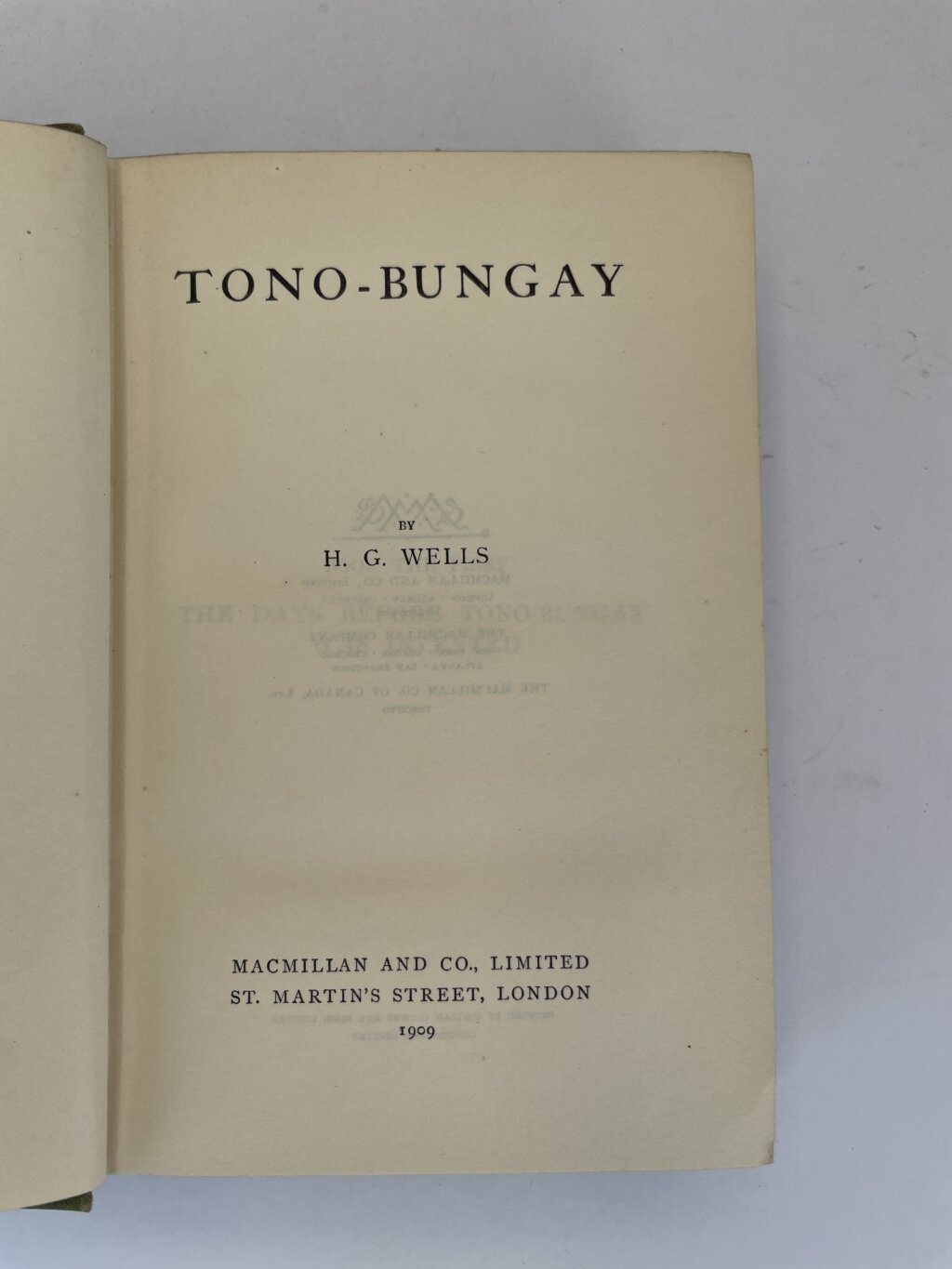
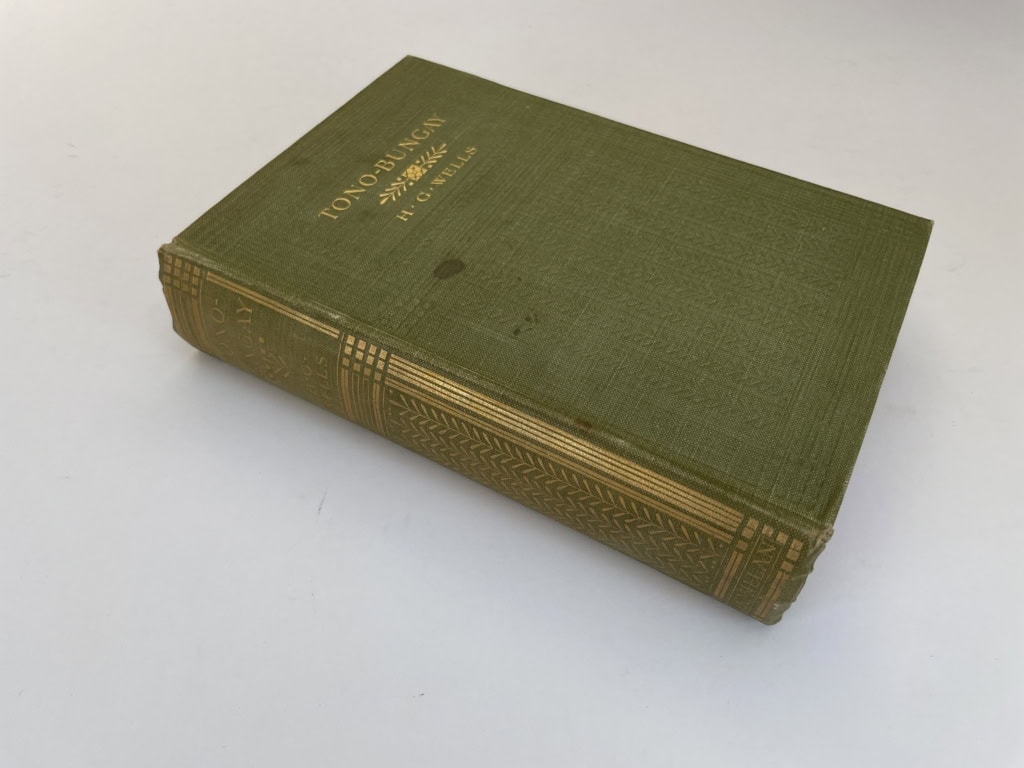
A first edition, first printing of Tono-Bungay by H. G. Wells published by Macmillan, London in 1909. A very good copy free from internal inscriptions, boards bound in publisher’s original green cloth with gilt titling to the front board within a cartouche and geometric debossed design, similarly to the spine with gilt titling and design, some pushing to the spine tips, rubbing to the corners and staining to the the rear boards, toning to the text block with gilt top edge, a small front inner hinge split to the spine – small mark to the front cover.
Tono-Bungay by H. G. Wells follows George Ponderevo, who helps his charismatic Uncle Edward build a vast fortune on a fraudulent patent medicine. As the tonic’s success spirals into financial and moral collapse, George reflects on class mobility, scientific curiosity and the hollowness of commercial culture. Wells uses satire and social realism to expose Edwardian Britain’s obsession with wealth and illusion. The novel charts George’s search for purpose amid a society driven by advertising, speculation and restless ambition.
(We don't keep all of our stock in the shop, so send us an email if you're planning a trip to see a particular author or book.)
- Description
Description
A first edition, first printing of Tono-Bungay by H. G. Wells published by Macmillan, London in 1909. A very good copy free from internal inscriptions, boards bound in publisher’s original green cloth with gilt titling to the front board within a cartouche and geometric debossed design, similarly to the spine with gilt titling and design, some pushing to the spine tips, rubbing to the corners and staining to the the rear boards, toning to the text block with gilt top edge, a small front inner hinge split to the spine – small mark to the front cover.
Tono-Bungay by H. G. Wells follows George Ponderevo, who helps his charismatic Uncle Edward build a vast fortune on a fraudulent patent medicine. As the tonic’s success spirals into financial and moral collapse, George reflects on class mobility, scientific curiosity and the hollowness of commercial culture. Wells uses satire and social realism to expose Edwardian Britain’s obsession with wealth and illusion. The novel charts George’s search for purpose amid a society driven by advertising, speculation and restless ambition.
