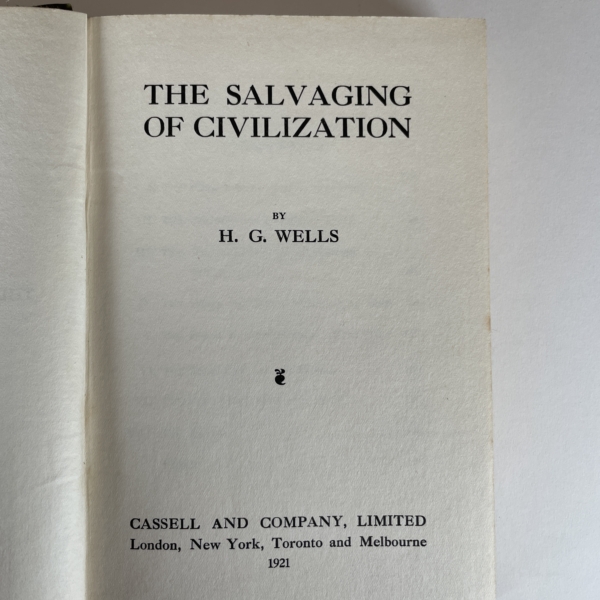

H.G. Wells – The Salvaging Of Civilization – First Edition 1921
£45.00
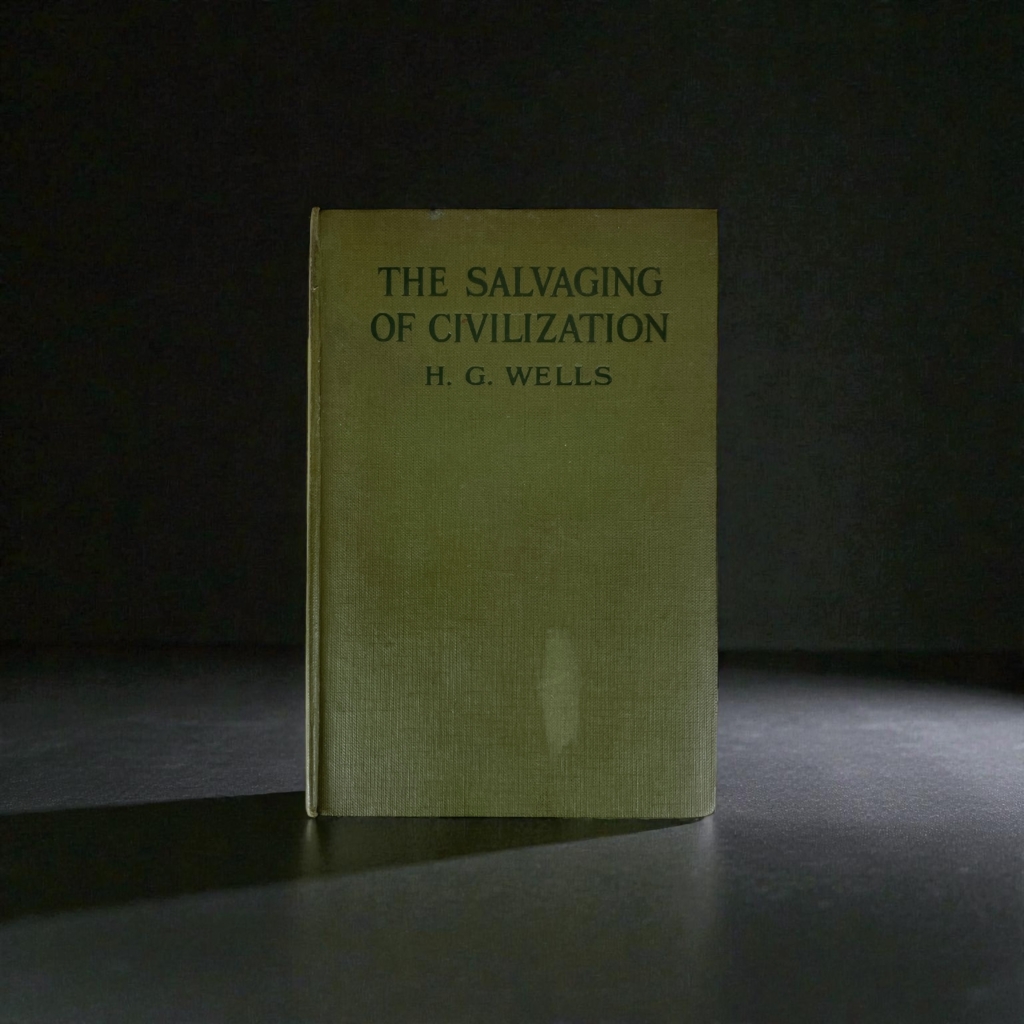
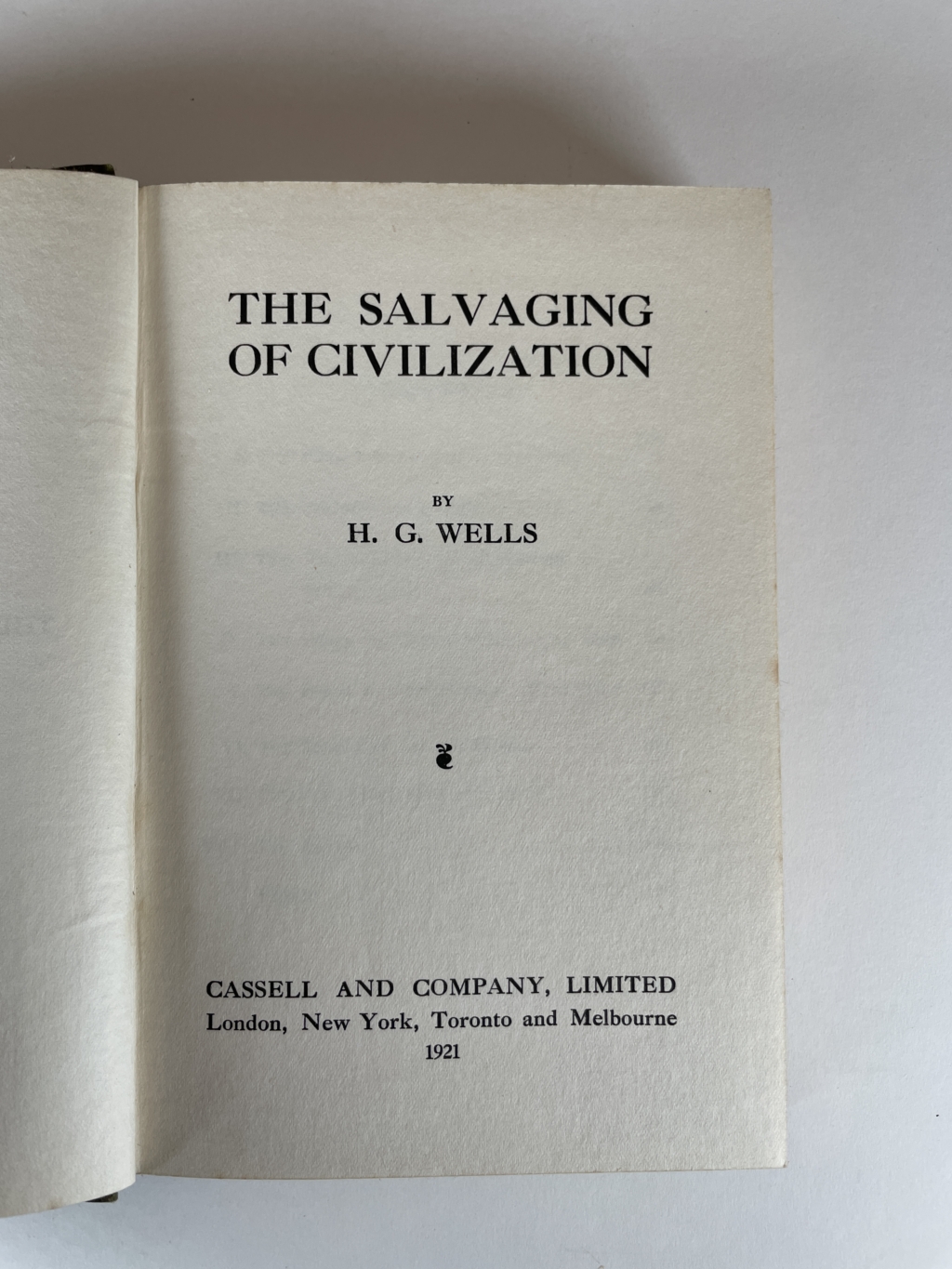
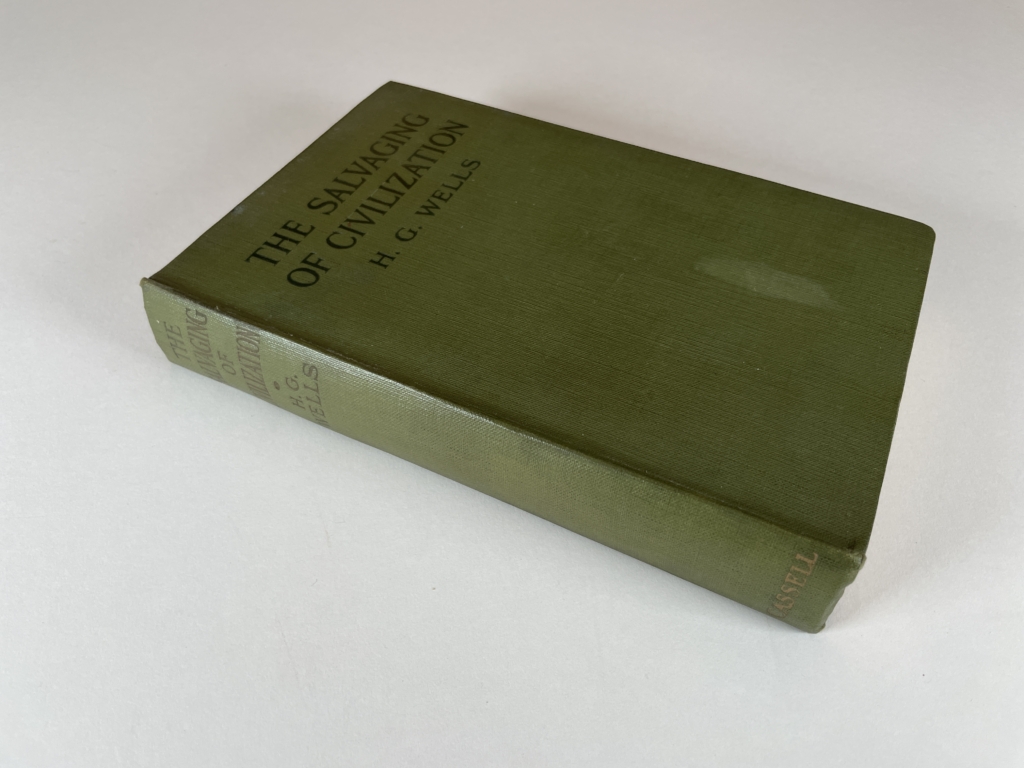
A first edition, first printing of The Salvaging of Civilization by H.G. Wells, published by Cassell and Company in 1921. A very good copy without inscriptions, a noted erratum on page 176, boards bound in green cloth with black titling to the front board and tarnished gilt titling to the spine, spine tips slightly pushed, bumping to upper edge of front and rear boards, with light shelf-wear to boards, toning and spotting to the text block and ghosting to the front and rear free end papers.
The Salvaging of Civilization is H. G. Wells’ argument for rebuilding society after World War I through global co-operation, scientific planning and educational reform. Wells contends that piecemeal national policies cannot prevent future conflicts; instead, humanity needs a rationally organised world state to secure peace and progress. Blending social criticism with utopian vision, the book urges readers to rethink political structures and embrace collective responsibility for civilisation’s survival and improvement.
(We don't keep all of our stock in the shop, so send us an email if you're planning a trip to see a particular author or book.)
- Description
Description
A first edition, first printing of The Salvaging of Civilization by H.G. Wells, published by Cassell and Company in 1921. A very good copy without inscriptions, a noted erratum on page 176, boards bound in green cloth with black titling to the front board and tarnished gilt titling to the spine, spine tips slightly pushed, bumping to upper edge of front and rear boards, with light shelf-wear to boards, toning and spotting to the text block and ghosting to the front and rear free end papers.
The Salvaging of Civilization is H. G. Wells’ argument for rebuilding society after World War I through global co-operation, scientific planning and educational reform. Wells contends that piecemeal national policies cannot prevent future conflicts; instead, humanity needs a rationally organised world state to secure peace and progress. Blending social criticism with utopian vision, the book urges readers to rethink political structures and embrace collective responsibility for civilisation’s survival and improvement.