Betty James – London On A Sunday; A Sort of Guide Book – First Edition 1964
£45.00
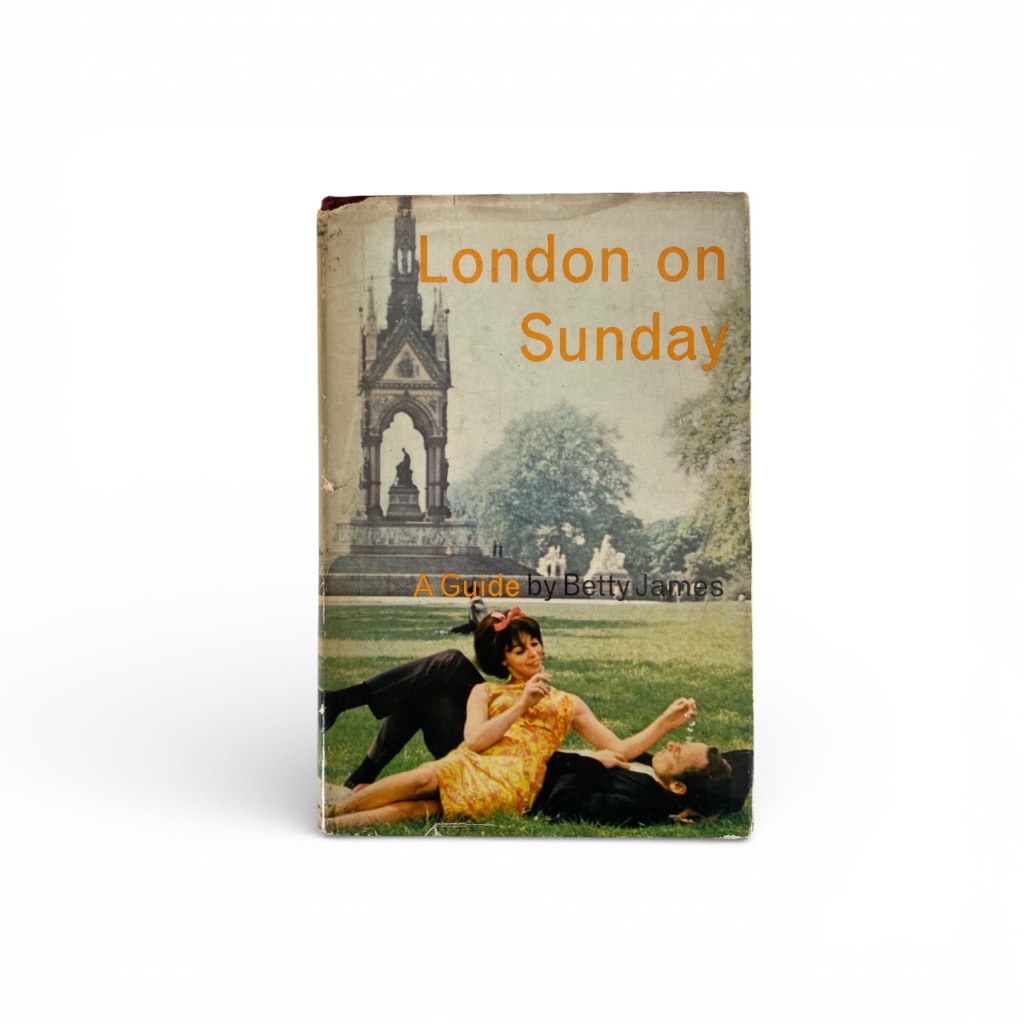
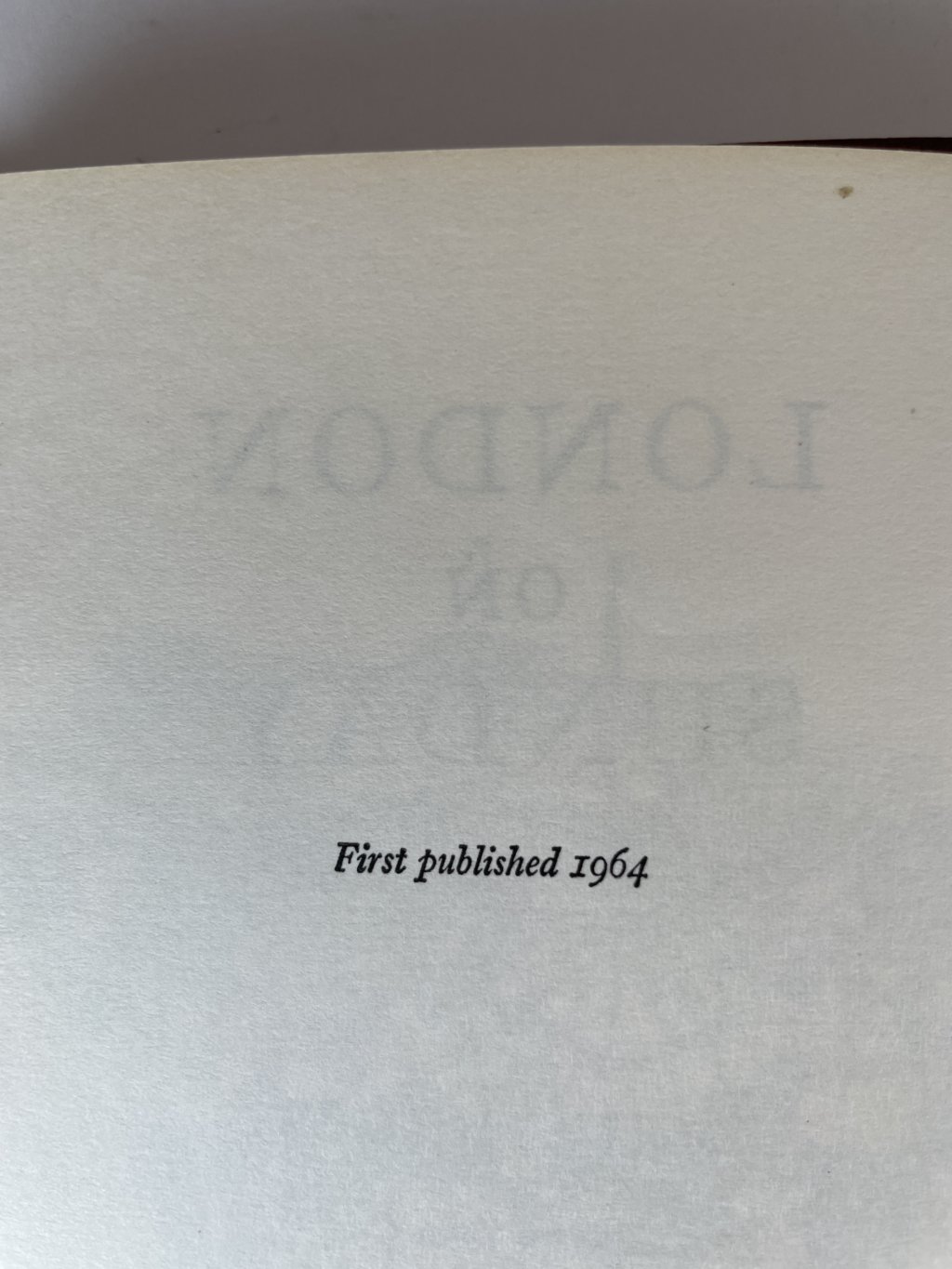
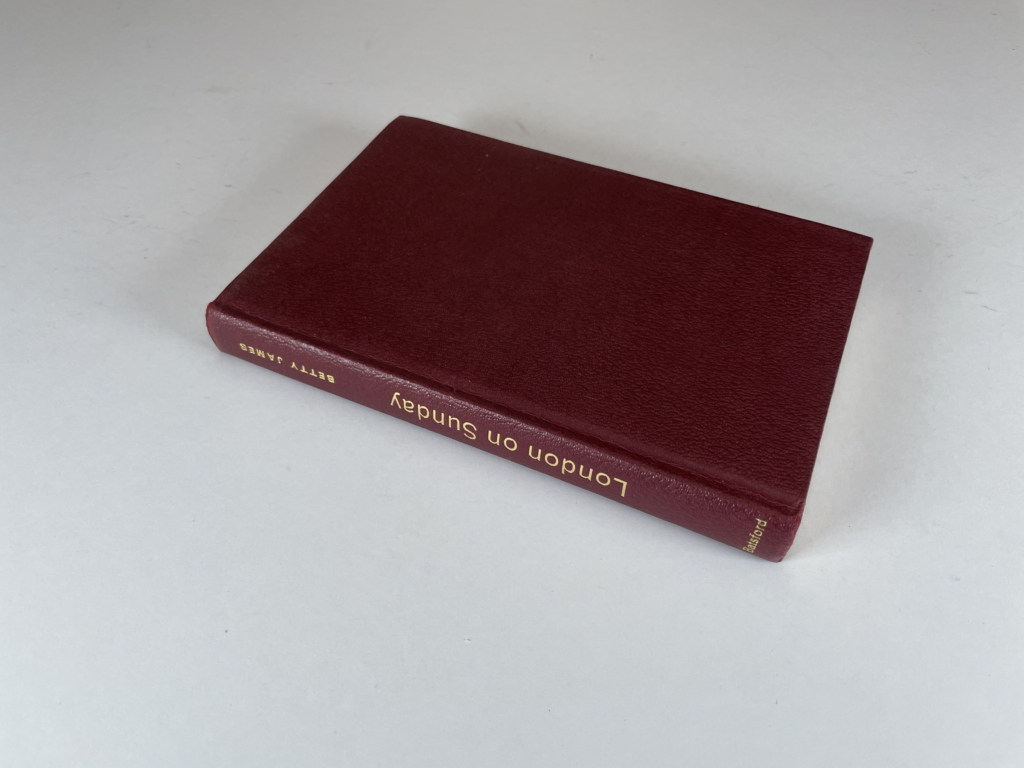
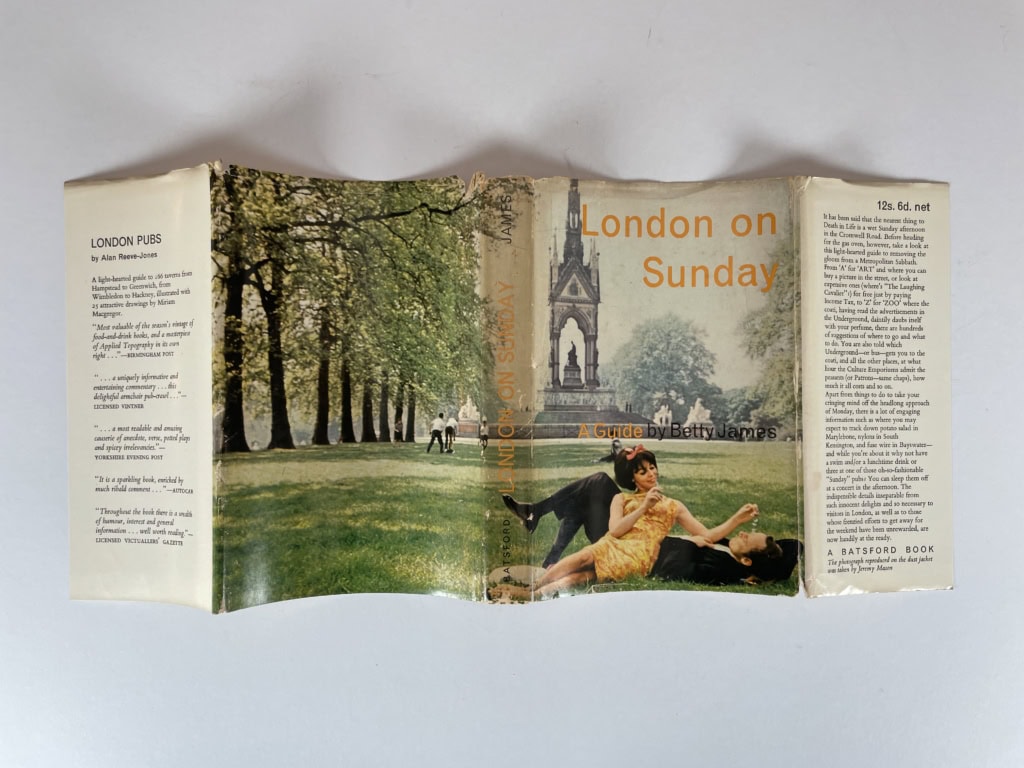
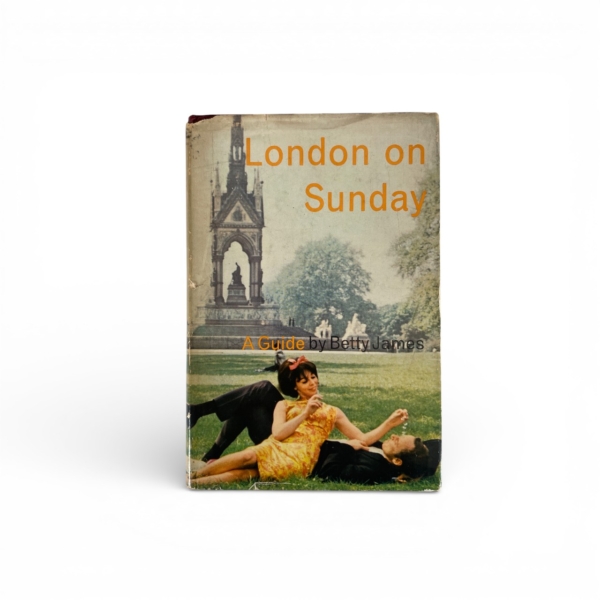
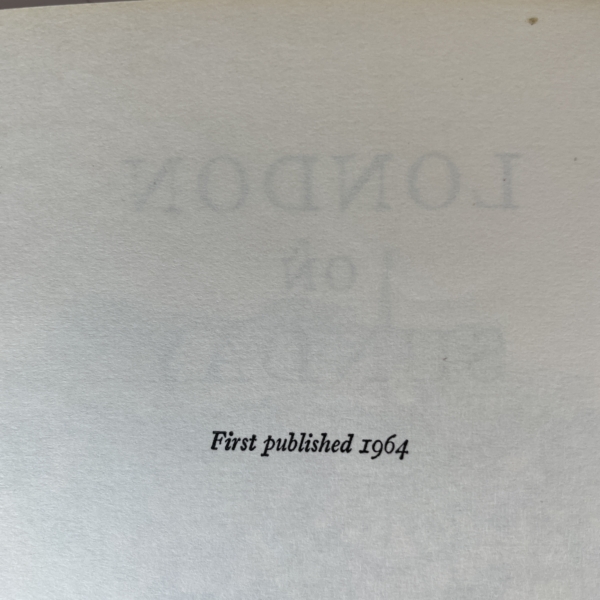
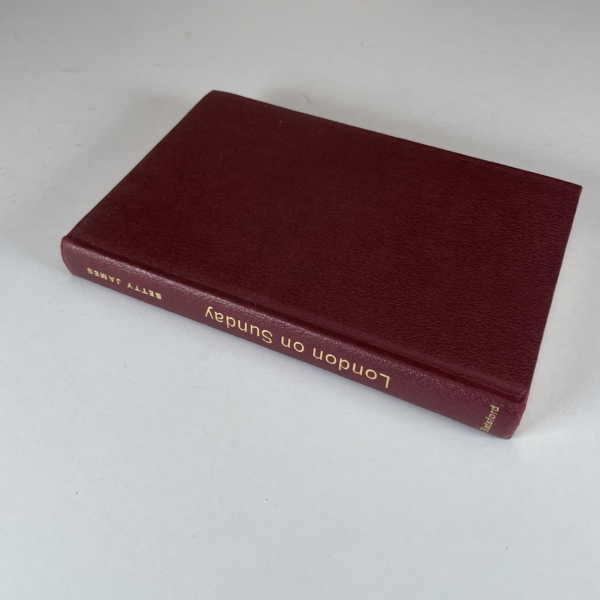
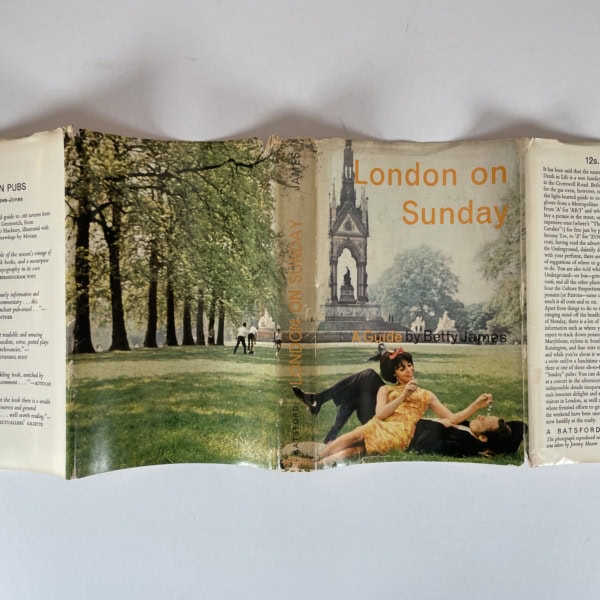
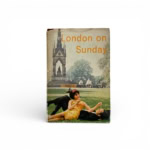
A first edition, first printing of ‘London on a Sunday’ by Betty James, published by Batsford, London in 1964, with drawings by John Cooper. A near fine copy, boards bound in publisher’s maroon faux grained leather with gilt titling to the spine, toning to the text block with spotting to the bottom edge. In a very good unclipped wrapper, with fading to the spine, chipping to the spine tips and knuckles of front and rear flap folds. Cover photograph by Jeremy Mason.
London on a Sunday by Betty James is a reflective essay and observational sketch capturing the city’s quieter rhythm during its weekly pause. Shops close, streets soften and familiar bustle gives way to contemplation. James observes ordinary scenes—parks, churches, lingering walkers—to reveal London’s character beyond commerce. The lyrical language contrasts weekday urgency with Sunday calm, suggesting rest as a form of renewal and a chance to notice humanity, tradition and understated beauty within a historic, shared urban landscape.
(We don't keep all of our stock in the shop, so send us an email if you're planning a trip to see a particular author or book.)
- Description
Description
A first edition, first printing of ‘London on a Sunday’ by Betty James, published by Batsford, London in 1964, with drawings by John Cooper. A near fine copy, boards bound in publisher’s maroon faux grained leather with gilt titling to the spine, toning to the text block with spotting to the bottom edge. In a very good unclipped wrapper, with fading to the spine, chipping to the spine tips and knuckles of front and rear flap folds. Cover photograph by Jeremy Mason.
London on a Sunday by Betty James is a reflective essay and observational sketch capturing the city’s quieter rhythm during its weekly pause. Shops close, streets soften and familiar bustle gives way to contemplation. James observes ordinary scenes—parks, churches, lingering walkers—to reveal London’s character beyond commerce. The lyrical language contrasts weekday urgency with Sunday calm, suggesting rest as a form of renewal and a chance to notice humanity, tradition and understated beauty within a historic, shared urban landscape.