

H.G. Wells – The Passionate Friends – First Edition 1913

£75.00
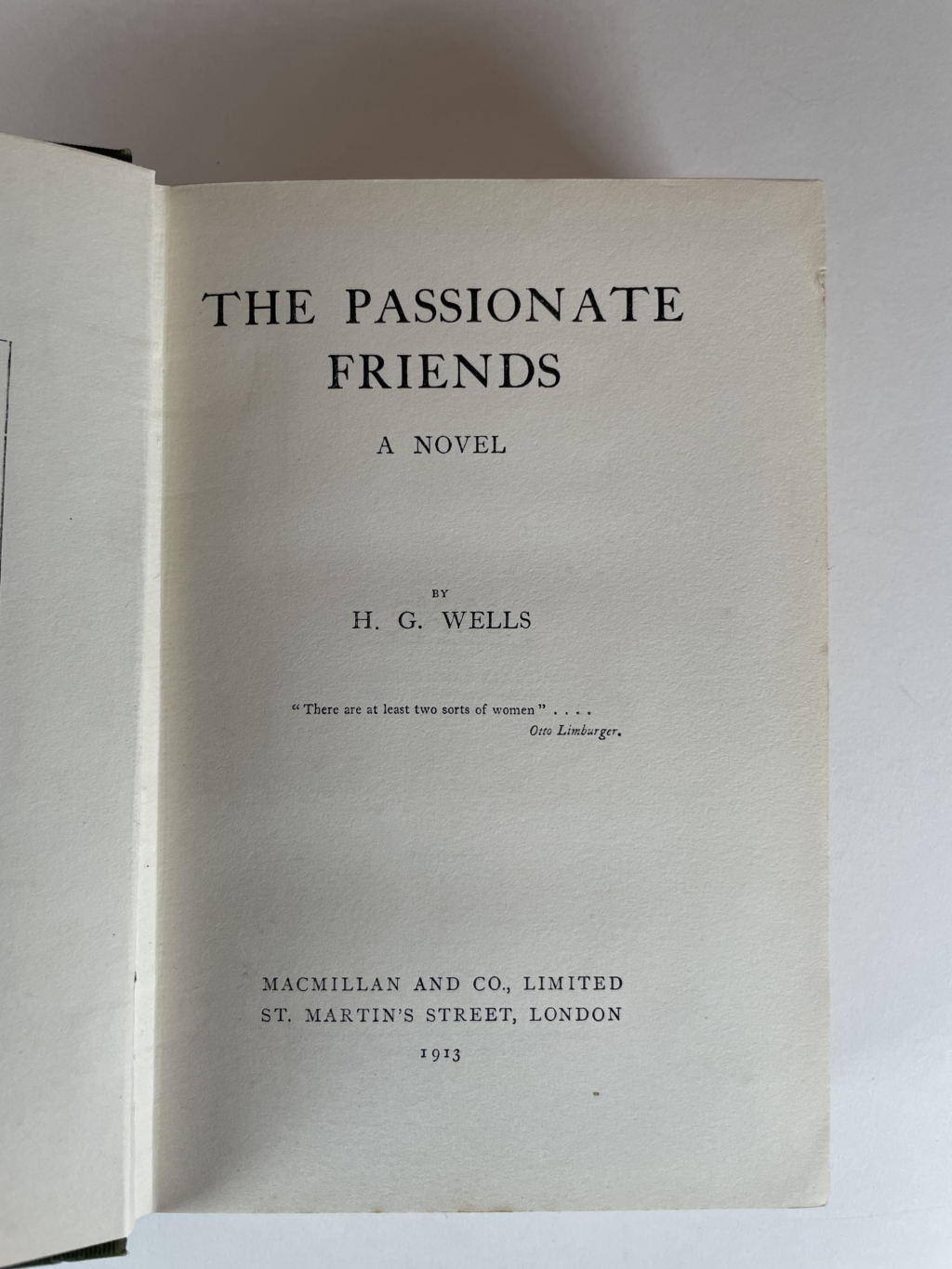
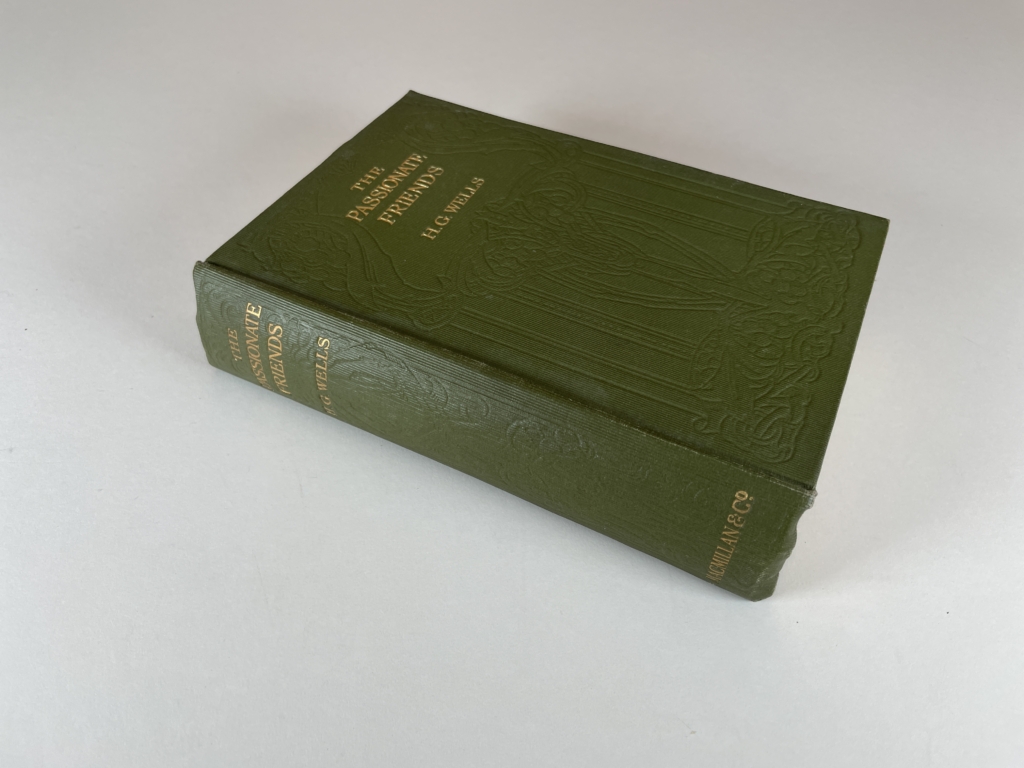
A first edition, first printing of The Passionate Friends by H. G. Wells published by Macmillan, London in 1913. A near fine copy free from internal inscriptions, boards bound in publisher’s original green cloth with gilt titling to the front board with debossed art nouveau design, similarly to the spine with tarnishing to the gilt, some pushing to the spine tips and rubbing to the corners of boards, toning to the text block with gilt top edge, ghosting to the front and rear free end papers, a former retail label to the rear paste-down.
The Passionate Friends by H. G. Wells recounts the lifelong, complicated relationship between a reflective narrator and Mary Justin, a woman constrained by marriage and social expectations. Their love, rekindled through chance meetings, becomes a meditation on desire, morality and the costs of emotional restraint. Wells contrasts personal longing with rigid Edwardian conventions, arguing for greater emotional freedom. The novel blends romance and social critique, depicting how love can shape—and be thwarted by—the structures of society and duty.
(We don't keep all of our stock in the shop, so send us an email if you're planning a trip to see a particular author or book.)
- Description
Description
A first edition, first printing of The Passionate Friends by H. G. Wells published by Macmillan, London in 1913. A near fine copy free from internal inscriptions, boards bound in publisher’s original green cloth with gilt titling to the front board with debossed art nouveau design, similarly to the spine with tarnishing to the gilt, some pushing to the spine tips and rubbing to the corners of boards, toning to the text block with gilt top edge, ghosting to the front and rear free end papers, a former retail label to the rear paste-down.
The Passionate Friends by H. G. Wells recounts the lifelong, complicated relationship between a reflective narrator and Mary Justin, a woman constrained by marriage and social expectations. Their love, rekindled through chance meetings, becomes a meditation on desire, morality and the costs of emotional restraint. Wells contrasts personal longing with rigid Edwardian conventions, arguing for greater emotional freedom. The novel blends romance and social critique, depicting how love can shape—and be thwarted by—the structures of society and duty.