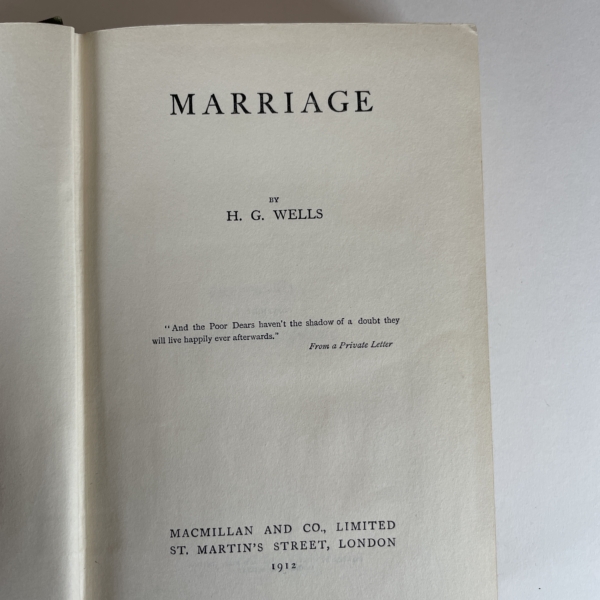
H.G. Wells – Marriage – First Edition 1912
£75.00
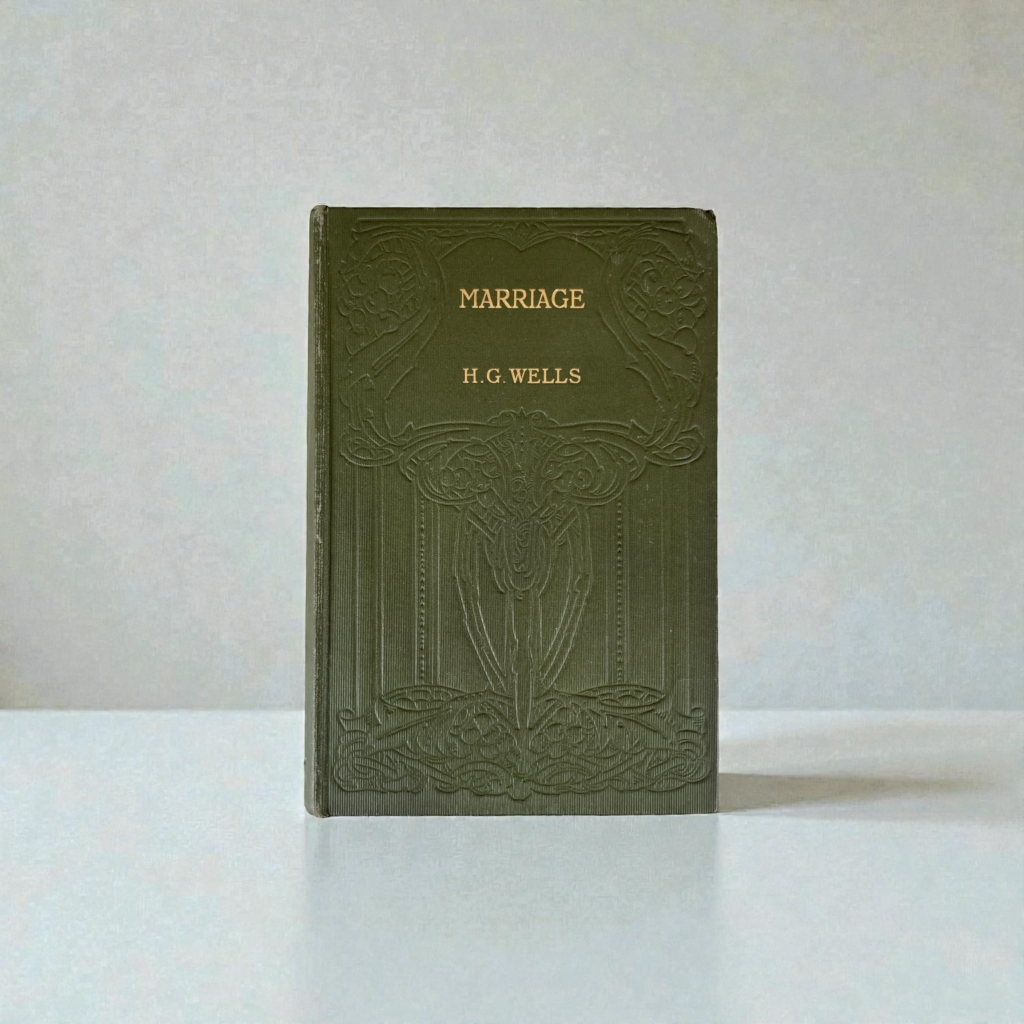
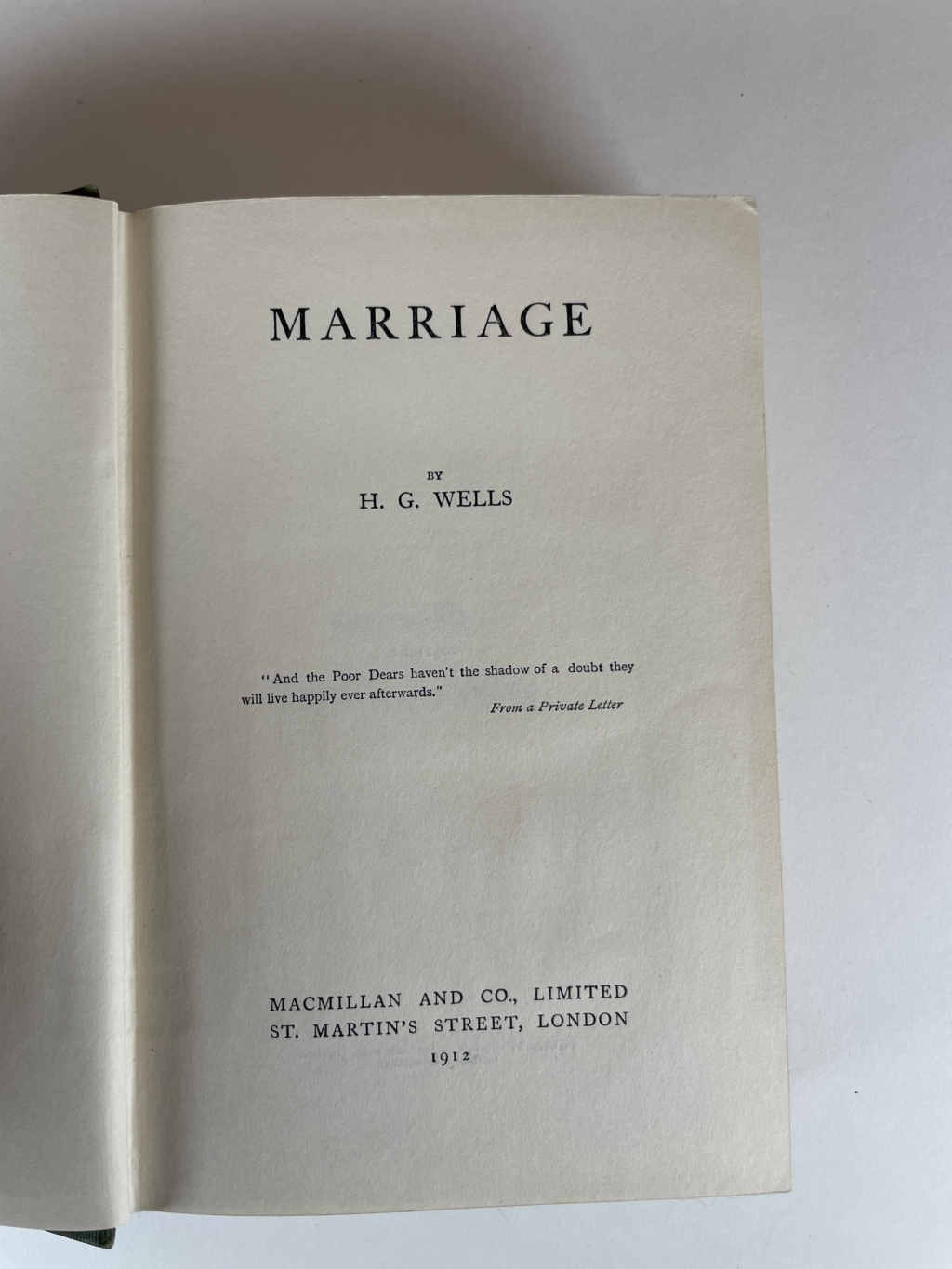
A first edition, first printing of Marriage by H. G. Wells published by Macmillan, London in 1912. A near fine copy inscribed by a previous owner in pencil to the front free end paper, boards bound in publisher’s original green cloth with gilt titling to the front board with debossed art nouveau design, similarly to the spine, some pushing to the spine tips and rubbing to the corners, toning to the text block with gilt top edge, ghosting to the front and rear free end papers, a former retail label to the rear paste-down.
Marriage by H. G. Wells follows Trafford and Marjorie, whose union begins in romantic idealism but soon collides with ambition, science, money and diverging desires. As Trafford pursues research and Marjorie seeks social success, their relationship becomes a study of mismatched expectations and personal growth. Wells uses the couple’s struggles to explore gender roles, class aspirations, and the tension between individual purpose and domestic life. The novel blends realism and social critique to portray marriage as a complex, evolving negotiation.
(We don't keep all of our stock in the shop, so send us an email if you're planning a trip to see a particular author or book.)
- Description
Description
A first edition, first printing of Marriage by H. G. Wells published by Macmillan, London in 1912. A near fine copy inscribed by a previous owner in pencil to the front free end paper, boards bound in publisher’s original green cloth with gilt titling to the front board with debossed art nouveau design, similarly to the spine, some pushing to the spine tips and rubbing to the corners, toning to the text block with gilt top edge, ghosting to the front and rear free end papers, a former retail label to the rear paste-down.
Marriage by H. G. Wells follows Trafford and Marjorie, whose union begins in romantic idealism but soon collides with ambition, science, money and diverging desires. As Trafford pursues research and Marjorie seeks social success, their relationship becomes a study of mismatched expectations and personal growth. Wells uses the couple’s struggles to explore gender roles, class aspirations, and the tension between individual purpose and domestic life. The novel blends realism and social critique to portray marriage as a complex, evolving negotiation.