





H.G. Wells – The New Machiavelli – First Edition 1911

£75.00
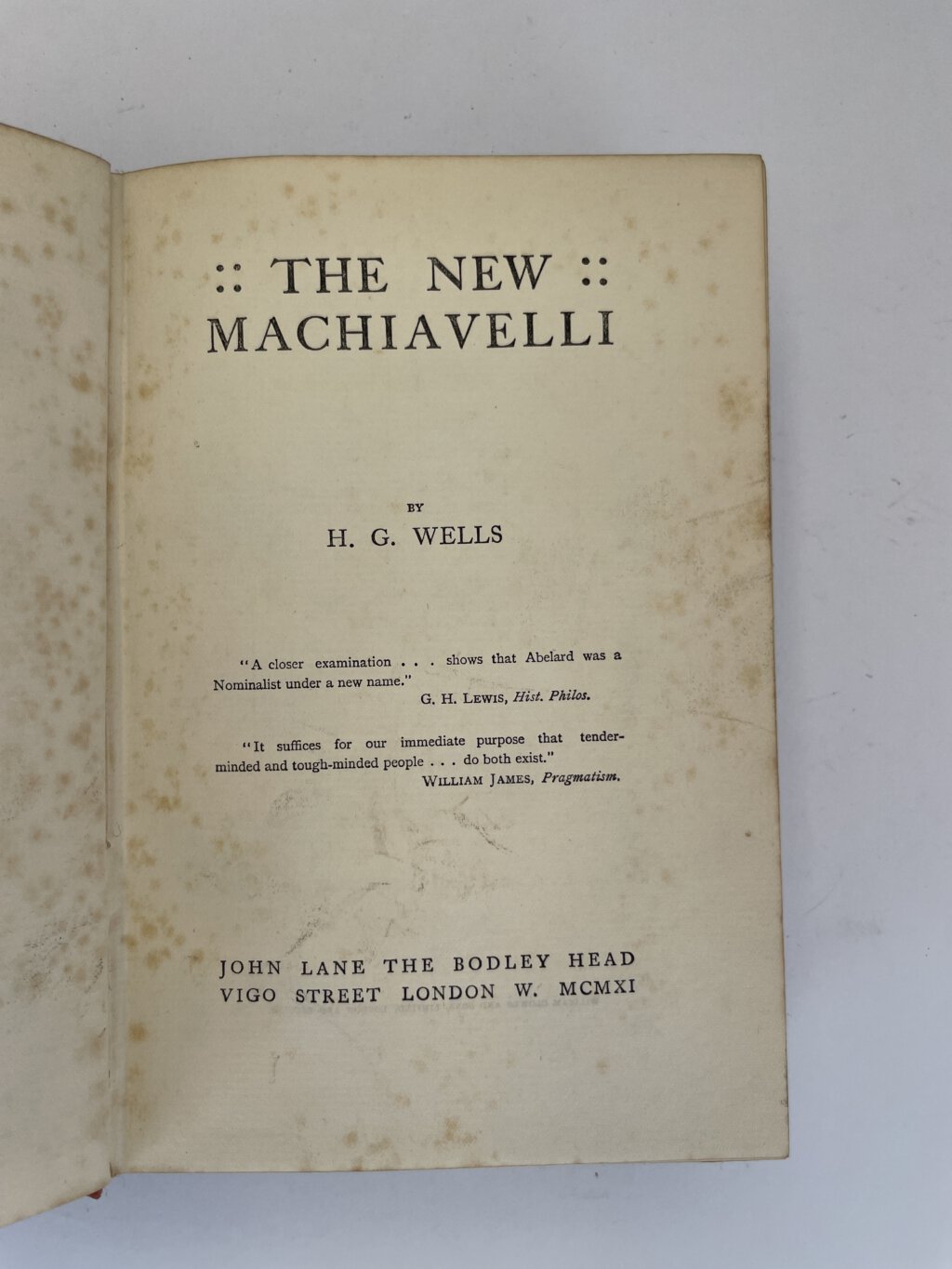
A first edition, first printing of The New Machiavelli by H. G. Wells, published by John Lane The Bodley Head, London in 1911. A very good copy without inscriptions. The boards bound in red cloth with silver titling to the front board and gilt titling to the spine which is faded and with pushing to the spine tips, boards a little rub-worn, a red top stain to the deckle edged text block, some fairly heavy foxing to the prelims
The New Machiavelli by H. G. Wells follows Richard Remington, a rising Liberal politician whose idealistic plans for social reform collide with personal scandal and political hypocrisy. Through Remington’s memoir-like confession, Wells examines ambition, morality, sexual freedom and the compromises demanded by public life. The novel satirises Edwardian politics while exploring the tension between private desire and public duty. Blending autobiography with social critique, it exposes how structural constraints can stifle even the most energetic reformers.
(We don't keep all of our stock in the shop, so send us an email if you're planning a trip to see a particular author or book.)
- Description
Description
A first edition, first printing of The New Machiavelli by H. G. Wells, published by John Lane The Bodley Head, London in 1911. A very good copy without inscriptions. The boards bound in red cloth with silver titling to the front board and gilt titling to the spine which is faded and with pushing to the spine tips, boards a little rub-worn, a red top stain to the deckle edged text block, some fairly heavy foxing to the prelims
The New Machiavelli by H. G. Wells follows Richard Remington, a rising Liberal politician whose idealistic plans for social reform collide with personal scandal and political hypocrisy. Through Remington’s memoir-like confession, Wells examines ambition, morality, sexual freedom and the compromises demanded by public life. The novel satirises Edwardian politics while exploring the tension between private desire and public duty. Blending autobiography with social critique, it exposes how structural constraints can stifle even the most energetic reformers.