The Break-Up Of The Beatles: High-Court Dissolution Papers – Superb Archive of Material
£50,000.00
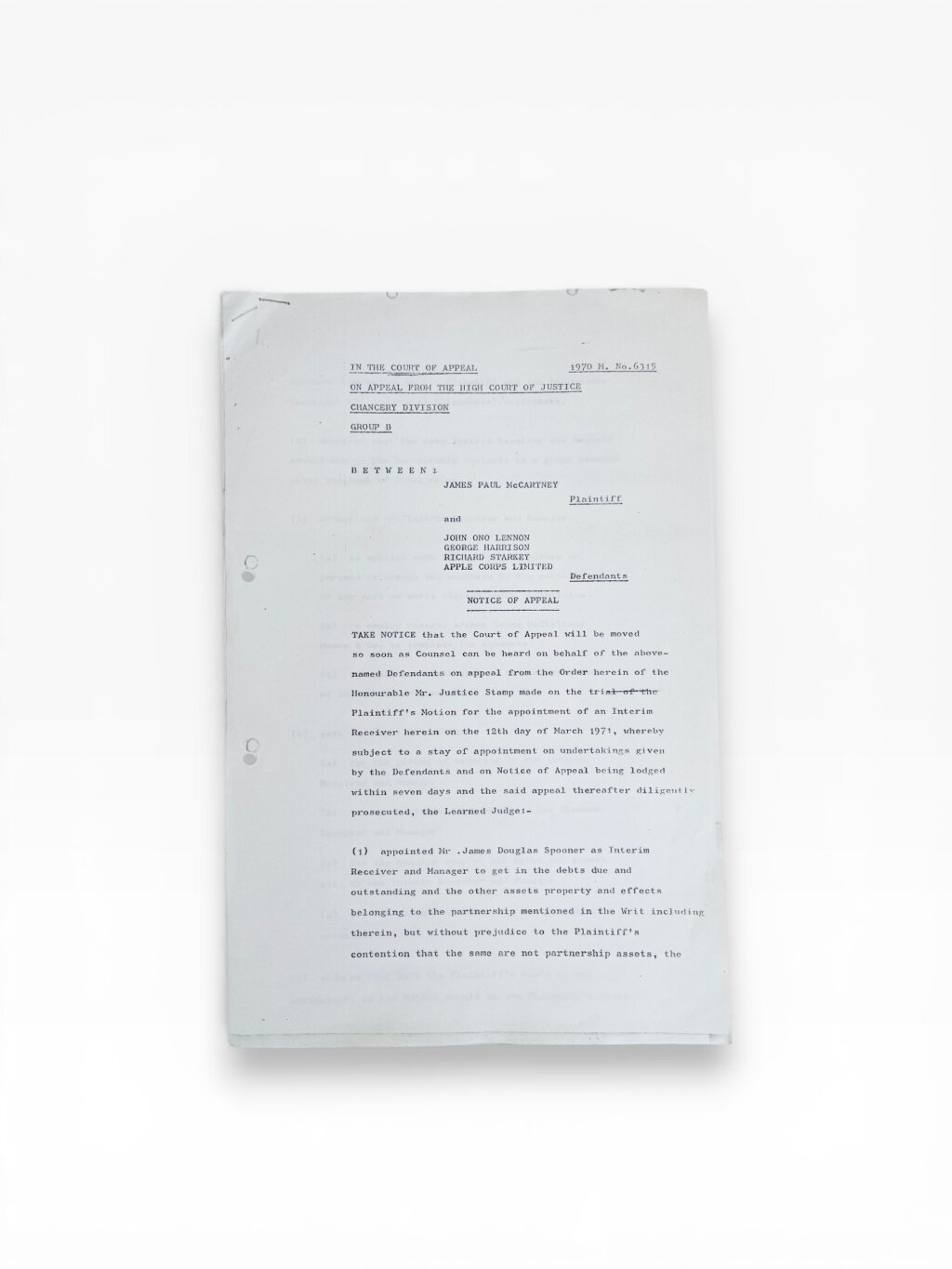
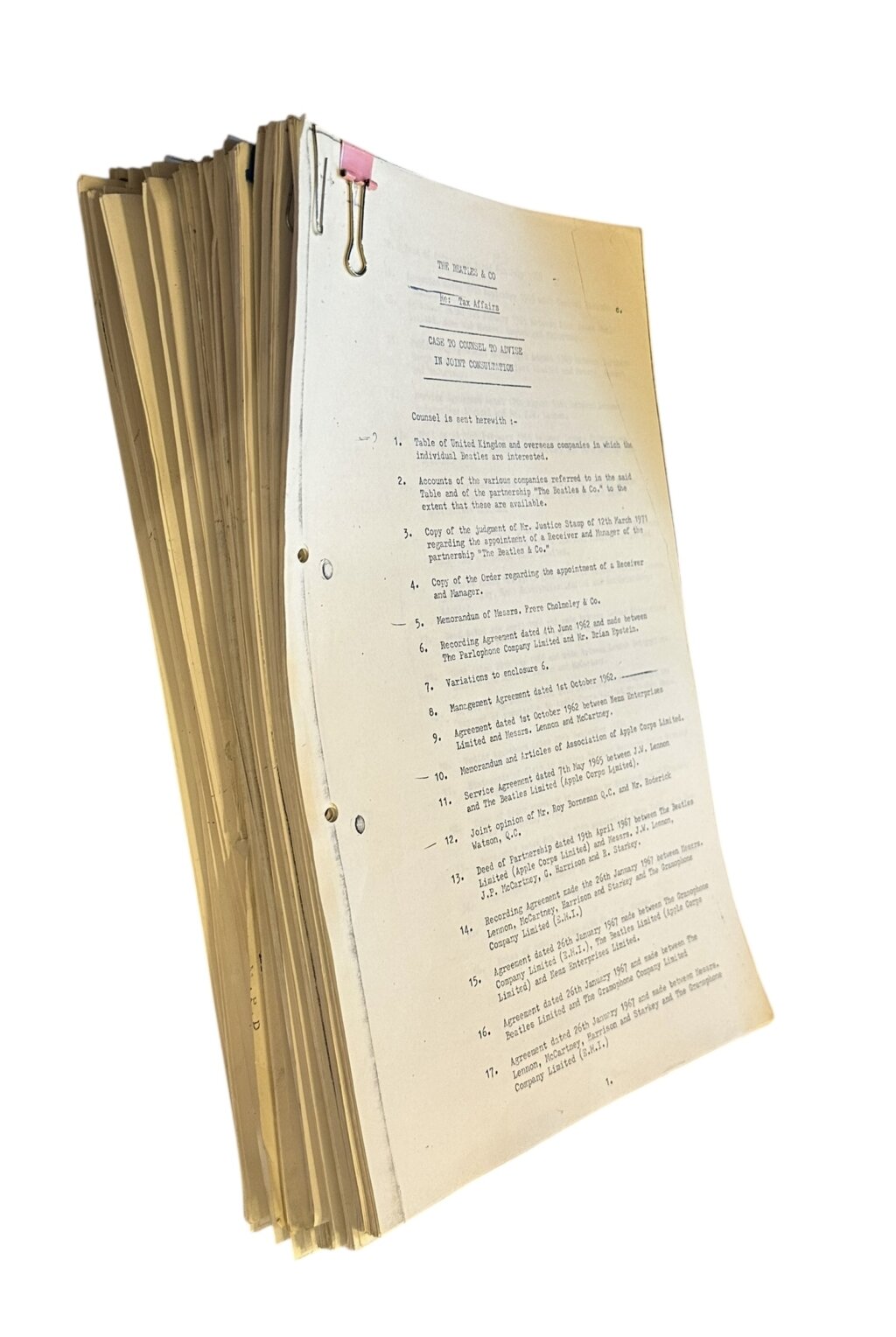
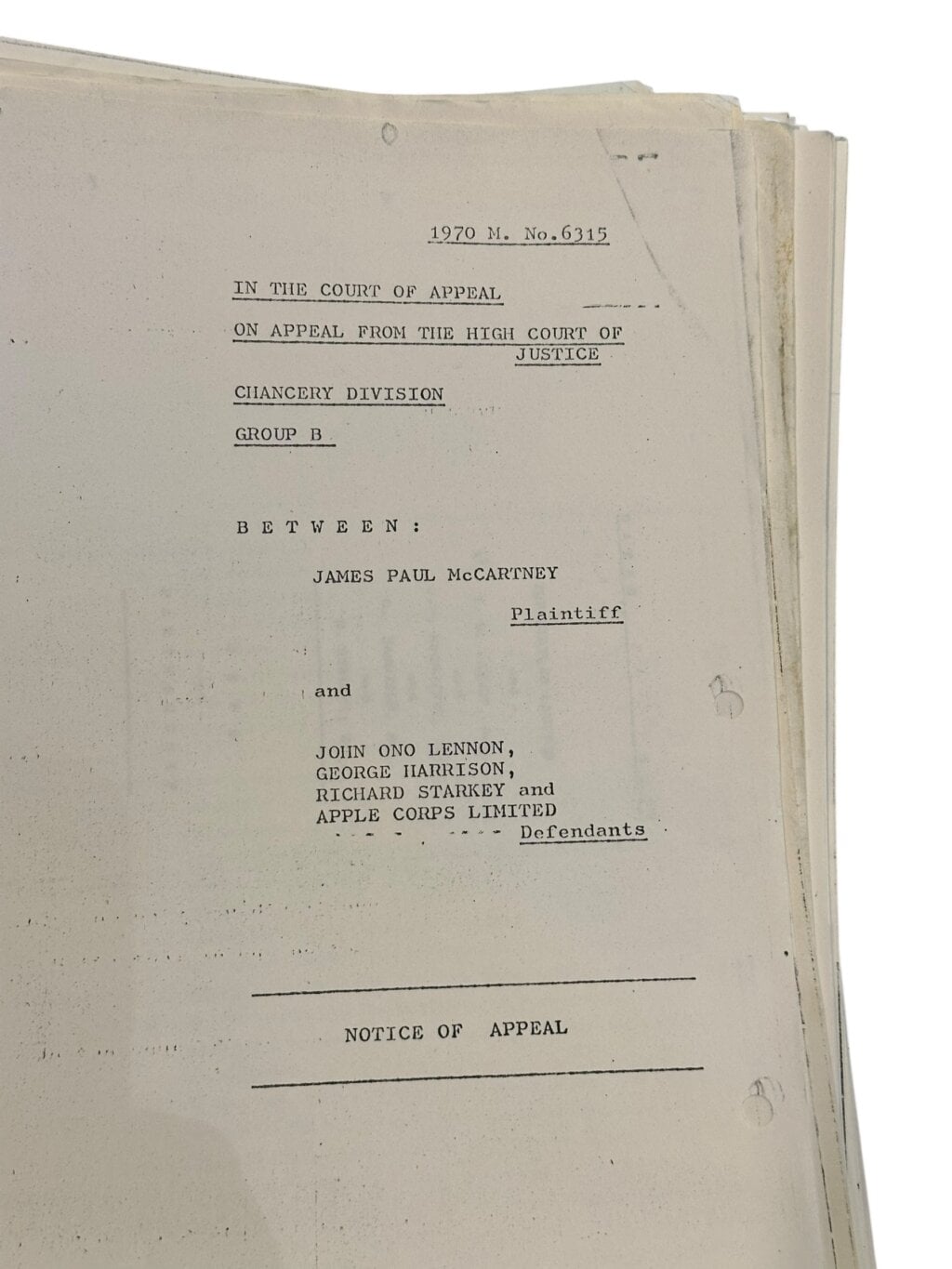
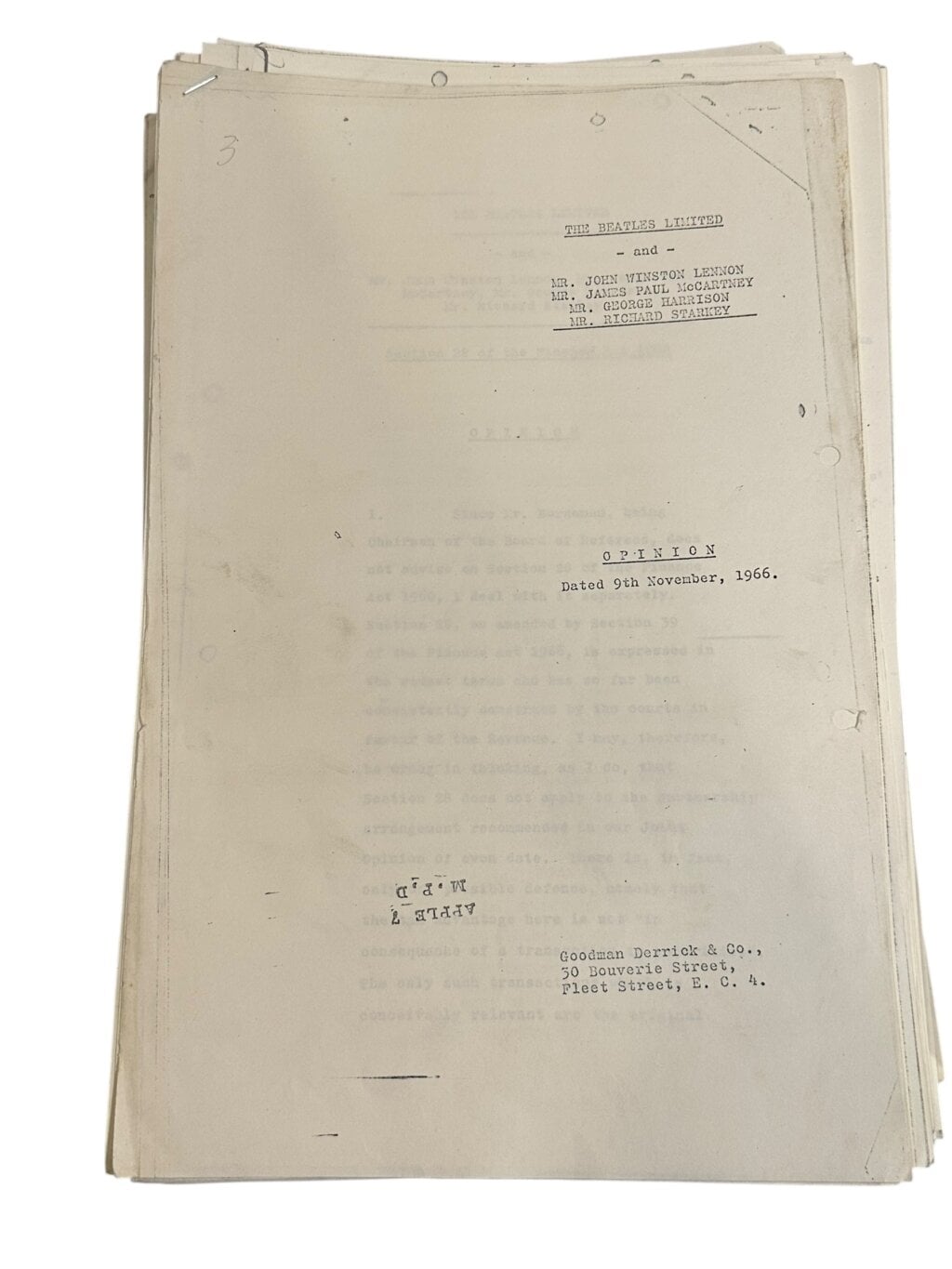
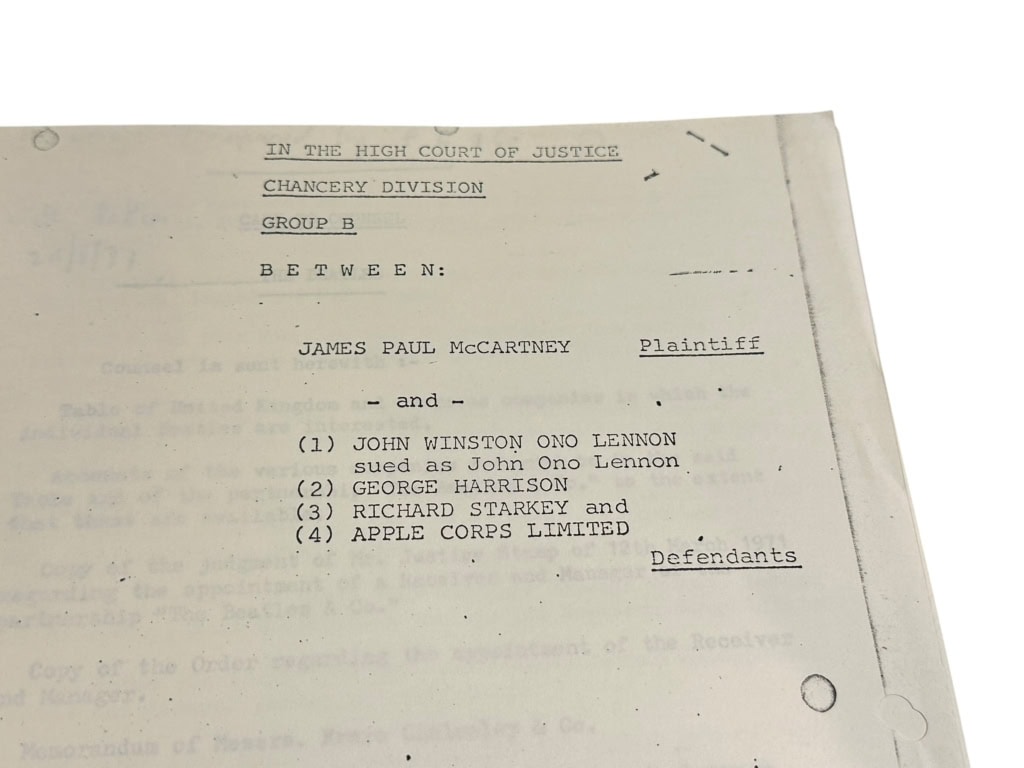
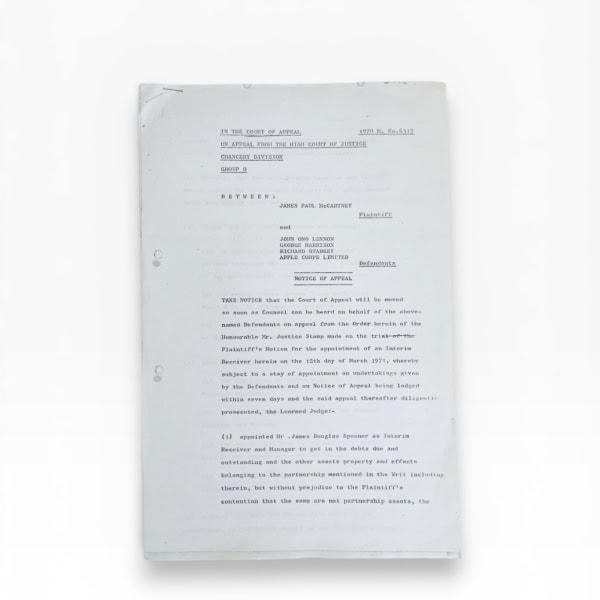
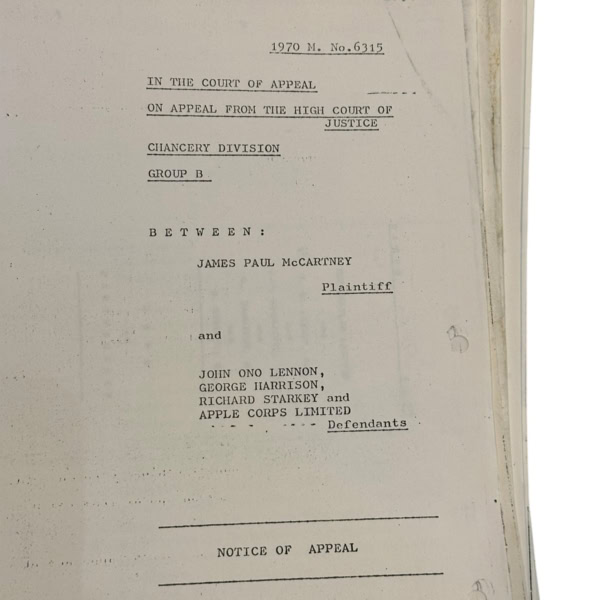
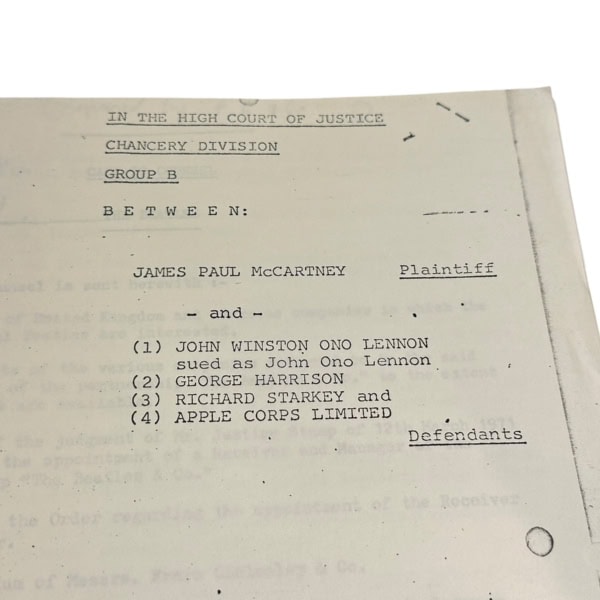
A substantial and historically significant archive of over 300 pages of contemporaneous typescript copy documents, compiled by the solicitors and legal representatives acting during the London High Court proceedings initiated by Paul McCartney in December 1970 to dissolve the partnership of The Beatles. The action, brought against John Lennon, George Harrison, Ringo Starr (Richard Starkey), and Apple Corps, sought a judicial declaration to terminate the Beatles’ business partnership and to remove American manager Allen Klein from authority over the group’s financial affairs.
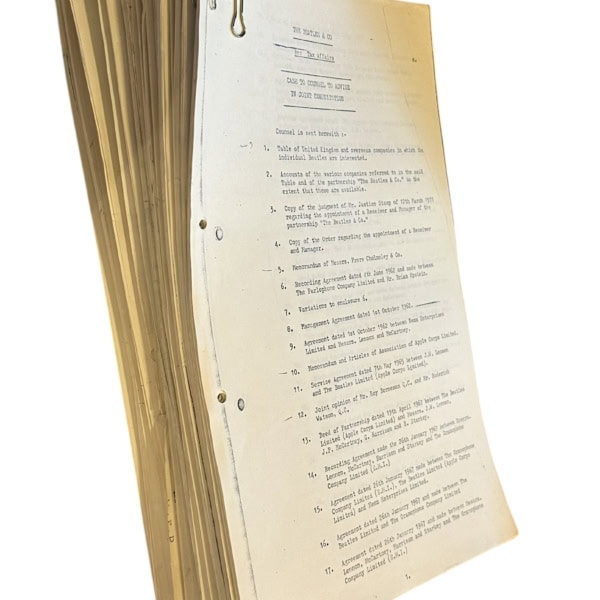
The collection comprises unbound loose sheets, many bearing headed titles, and includes:
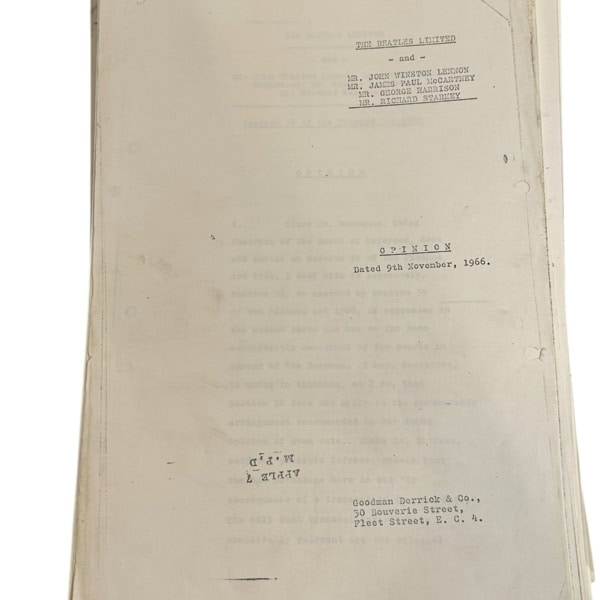
A nine-page copy of the original 1967 Deed of Partnership of The Beatles Limited (23 Albemarle Street, London), with facsimile signatures of the four members to pp. 8–9, later noted in internal documents as the first formal written instrument of partnership.
Copies of Writs issued to Lennon (then of Tittenhurst Park, Ascot; sued as John Winston Lennon, subsequently of New York), Harrison (Friar Park, Henley-on-Thames), Starkey (Round Hill, Highgate), and Apple Corps (3 Savile Row, London W1).
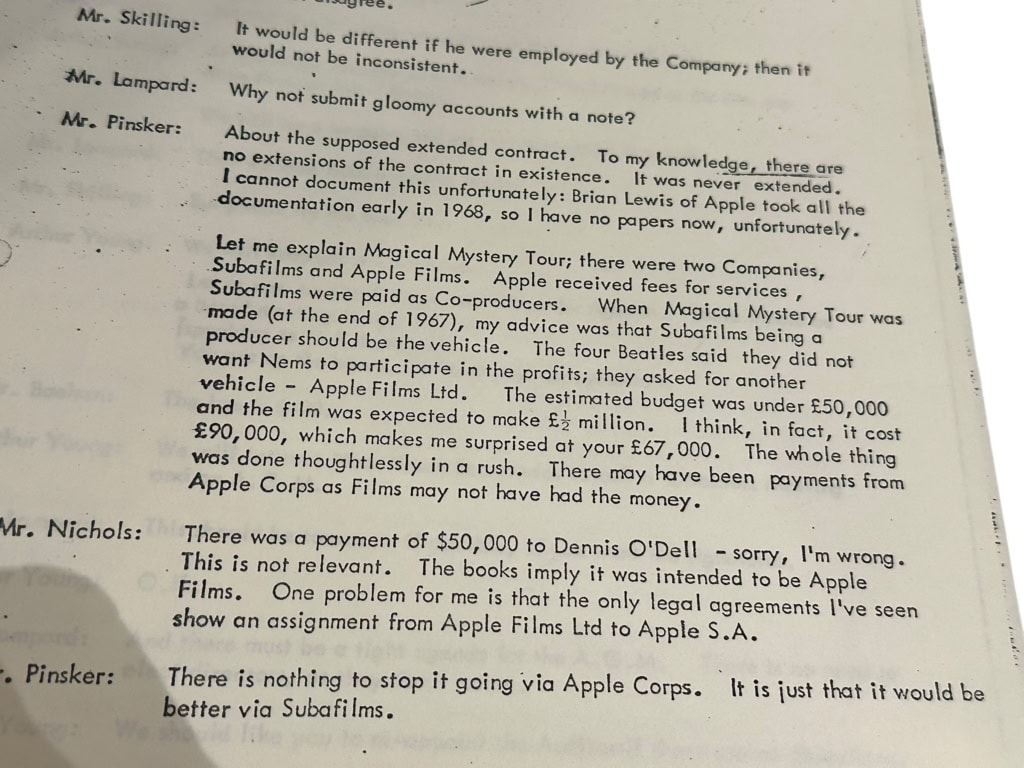
Minutes of meetings between legal and financial representatives detailing negotiations, disputes, and strategic discussions, including the Cannes meetings (21–22 July 1971) and the ABKCO Industries meeting at Savile Row, 22 April 1971, described contemporaneously as “tense and heated.”
A Draft Order (26 January 1971) requiring Mr. Klein to provide a chronological account of his involvement with the Beatles from January/February 1969 and to disclose all sums received by ABKCO in relation to the group.
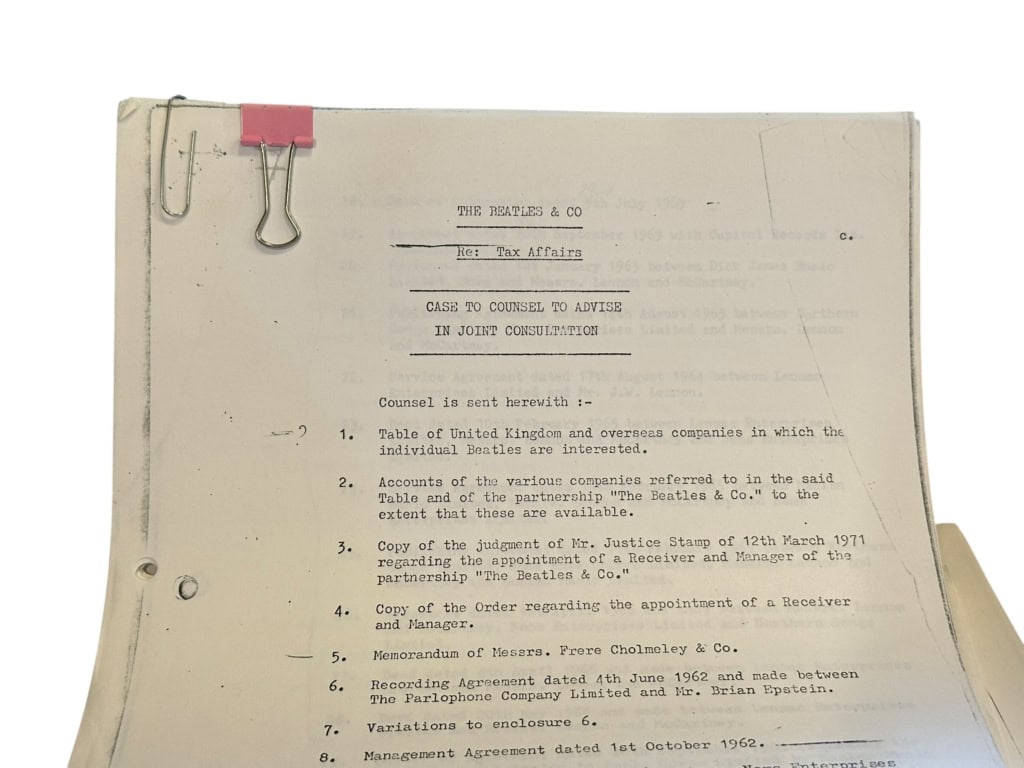
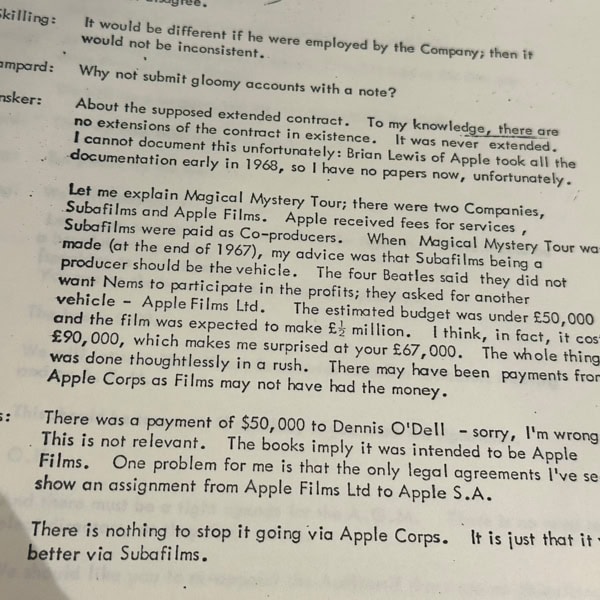
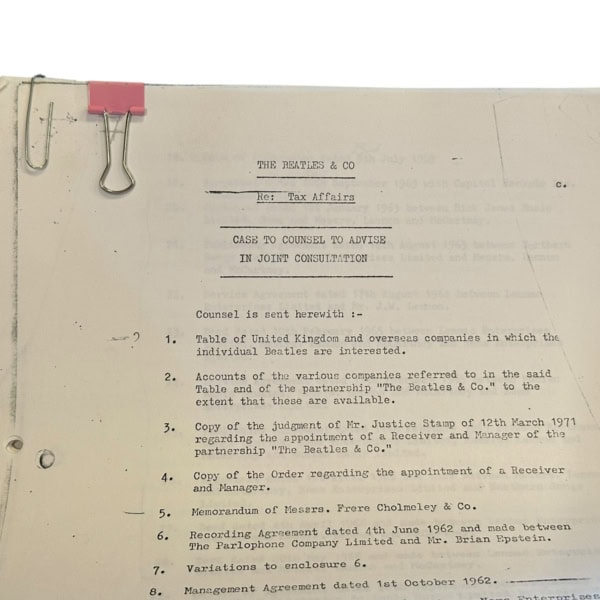
Internal memoranda addressing unresolved contractual questions, including the absence of a written agreement upon the departure of Pete Best and appointment of Ringo Starr; tax liabilities; royalty entanglements; studio financing; film rights disputes (including Let It Be, Hey Jude, Revolution, and Magical Mystery Tour); and the growing conflict over management transparency.
Notably, the papers document mounting concern over ABKCO’s failure to produce full accounting records dating back to 1966, at a time when scrutiny from the Inland Revenue intensified.
These documents provide a rare, contemporaneous record of the legal unravelling of the most commercially and culturally influential musical partnership of the twentieth century.
While public narratives of the Beatles’ dissolution often emphasize personal tensions, this archive reveals the structural and fiduciary complexities underlying the dispute following the death of manager Brian Epstein in 1967. The minutes candidly observe:
“It would be almost impossible to exaggerate the actual complexity of the various legal arrangements which have been entered into by Messrs. Lennon, McCartney, Harrison and Starkey…”
The papers demonstrate that even after the cessation of collaborative recording, the partnership’s contractual purpose had not legally expired — raising the central question repeatedly noted in the minutes:
“The question is — where is the money?”
Entirely unpublished and preserved from a solicitor’s working archive, the bundle represents professional reference copies used during live proceedings. Evidence of handling — light curling to page corners — reflects active consultation during the case. Otherwise, the papers remain in overall good condition.
Such working legal archives seldom survive intact outside institutional collections. As a primary source documenting the High Court action that formally ended The Beatles’ partnership, this archive stands as an exceptional artefact of modern cultural, legal, and music-industry history.
(We don't keep all of our stock in the shop, so send us an email if you're planning a trip to see a particular author or book.)
- Description
Description
A substantial and historically significant archive of over 300 pages of contemporaneous typescript copy documents, compiled by the solicitors and legal representatives acting during the London High Court proceedings initiated by Paul McCartney in December 1970 to dissolve the partnership of The Beatles. The action, brought against John Lennon, George Harrison, Ringo Starr (Richard Starkey), and Apple Corps, sought a judicial declaration to terminate the Beatles’ business partnership and to remove American manager Allen Klein from authority over the group’s financial affairs.
The collection comprises unbound loose sheets, many bearing headed titles, and includes:
A nine-page copy of the original 1967 Deed of Partnership of The Beatles Limited (23 Albemarle Street, London), with facsimile signatures of the four members to pp. 8–9, later noted in internal documents as the first formal written instrument of partnership.
Copies of Writs issued to Lennon (then of Tittenhurst Park, Ascot; sued as John Winston Lennon, subsequently of New York), Harrison (Friar Park, Henley-on-Thames), Starkey (Round Hill, Highgate), and Apple Corps (3 Savile Row, London W1).
Minutes of meetings between legal and financial representatives detailing negotiations, disputes, and strategic discussions, including the Cannes meetings (21–22 July 1971) and the ABKCO Industries meeting at Savile Row, 22 April 1971, described contemporaneously as “tense and heated.”
A Draft Order (26 January 1971) requiring Mr. Klein to provide a chronological account of his involvement with the Beatles from January/February 1969 and to disclose all sums received by ABKCO in relation to the group.
Internal memoranda addressing unresolved contractual questions, including the absence of a written agreement upon the departure of Pete Best and appointment of Ringo Starr; tax liabilities; royalty entanglements; studio financing; film rights disputes (including Let It Be, Hey Jude, Revolution, and Magical Mystery Tour); and the growing conflict over management transparency.
Notably, the papers document mounting concern over ABKCO’s failure to produce full accounting records dating back to 1966, at a time when scrutiny from the Inland Revenue intensified.
These documents provide a rare, contemporaneous record of the legal unravelling of the most commercially and culturally influential musical partnership of the twentieth century.
While public narratives of the Beatles’ dissolution often emphasize personal tensions, this archive reveals the structural and fiduciary complexities underlying the dispute following the death of manager Brian Epstein in 1967. The minutes candidly observe:
“It would be almost impossible to exaggerate the actual complexity of the various legal arrangements which have been entered into by Messrs. Lennon, McCartney, Harrison and Starkey…”
The papers demonstrate that even after the cessation of collaborative recording, the partnership’s contractual purpose had not legally expired — raising the central question repeatedly noted in the minutes:
“The question is — where is the money?”
Entirely unpublished and preserved from a solicitor’s working archive, the bundle represents professional reference copies used during live proceedings. Evidence of handling — light curling to page corners — reflects active consultation during the case. Otherwise, the papers remain in overall good condition.
Such working legal archives seldom survive intact outside institutional collections. As a primary source documenting the High Court action that formally ended The Beatles’ partnership, this archive stands as an exceptional artefact of modern cultural, legal, and music-industry history.