John Maynard Keynes – How To Pay For The War – First Edition 1940 – in custom-made slip case
£350.00
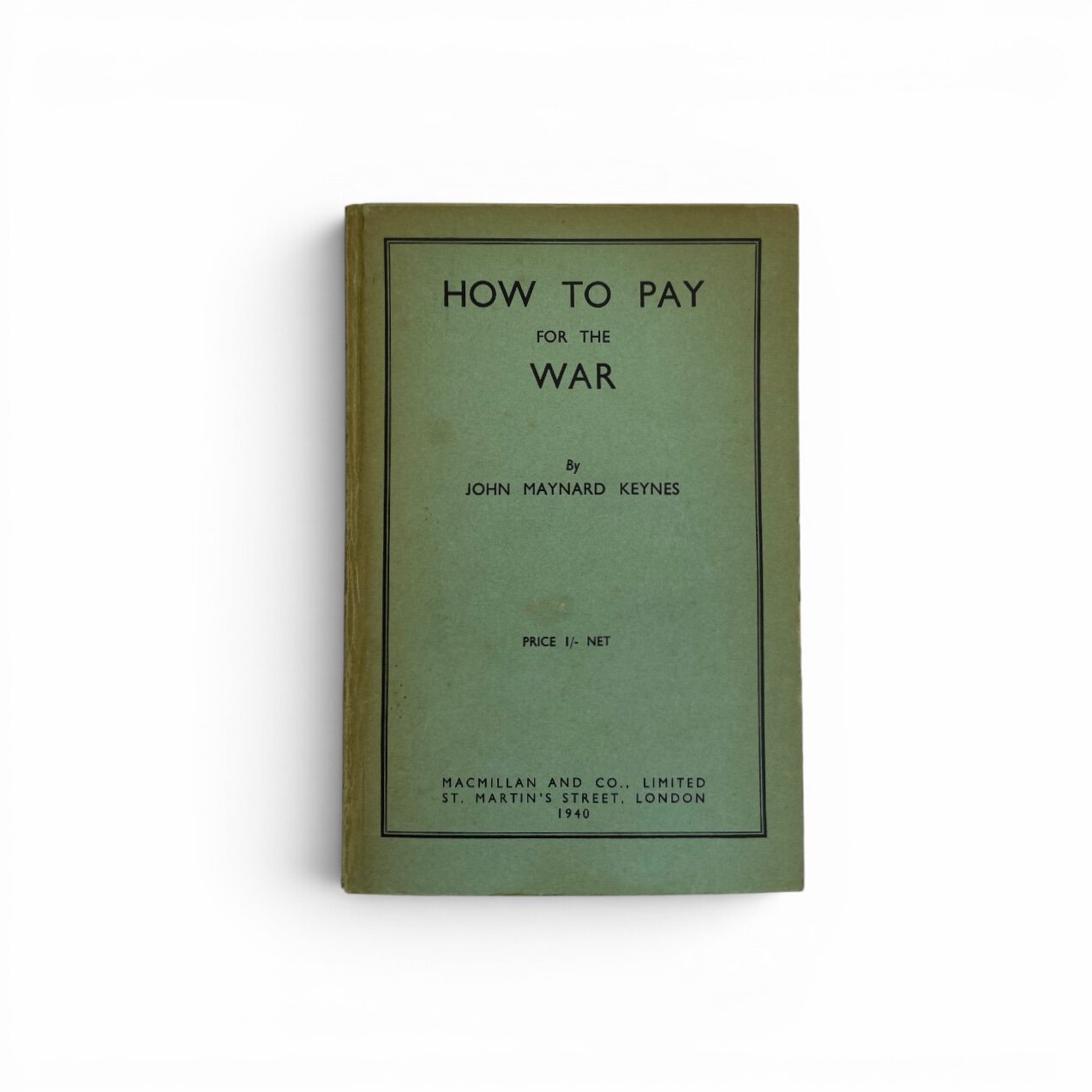
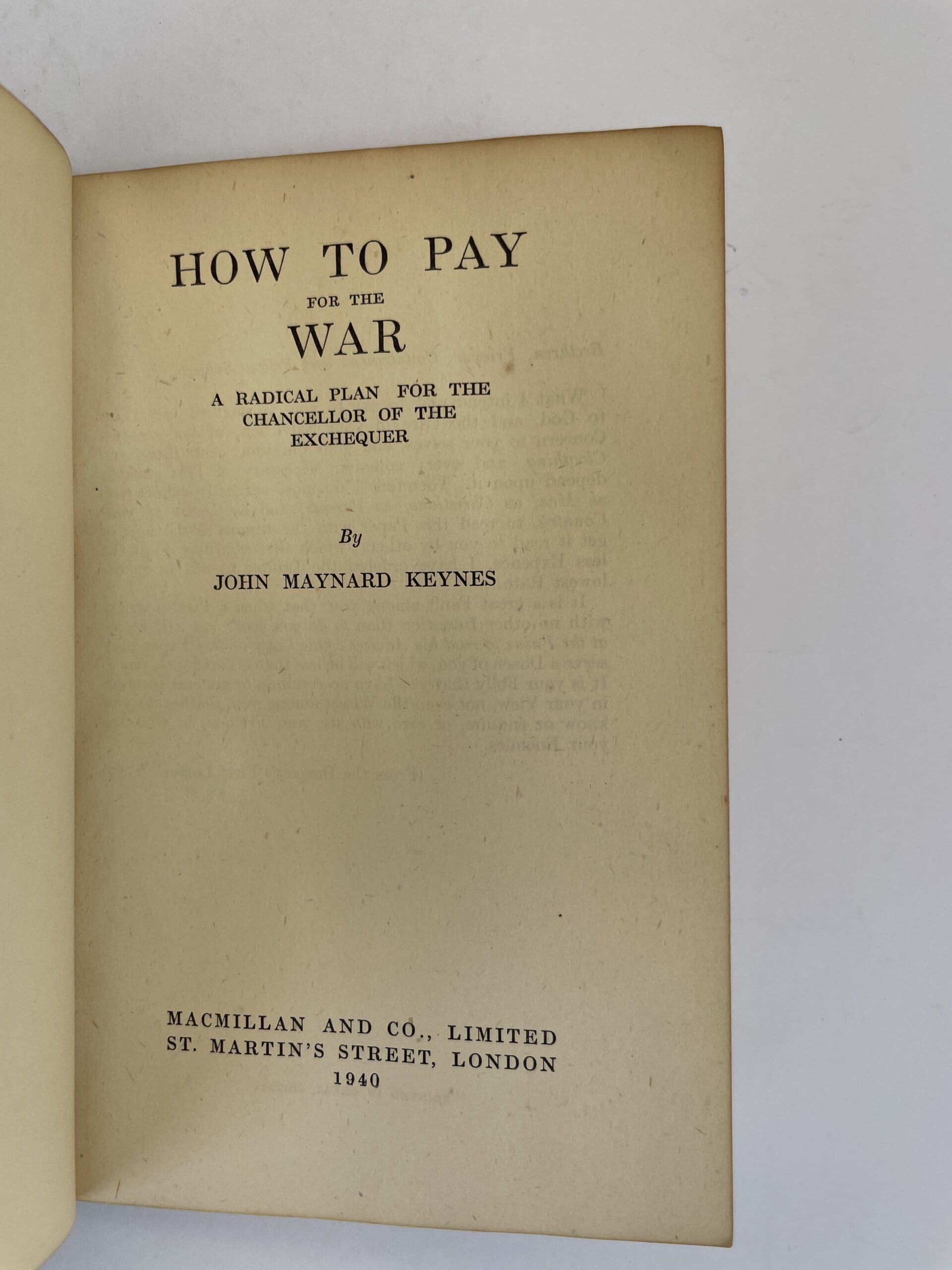
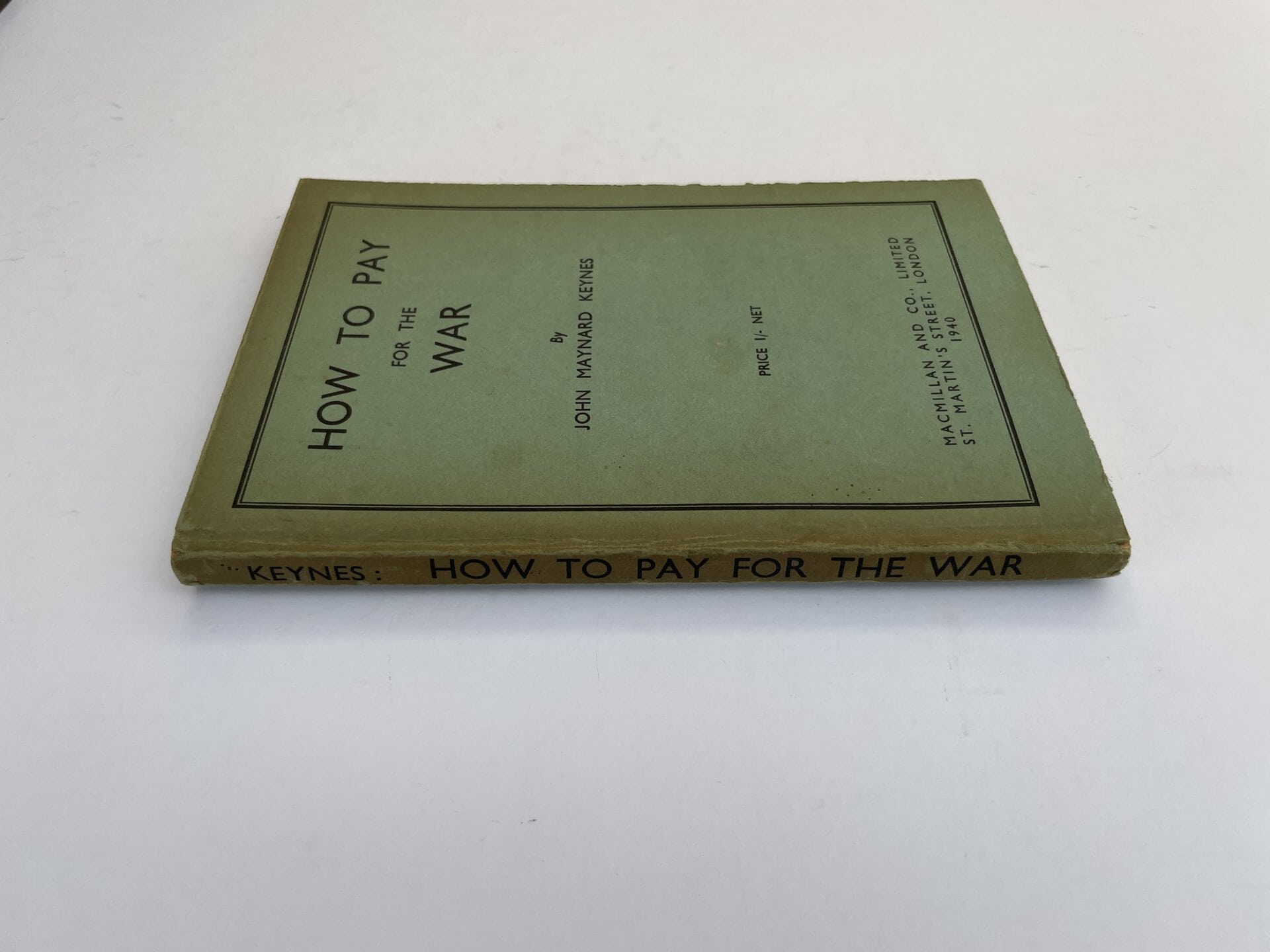
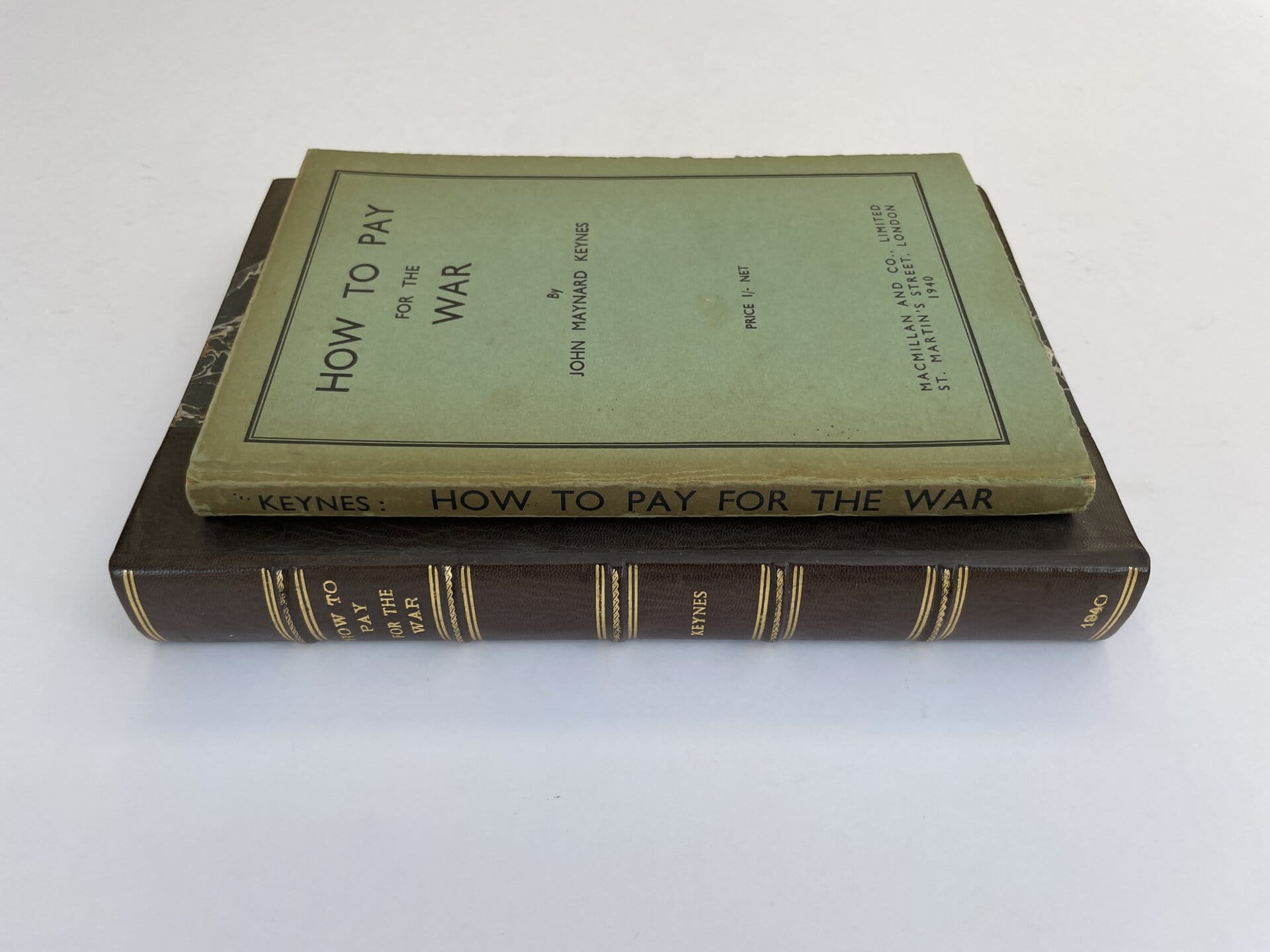
A first edition, first printing, published by Macmillan and Co. in 1940. This, the uncorrected version of Keynes’s attempt to “reconcile the demands of War and the claims of private consumption”. Bound in the original green card boards lettered and with panel to front cover in black. Light browning and minor rubbing to spine and extremities. A very good book. Housed in a custom-made clamshell box with marbled paper interior and three-quarter leather.
A corrected version, issued in orange printed boards, was published a few months later. In arguably his most successful work of persuasion, Keynes applies his General Theory to the wartime economy. He advocates a system of compulsory saving – euphemistically termed “deferred pay” (p. 30). “Apart from suggesting ways of adding greatly to the financial resources of the government, this inaugurated the idea of an iron ration at low, fixed prices of a list of necessities in lower-income budgets, with government subsidies if required. He proposed also to assist families with low incomes by introducing family allowances payable directly to the mother”

(We don't keep all of our stock in the shop, so send us an email if you're planning a trip to see a particular author or book.)
- Description
Description
A first edition, first printing, published by Macmillan and Co. in 1940 This, the uncorrected version of Keynes’s attempt to “reconcile the demands of War and the claims of private consumption”.Bound in the original green card boards lettered and with panel to front cover in black. Light browning and minor rubbing to spine and extremities. A very good book. Housed in a custom-made clamshell box with marbled paper interior and three-quarter leather.
A corrected version, issued in orange printed boards, was published a few months later. In arguably his most successful work of persuasion, Keynes applies his General Theory to the wartime economy. He advocates a system of compulsory saving – euphemistically termed “deferred pay” (p. 30). “Apart from suggesting ways of adding greatly to the financial resources of the government, this inaugurated the idea of an iron ration at low, fixed prices of a list of necessities in lower-income budgets, with government subsidies if required. He proposed also to assist families with low incomes by introducing family allowances payable directly to the mother”