



Bertrand Russell – A Free Man’s Worship – With A Special Preface By Bertrand Russell – First US Edition 1923

£125.00
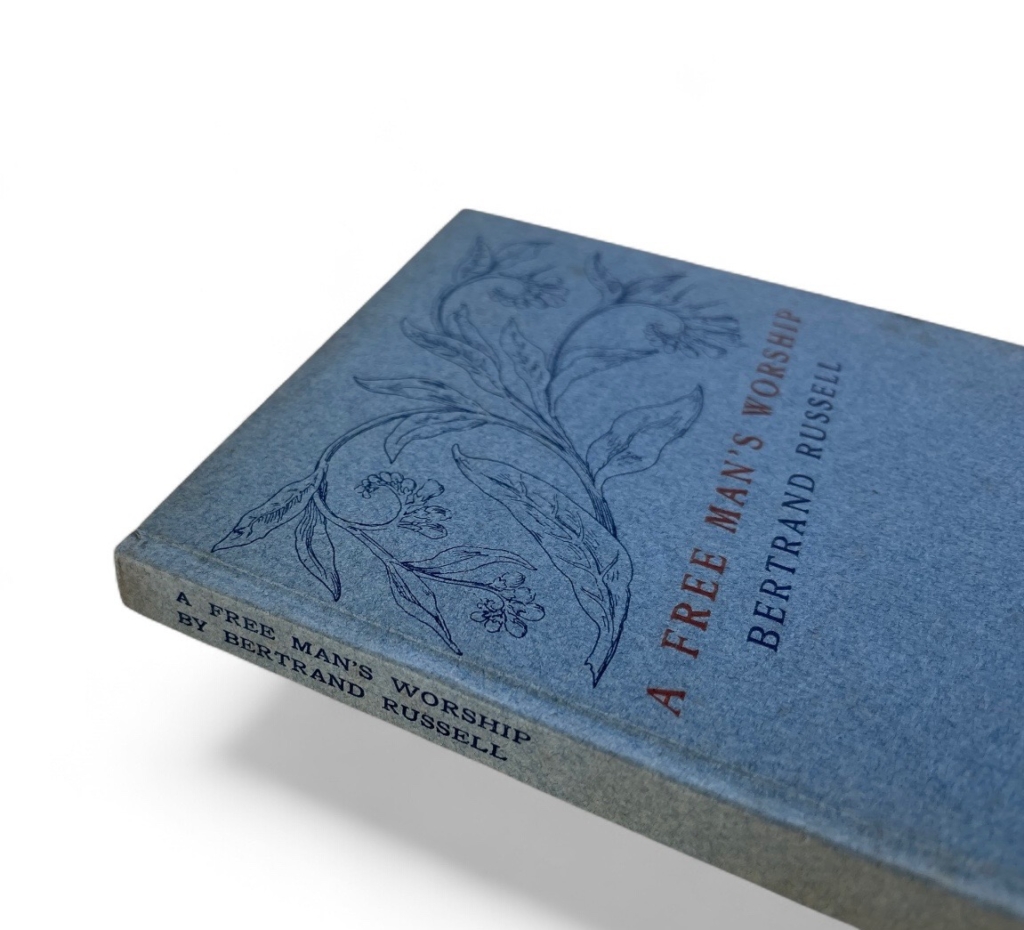
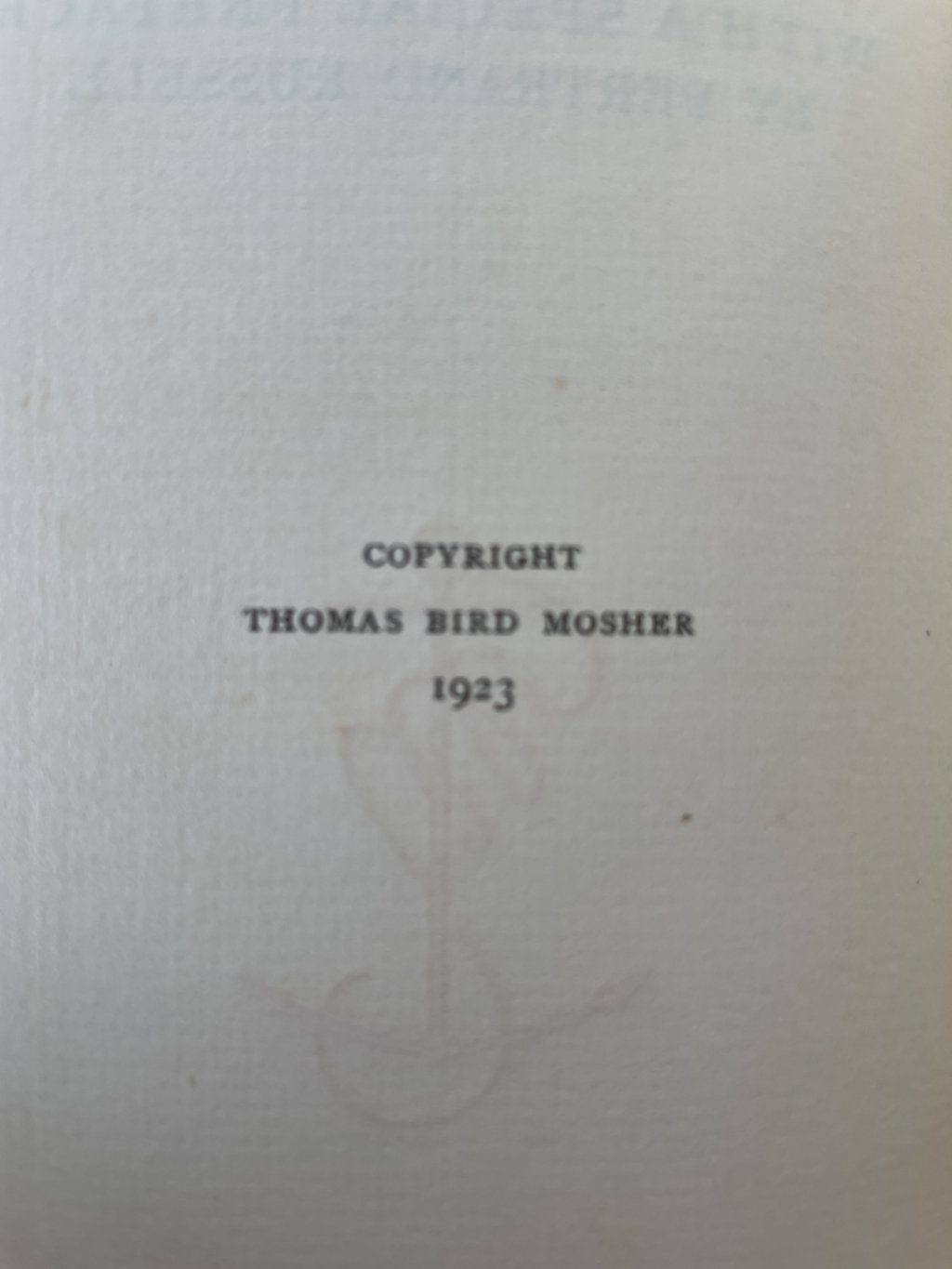
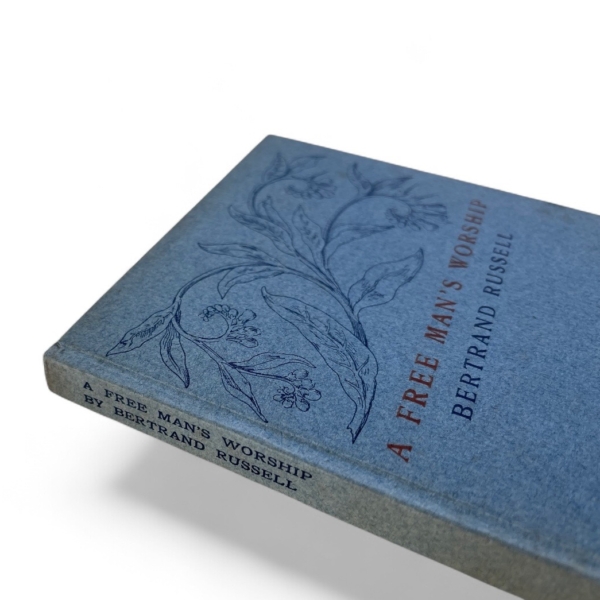
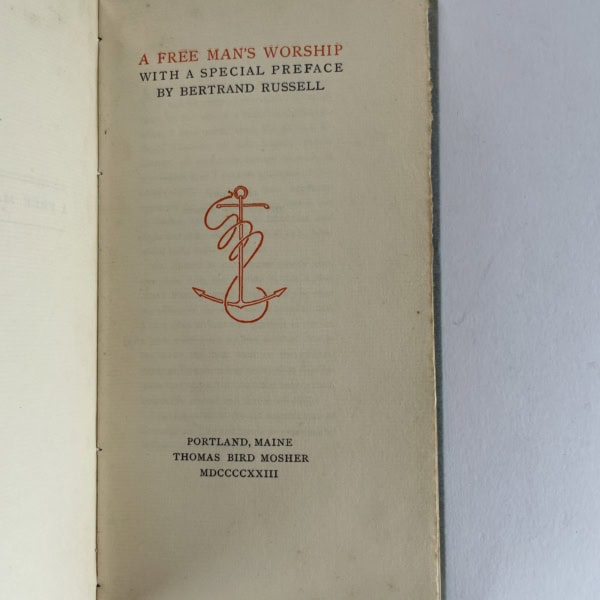
First US edition, first printing of A Free Man’s Worship by Bertrand Russell, published by Thomas Bird Mosher, Portland, Maine in 1923, published in a limited edition of 950. A near fine copy, hard boards bound in grey-blue paper with fading to the spine and extremities, small bump to rear edge of spine, some light internal spotting to front and rear paste-downs, an Ex Libris bookplate to front paste-down and toning to the rough trimmed text block.
A Free Man’s Worship by Bertrand Russell explores humanity’s place in a purposeless universe governed by blind forces. Rejecting religious dogma and divine authority, Russell argues that humans must create their own meaning and values through reason, compassion and the pursuit of beauty. Despite cosmic indifference, he celebrates human dignity found in conscious defiance and moral integrity. True “worship,” he concludes, lies in freely embracing truth and goodness, not in submission to fear or superstition.
(We don't keep all of our stock in the shop, so send us an email if you're planning a trip to see a particular author or book.)
- Description
Description
First US edition, first printing of A Free Man’s Worship by Bertrand Russell, published by Thomas Bird Mosher, Portland, Maine in 1923, published in a limited edition of 950. A near fine copy, hard boards bound in grey-blue paper with fading to the spine and extremities, small bump to rear edge of spine, some light internal spotting to front and rear paste-downs, an Ex Libris bookplate to front paste-down and toning to the rough trimmed text block.
A Free Man’s Worship by Bertrand Russell explores humanity’s place in a purposeless universe governed by blind forces. Rejecting religious dogma and divine authority, Russell argues that humans must create their own meaning and values through reason, compassion and the pursuit of beauty. Despite cosmic indifference, he celebrates human dignity found in conscious defiance and moral integrity. True “worship,” he concludes, lies in freely embracing truth and goodness, not in submission to fear or superstition.
You may also like…
-
Contemporary Chinese Paintings – Lubor Hájek, Adolf Hoffmeister, Eva Rychterová – SIGNED by Vera Brittain and others at Peace News
Original price was: £1,250.00.£750.00Current price is: £750.00.