
J.R.R Tolkien – The Lord of the Rings – All First Edition, First Printings

£85,000.00
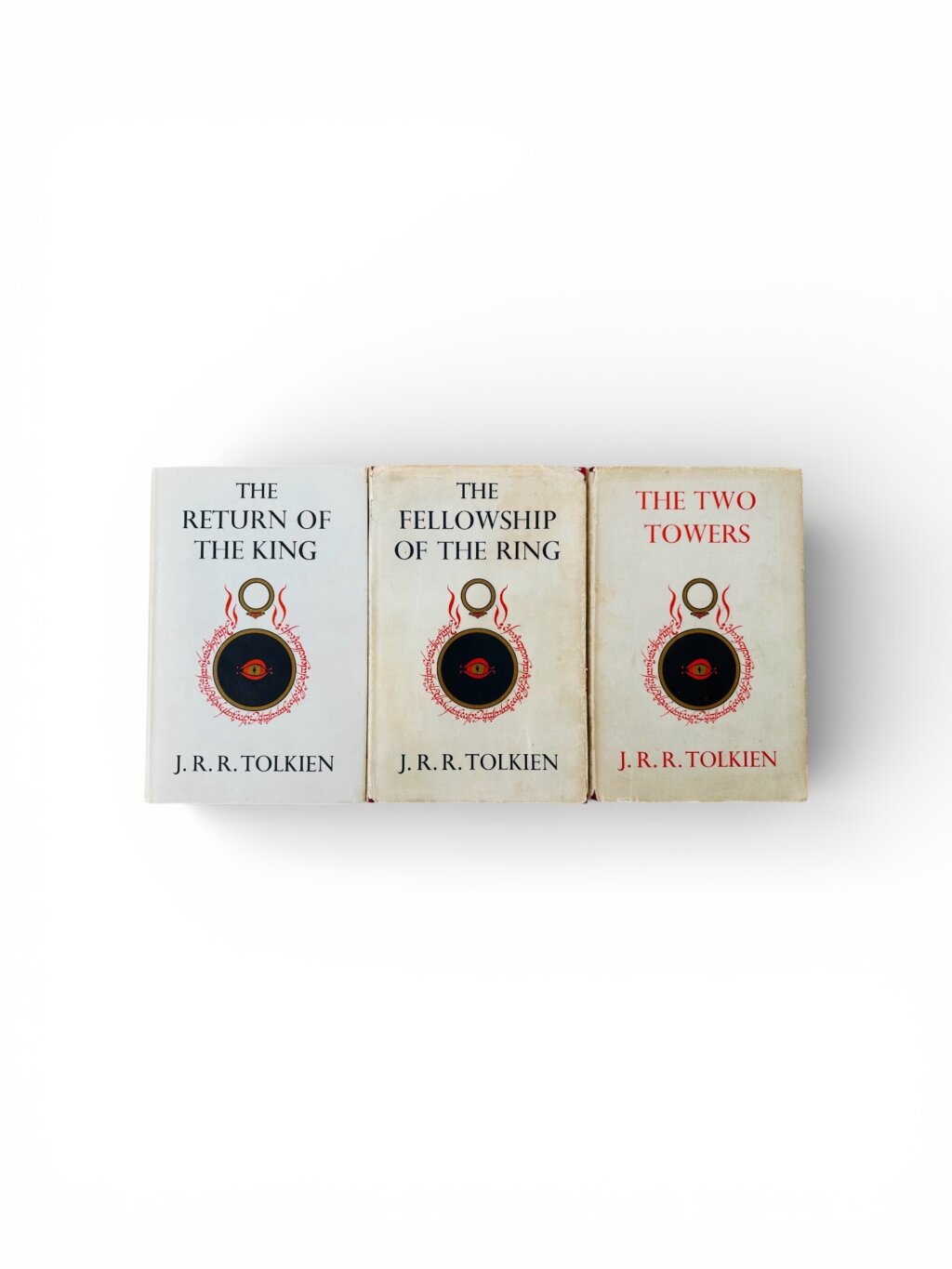
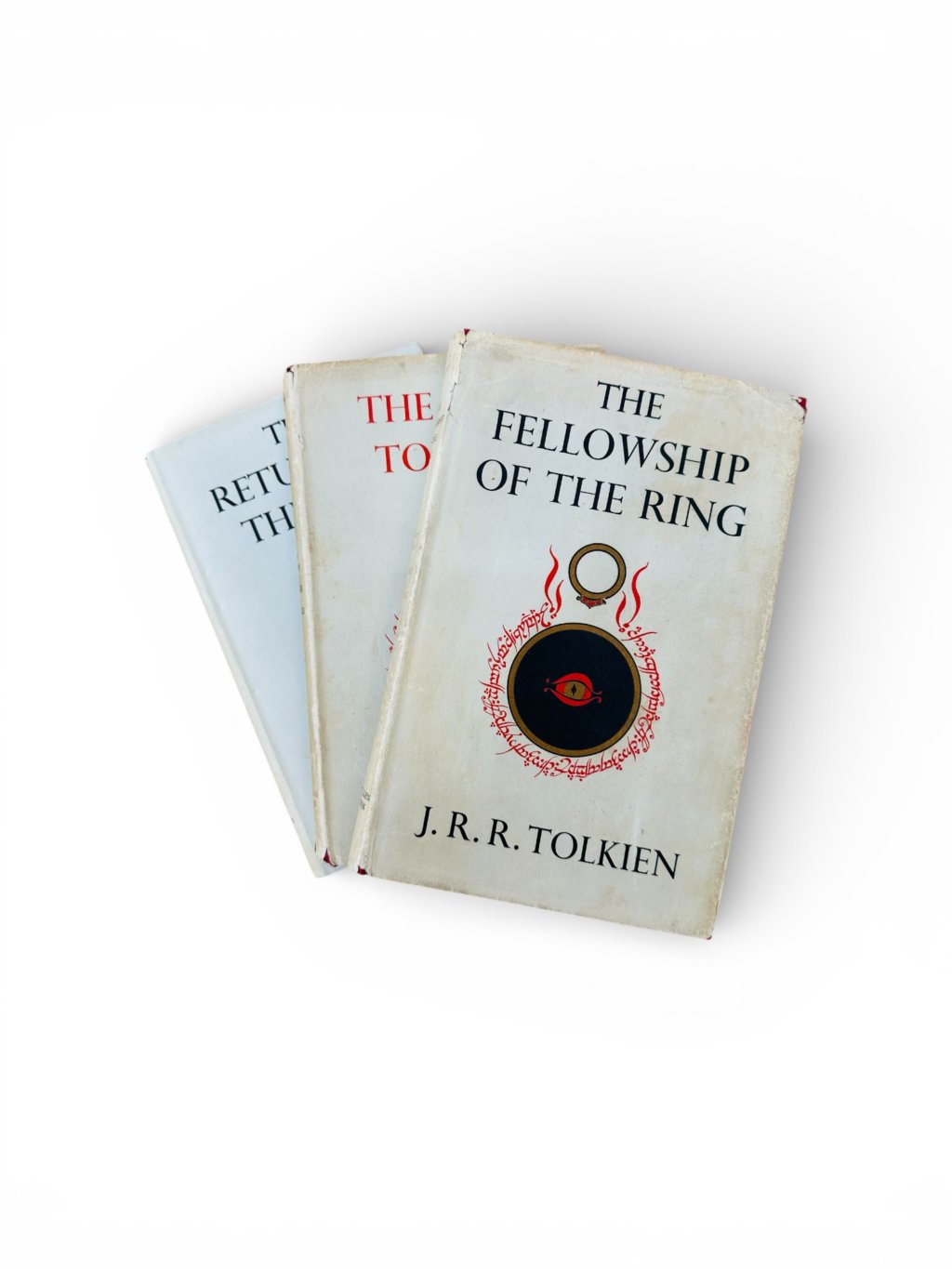
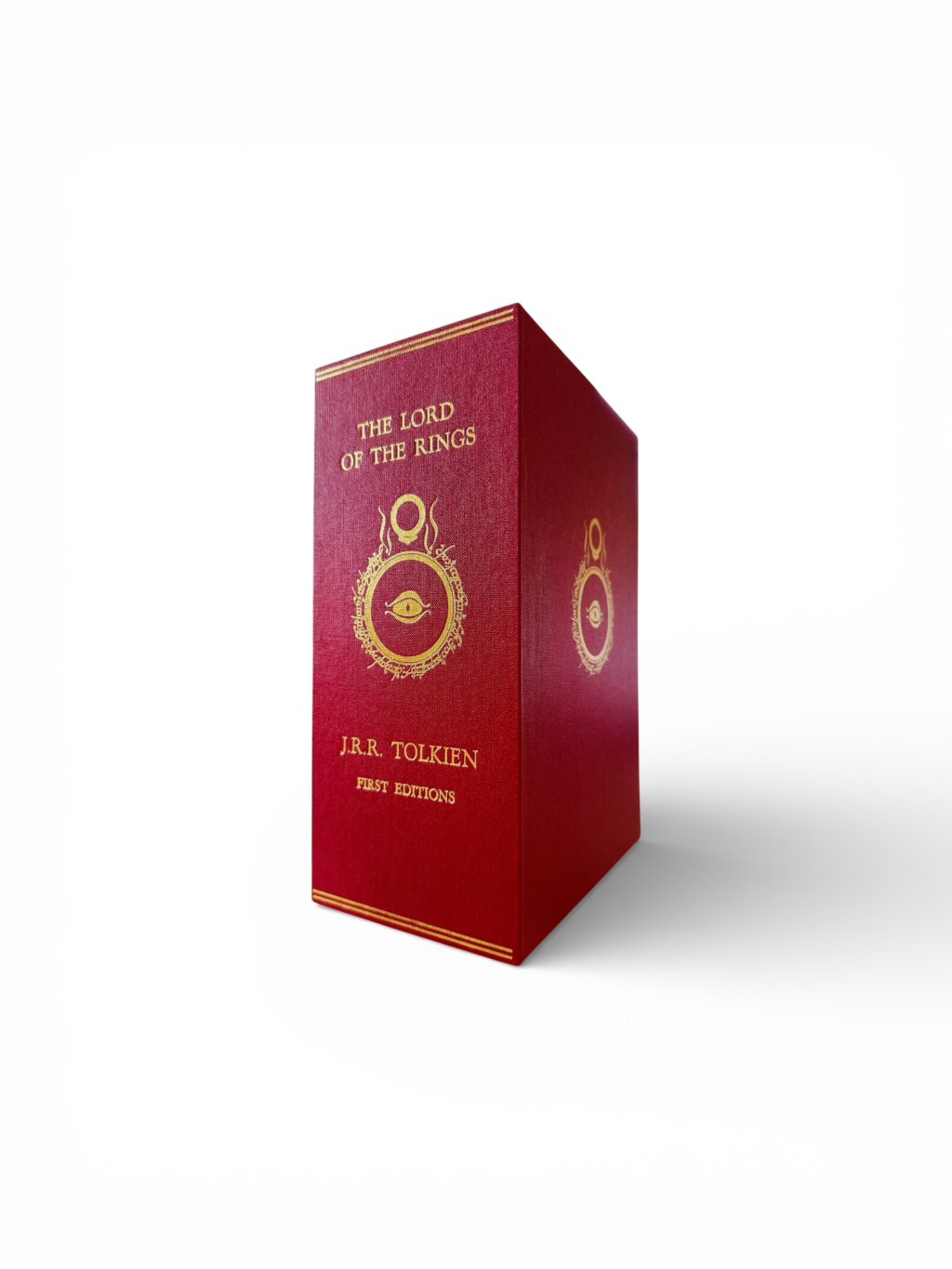
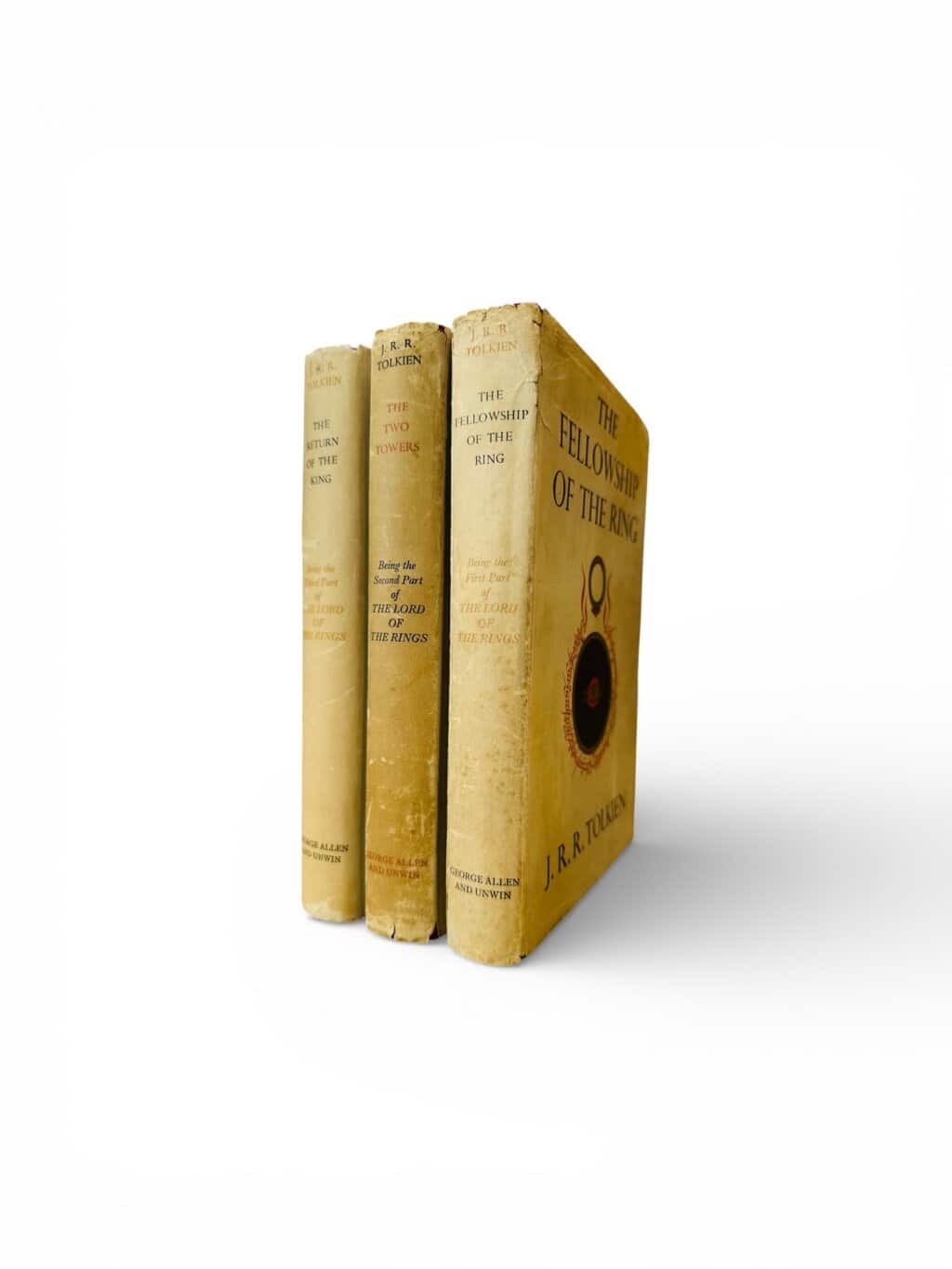
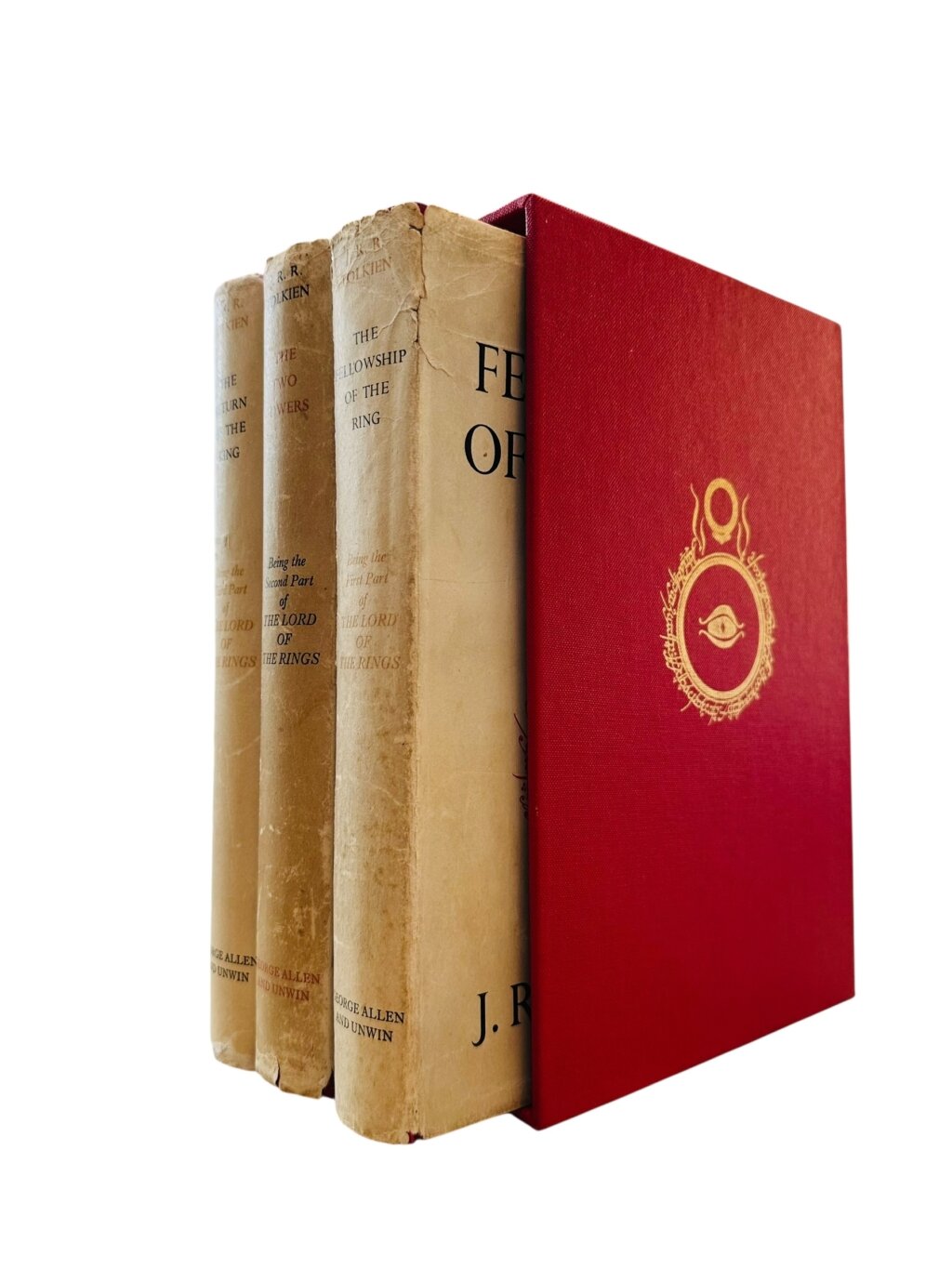
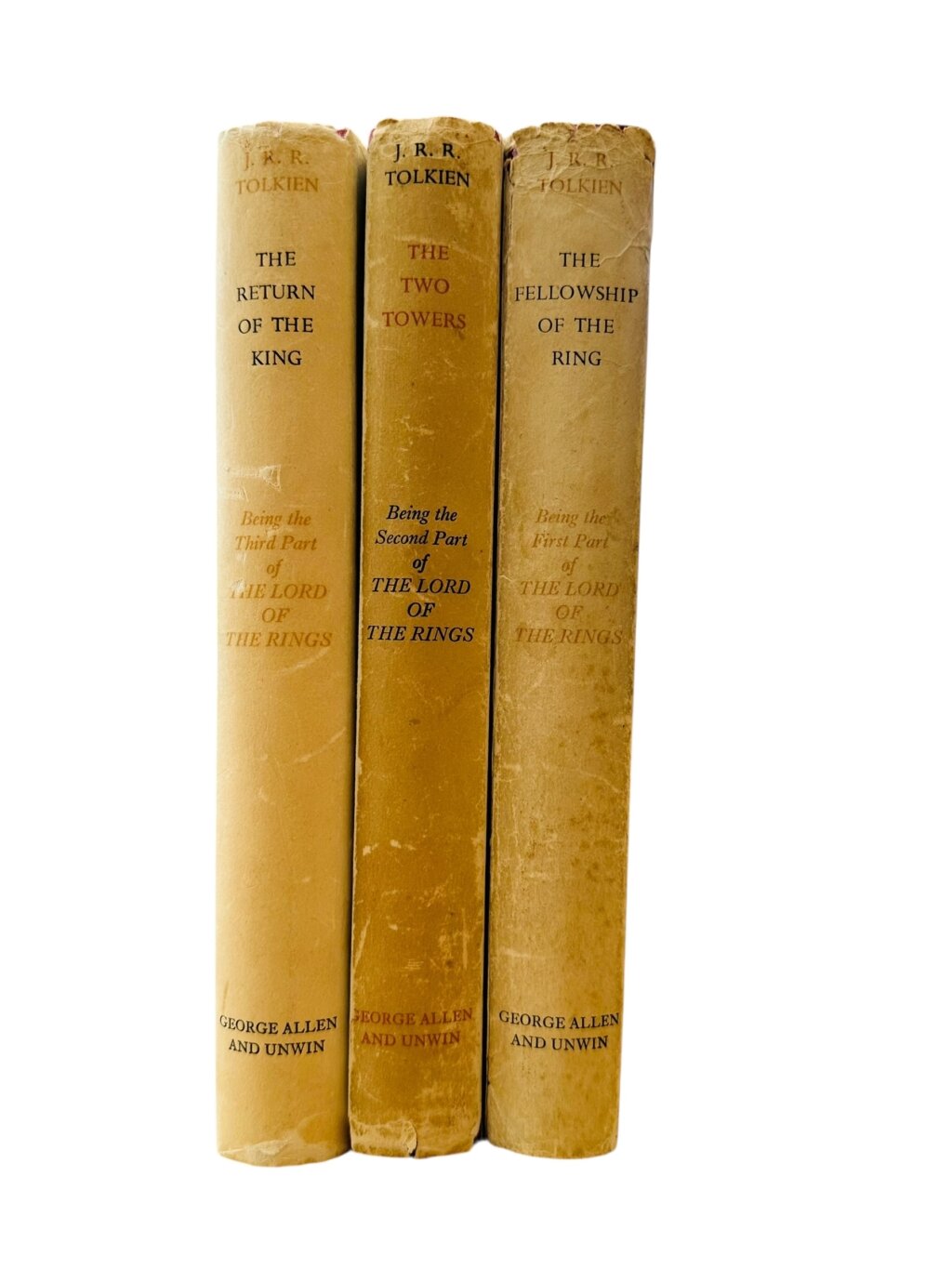
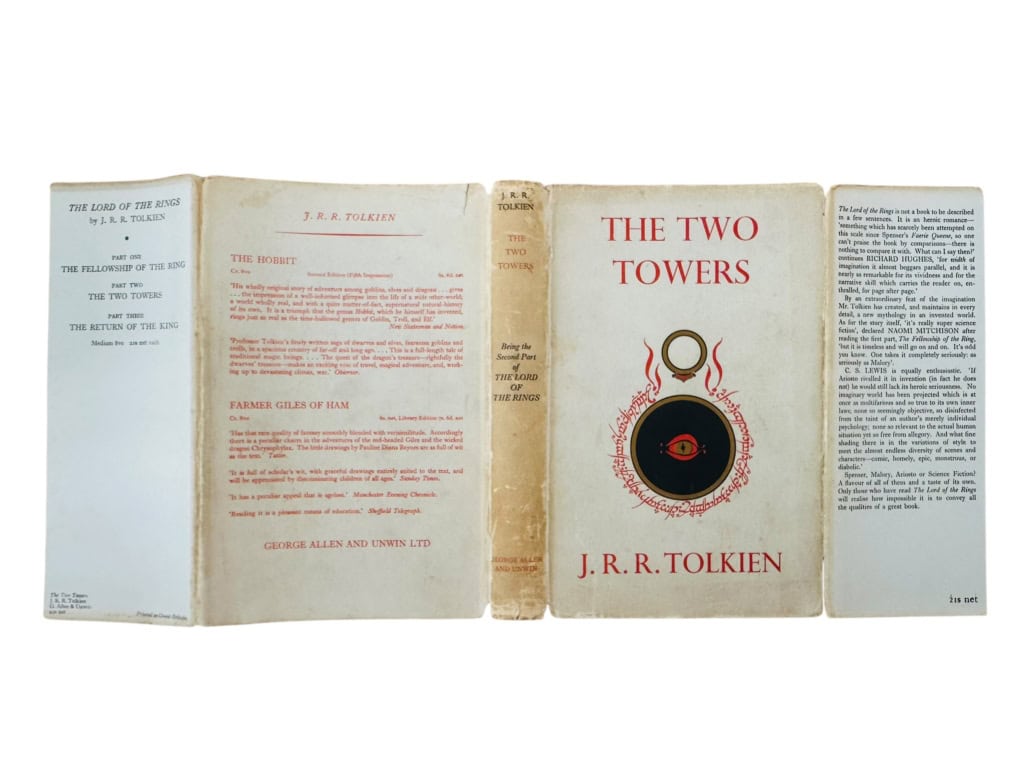
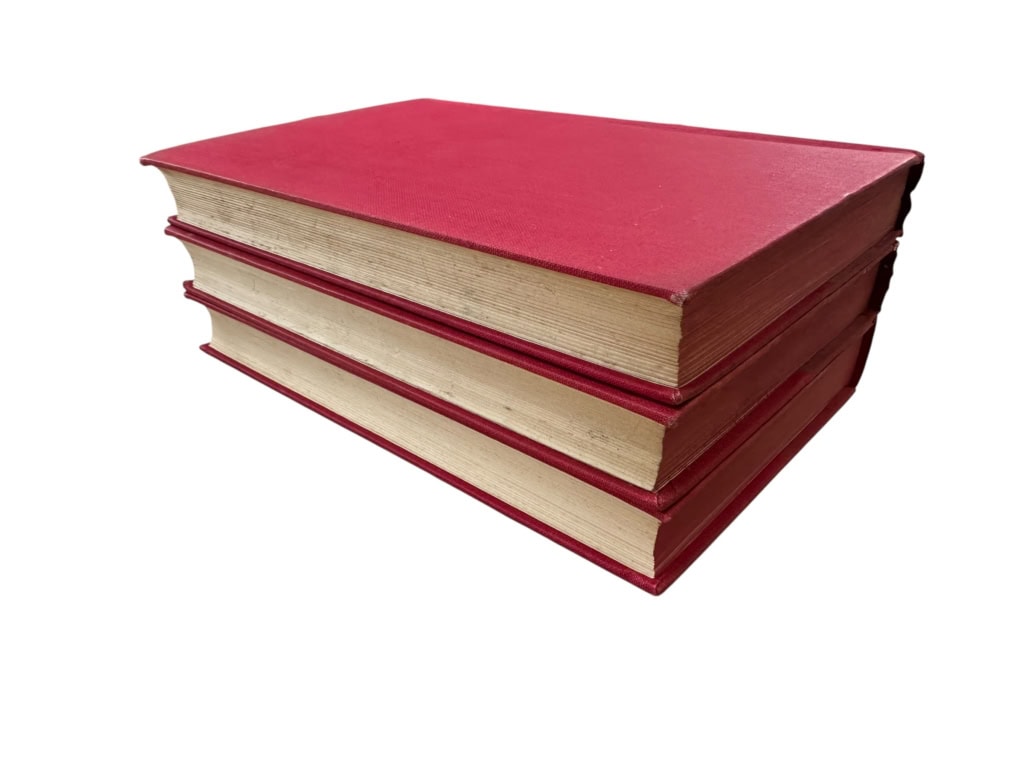
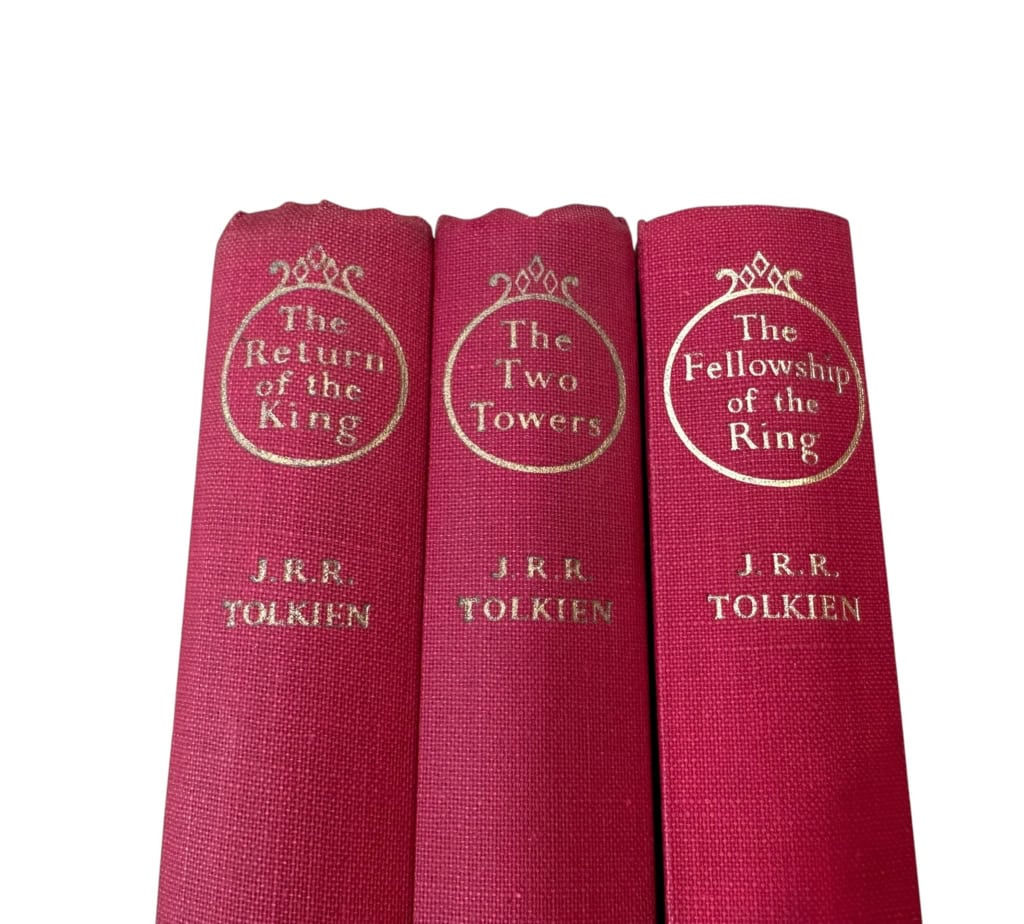
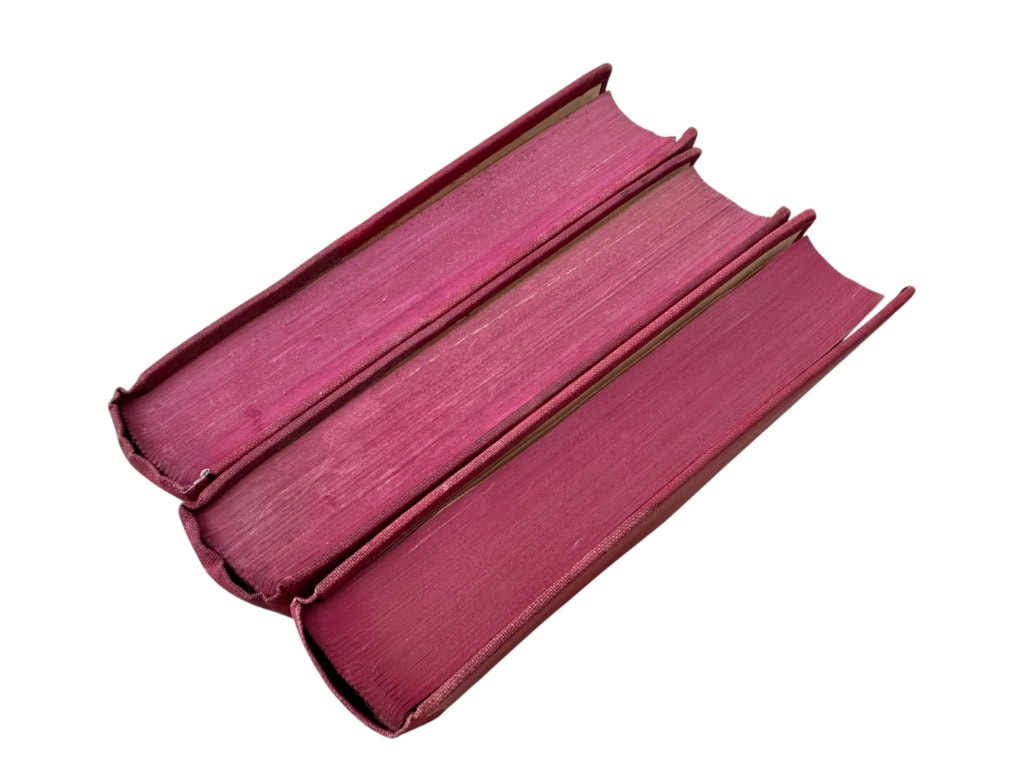
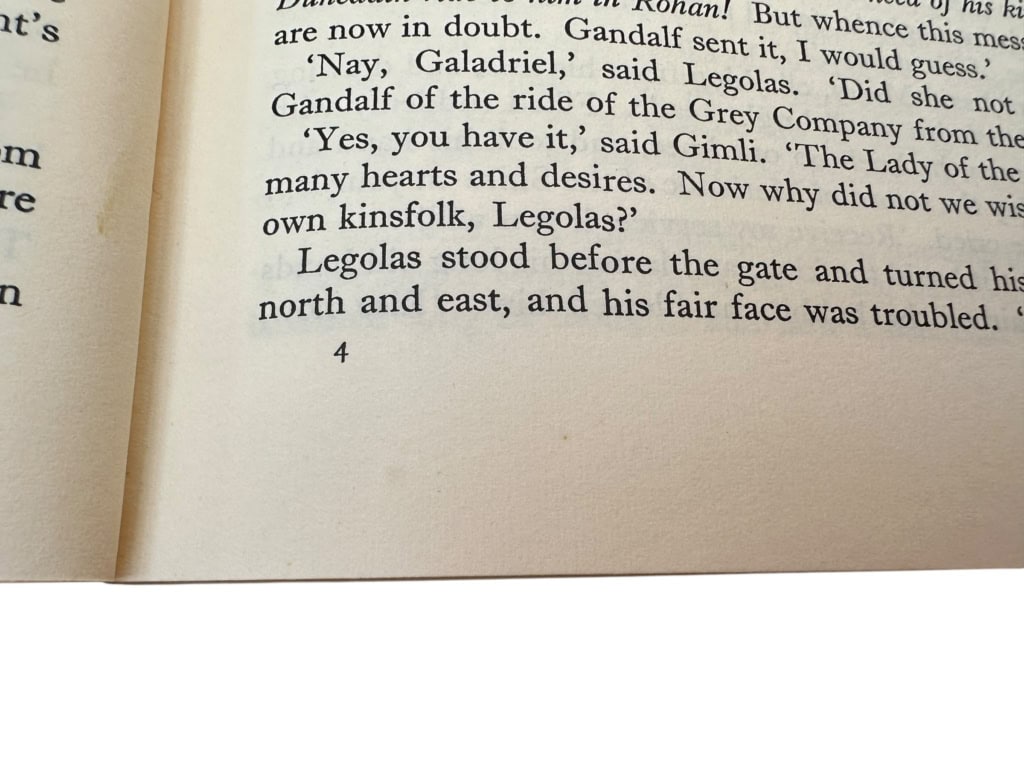
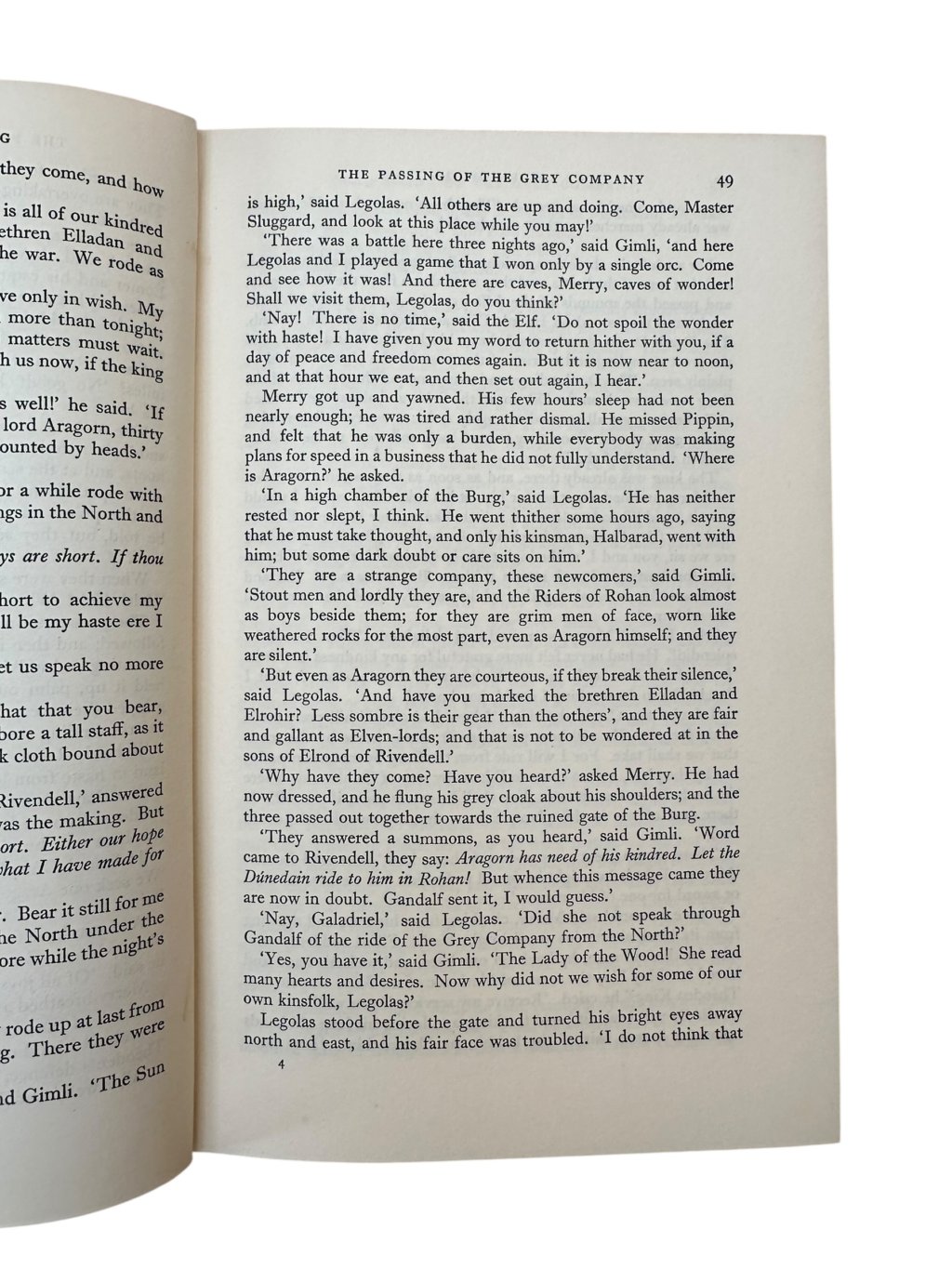
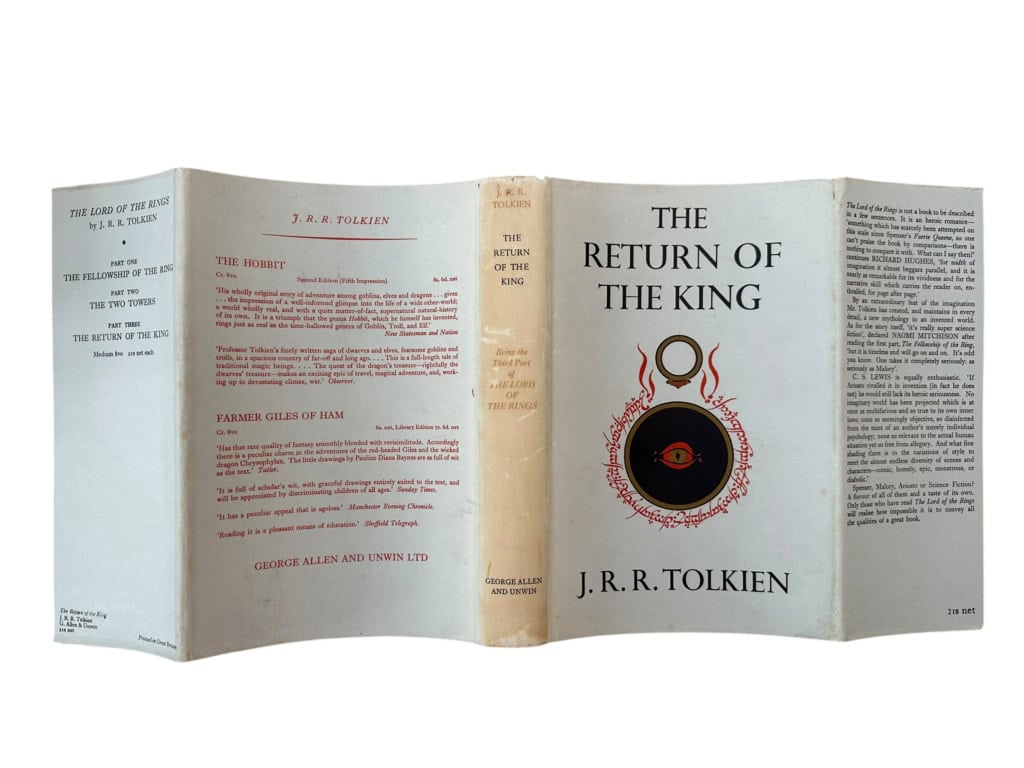
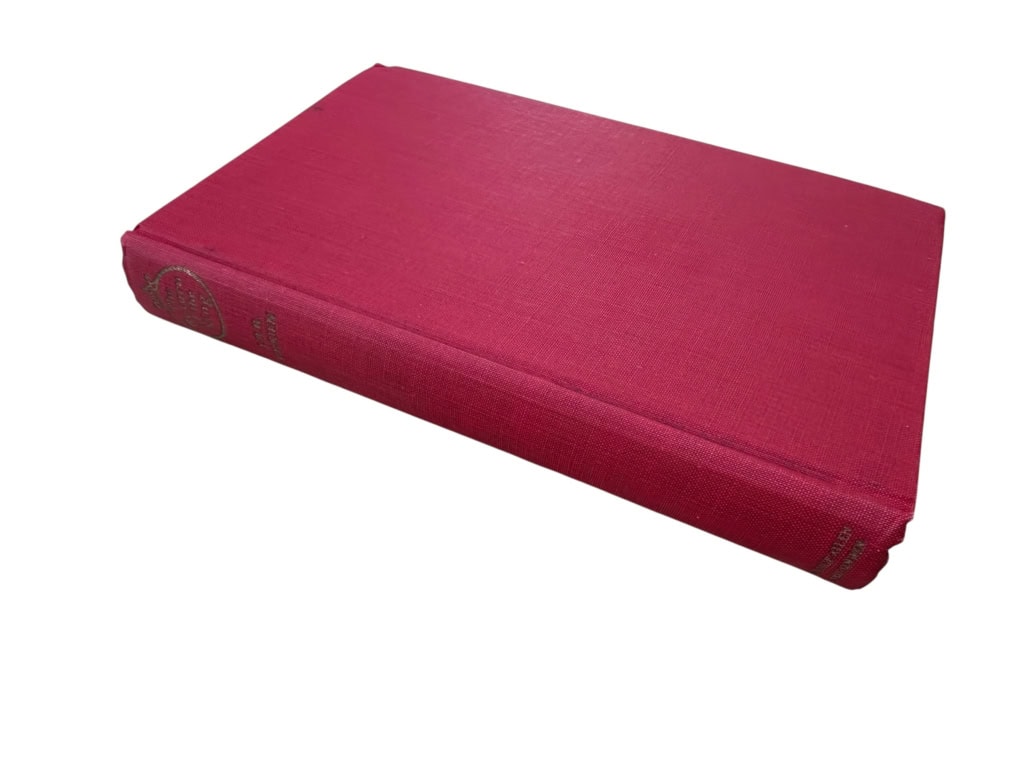
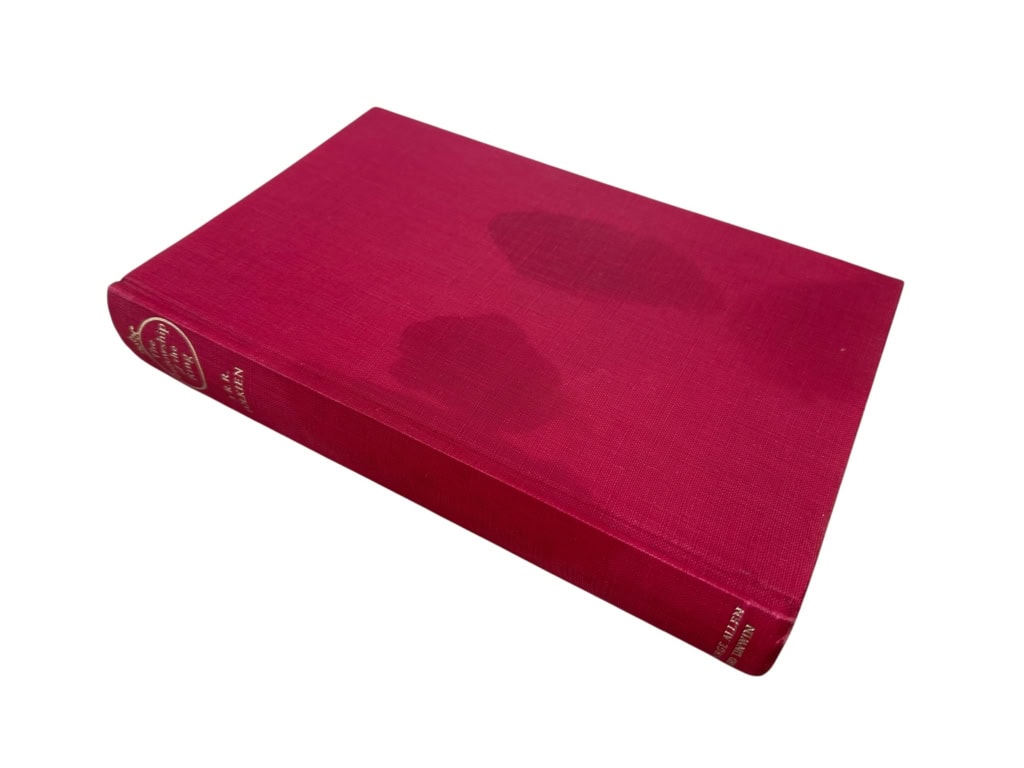
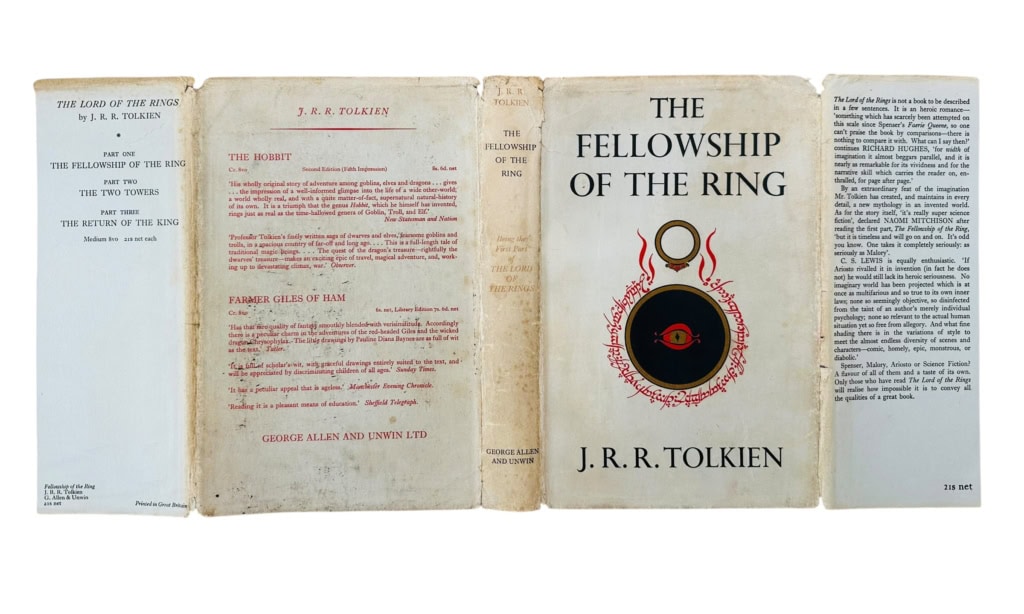
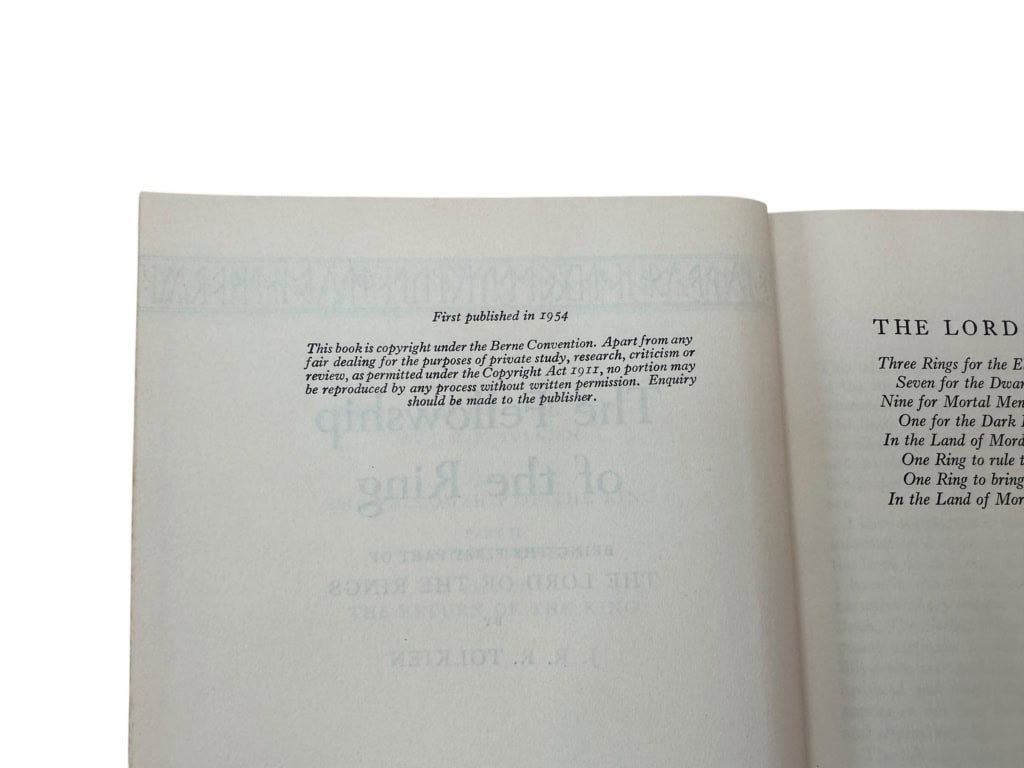
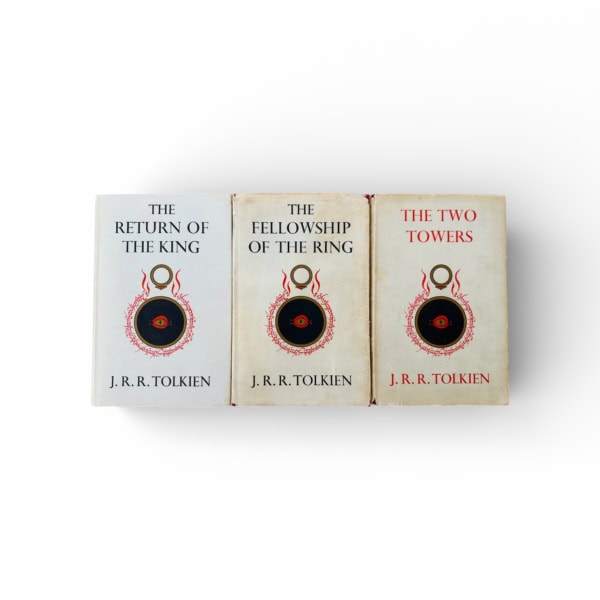
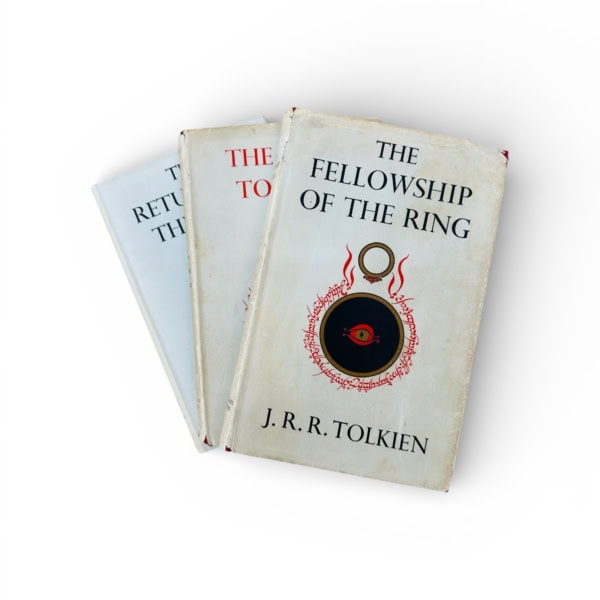
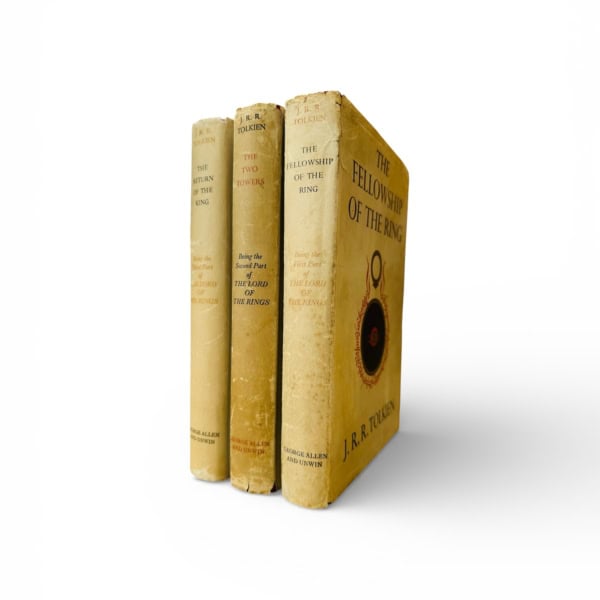
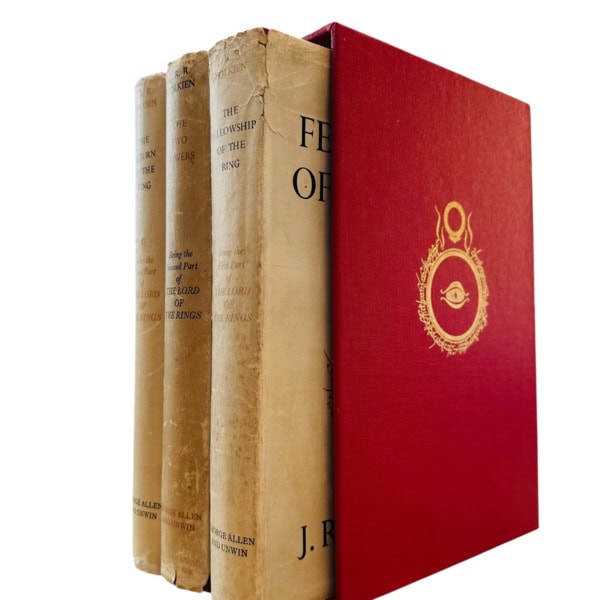
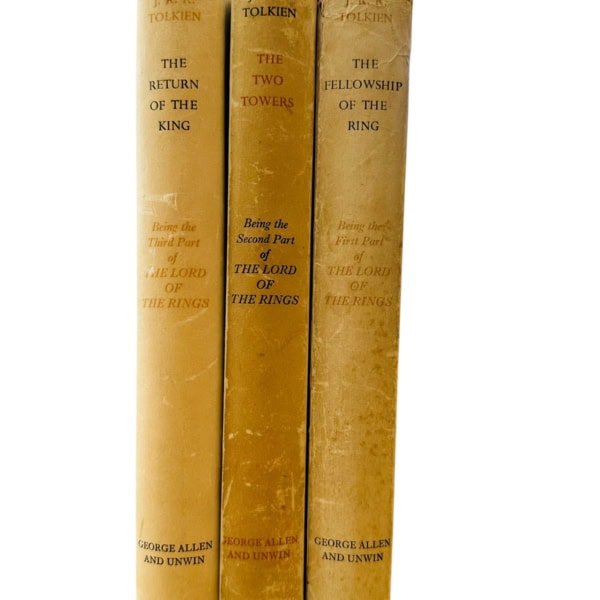
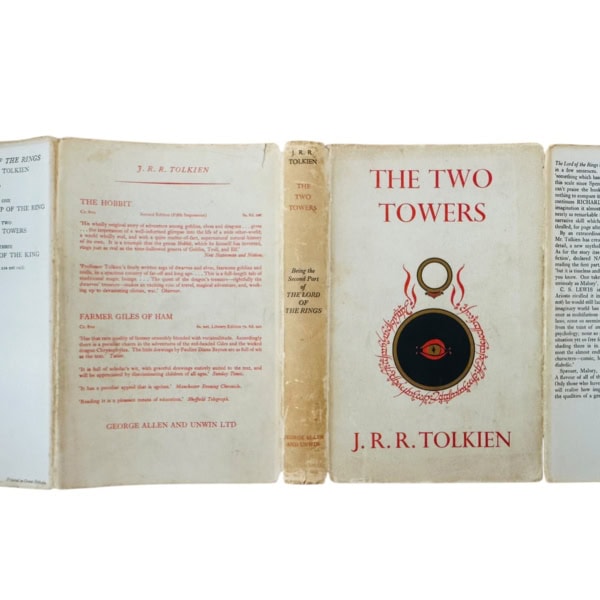
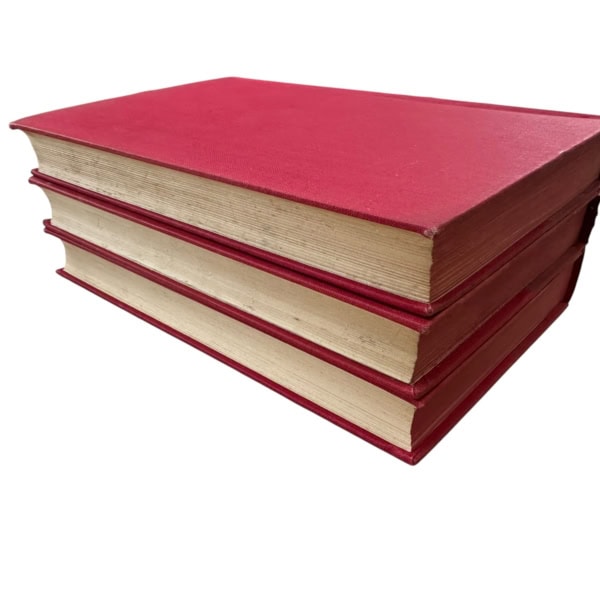
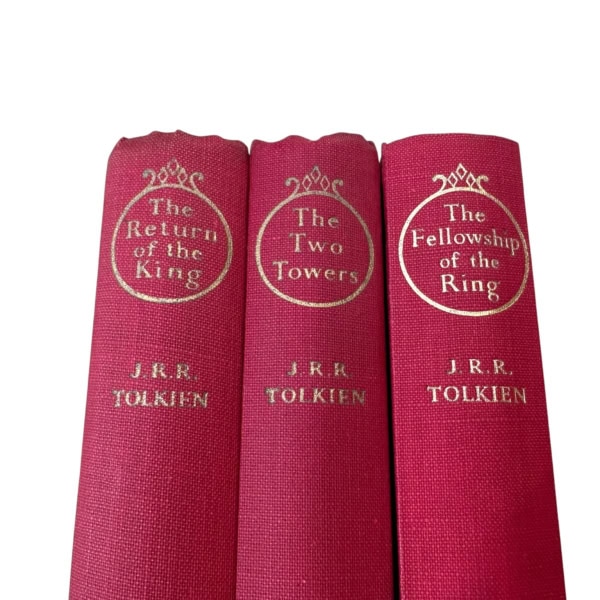
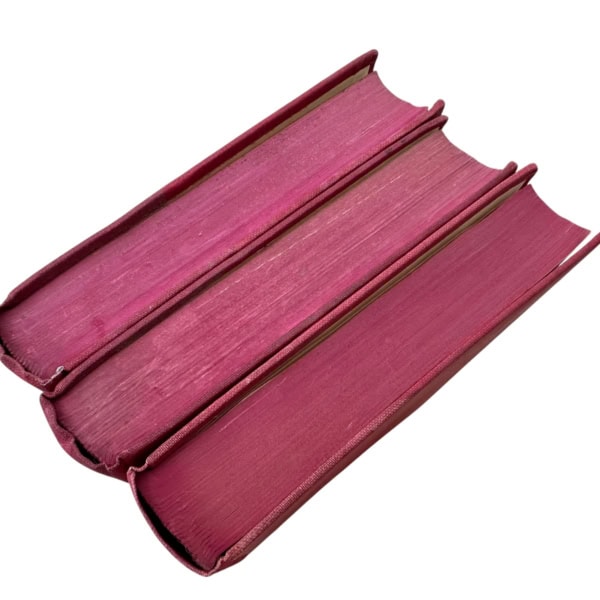
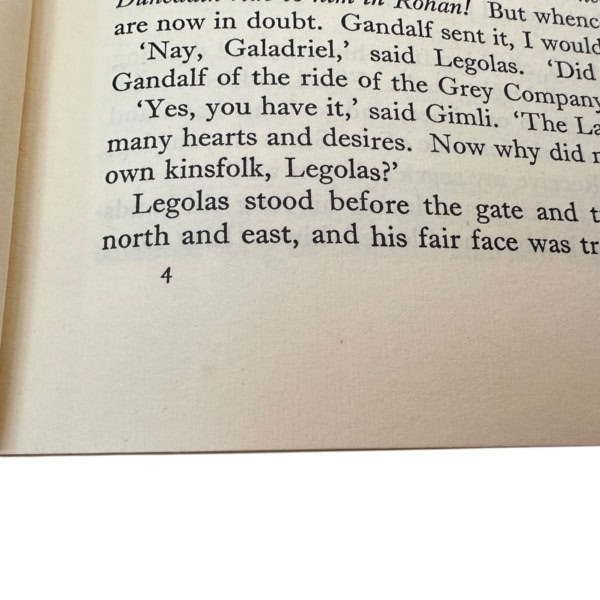
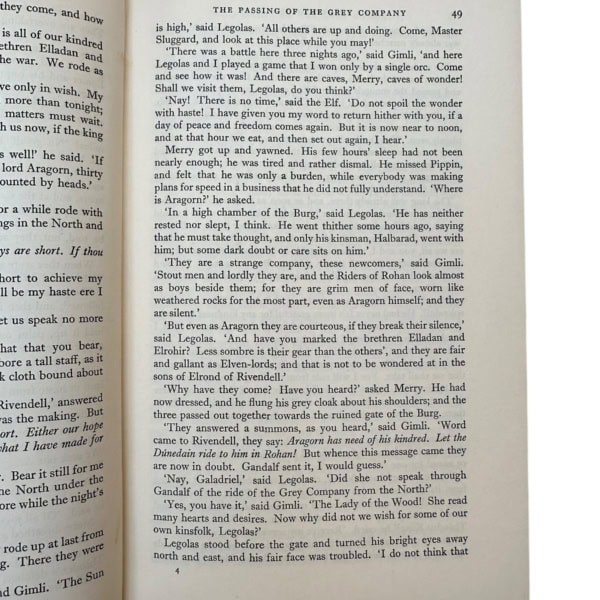
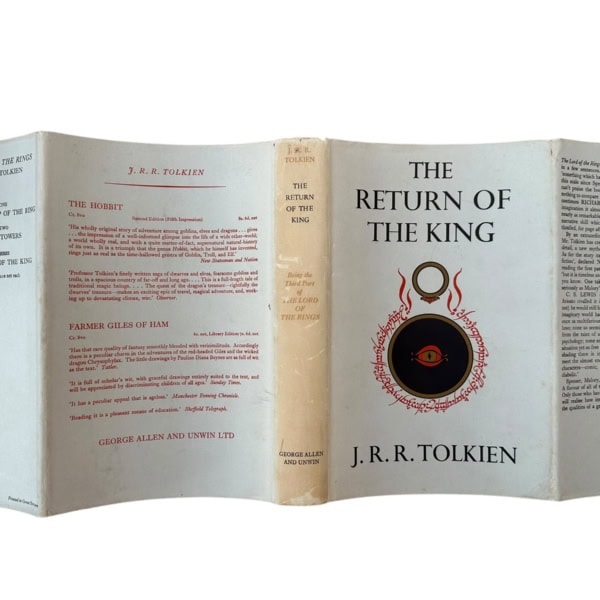
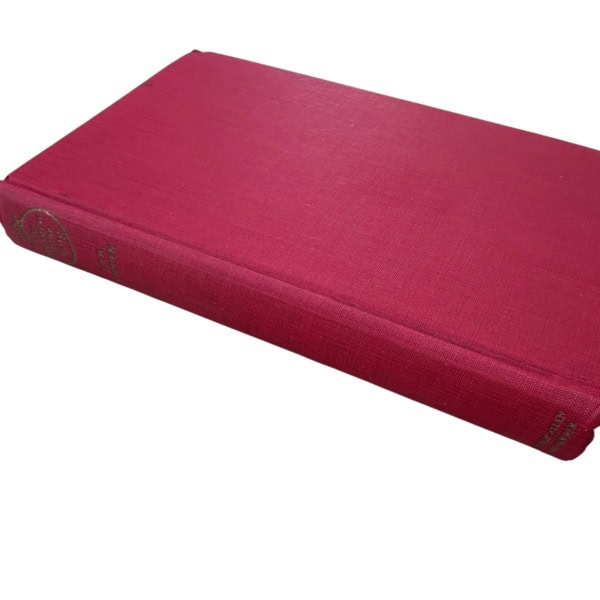
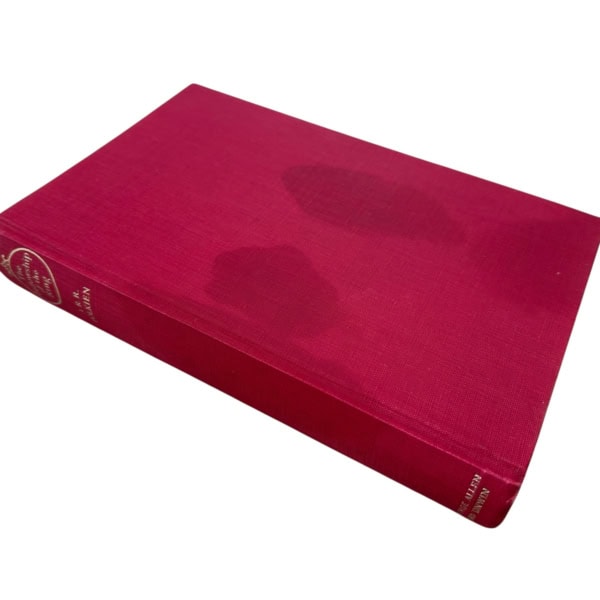
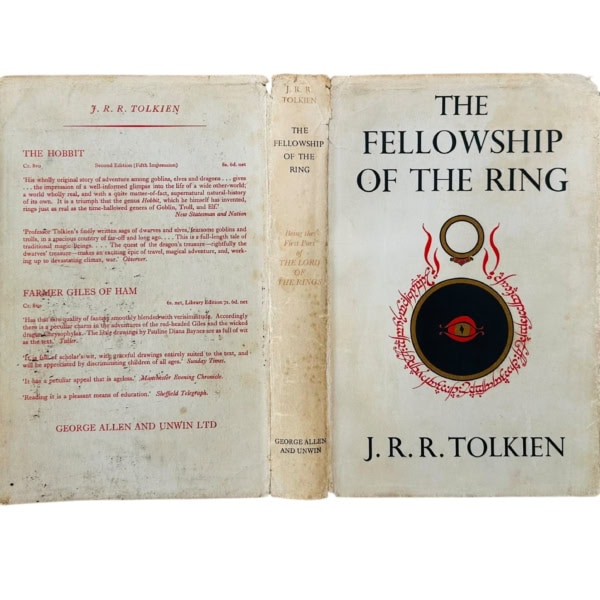
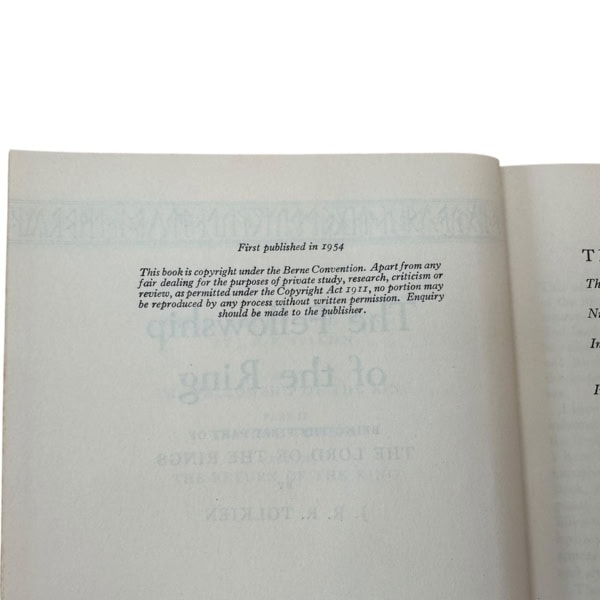
3 volumes, 8vo (223 x 145 mm). Half-titles. Folding maps printed in red and black at rear of each volume. Original publisher’s red cloth, spines lettered and decorated in gilt with Tolkien’s ring device, top edges stained red; original first issue dust-jackets, priced 21s net (spines toned, minor chipping and creasing at extremities, light surface soiling, central designs complete and unrestored). — The Fellowship of the Ring (1954), [vi], 423, [1] pp., “First published in 1954” to verso; The Two Towers (1954), [vi], 352 pp., “First published in 1954” to verso; The Return of the King (1955), [vi], 416 pp., “First published in 1955” to verso, text complete with Appendix and Index, the name “Legolas” in its characteristic staggered typographical setting, corrected in later impressions. All three volumes retaining correct early maps and red top stain. Bindings firm and square, cloth bright with light rubbing at spine ends, volume one with thin stains to the front board, internally clean and without inscriptions. Rear panels with advertisements referencing The Hobbit (Second Edition, Fifth Impression) and Farmer Giles of Ham, consistent with early states. A very good, unrestored first impression set.
Hammond & Anderson A5a, A6a, A7a; Currey p. 508; Bleiler p. 509.
When The Lord of the Rings appeared between 1954 and 1955, it was issued quietly, in modest print runs, by the London publisher George Allen & Unwin. Tolkien’s achievement was not merely narrative but architectural. Drawing upon philology, medieval literature, mythology, and his own linguistic inventions, he constructed a secondary world of unprecedented depth and internal coherence. Middle-earth was not a setting but a civilisation: languages, genealogies, cosmology, and moral philosophy interwoven with epic narrative. In doing so, Tolkien effectively established the template for modern high fantasy.
The trilogy’s publication history underscores its rarity. The first impression of The Fellowship of the Ring numbered only 3,000 copies; The Two Towers followed at 3,250; The Return of the King at 7,000. Survival rates in original, unrestored dust-jackets were never high.
More than seventy years after publication, The Lord of the Rings remains one of the most widely read and culturally resonant works of the modern era.
The present set — preserved in its original cloth and correctly priced dust-jackets — represents not only a landmark of imaginative literature but a cornerstone of serious book collecting.
(We don't keep all of our stock in the shop, so send us an email if you're planning a trip to see a particular author or book.)
- Description
Description
3 volumes, 8vo (223 x 145 mm). Half-titles. Folding maps printed in red and black at rear of each volume. Original publisher’s red cloth, spines lettered and decorated in gilt with Tolkien’s ring device, top edges stained red; original first issue dust-jackets, priced 21s net (spines toned, minor chipping and creasing at extremities, light surface soiling, central designs complete and unrestored). — The Fellowship of the Ring (1954), [vi], 423, [1] pp., “First published in 1954” to verso; The Two Towers (1954), [vi], 352 pp., “First published in 1954” to verso; The Return of the King (1955), [vi], 416 pp., “First published in 1955” to verso, text complete with Appendix and Index, the name “Legolas” in its characteristic staggered typographical setting, corrected in later impressions. All three volumes retaining correct early maps and red top stain. Bindings firm and square, cloth bright with light rubbing at spine ends, volume one with thin stains to the front board, internally clean and without inscriptions. Rear panels with advertisements referencing The Hobbit (Second Edition, Fifth Impression) and Farmer Giles of Ham, consistent with early states. A very good, unrestored first impression set.
Hammond & Anderson A5a, A6a, A7a; Currey p. 508; Bleiler p. 509.
When The Lord of the Rings appeared between 1954 and 1955, it was issued quietly, in modest print runs, by the London publisher George Allen & Unwin. Tolkien’s achievement was not merely narrative but architectural. Drawing upon philology, medieval literature, mythology, and his own linguistic inventions, he constructed a secondary world of unprecedented depth and internal coherence. Middle-earth was not a setting but a civilisation: languages, genealogies, cosmology, and moral philosophy interwoven with epic narrative. In doing so, Tolkien effectively established the template for modern high fantasy.
The trilogy’s publication history underscores its rarity. The first impression of The Fellowship of the Ring numbered only 3,000 copies; The Two Towers followed at 3,250; The Return of the King at 7,000. Survival rates in original, unrestored dust-jackets were never high.
More than seventy years after publication, The Lord of the Rings remains one of the most widely read and culturally resonant works of the modern era.
The present set — preserved in its original cloth and correctly priced dust-jackets — represents not only a landmark of imaginative literature but a cornerstone of serious book collecting.