

Frank Herbert – Dune Messiah – First Edition 1971
£600.00
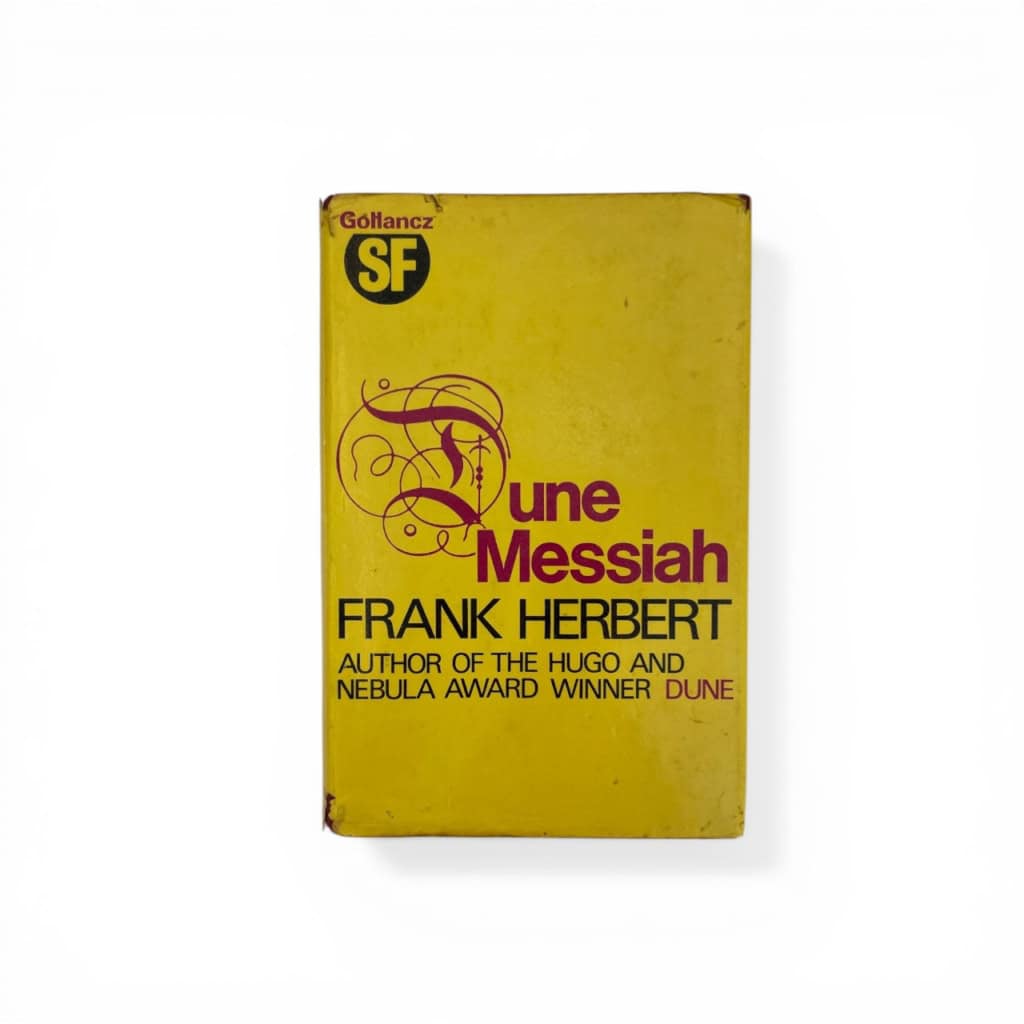
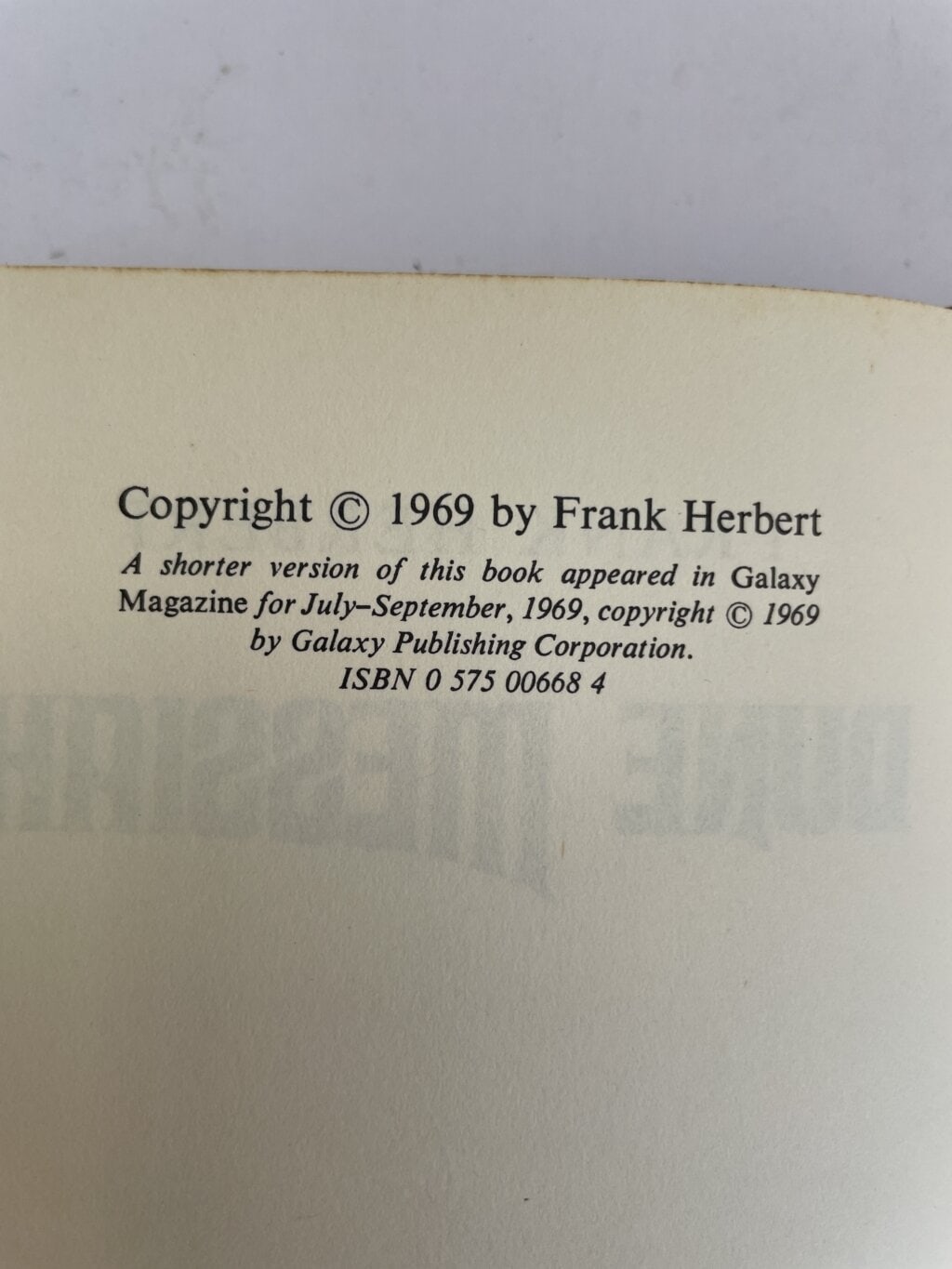
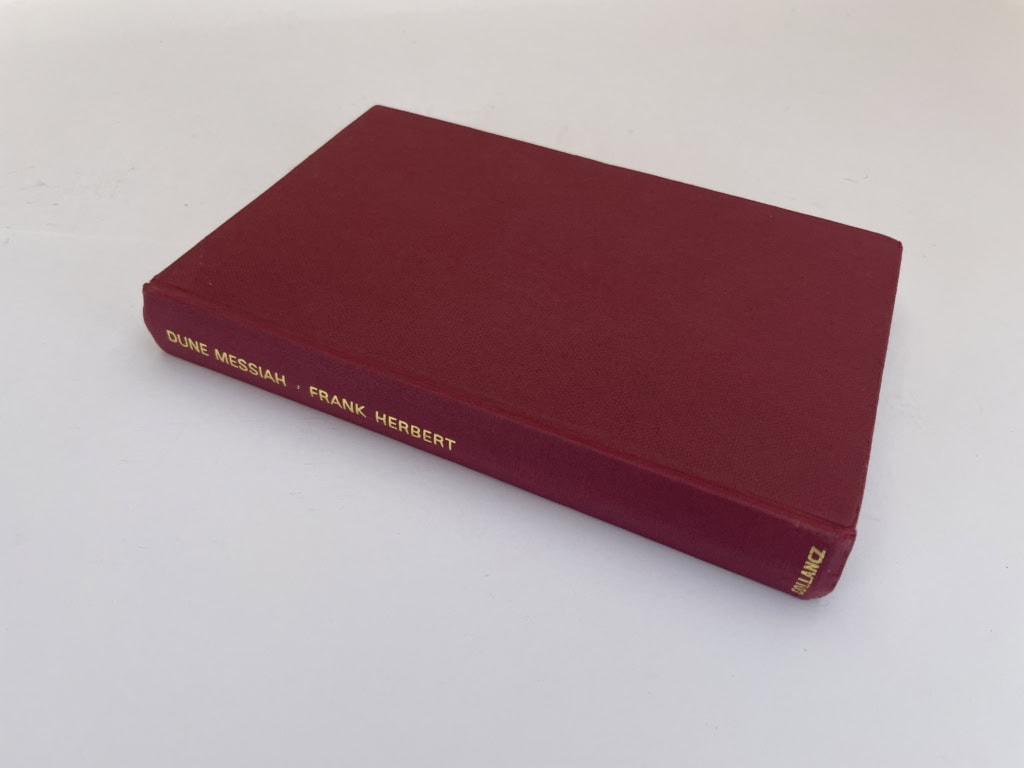
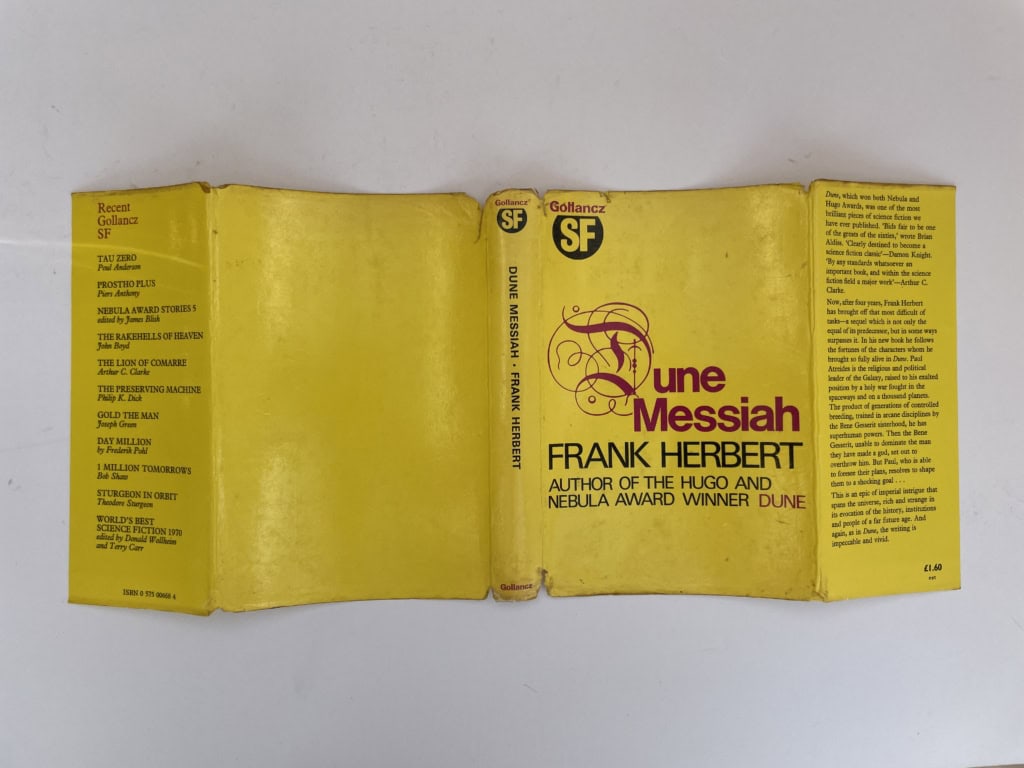
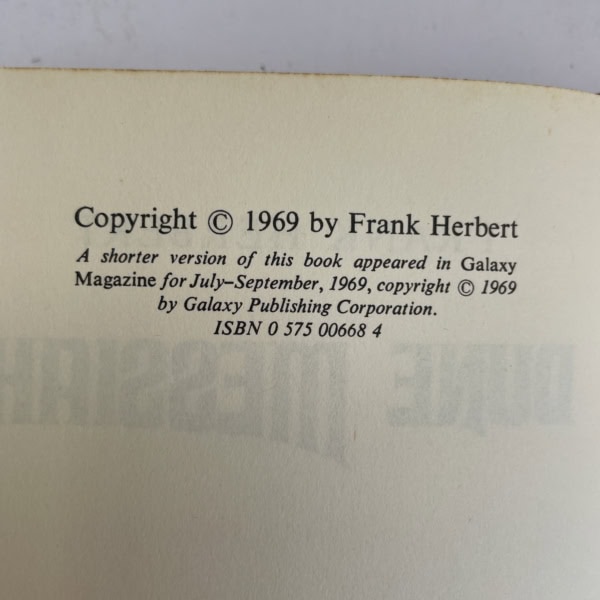
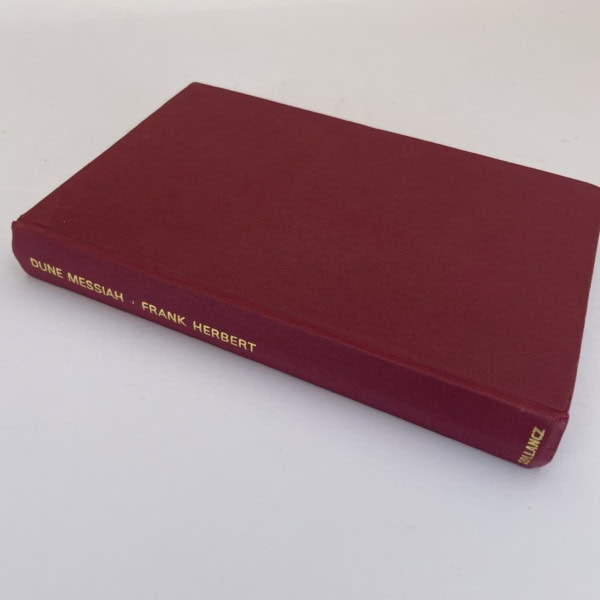
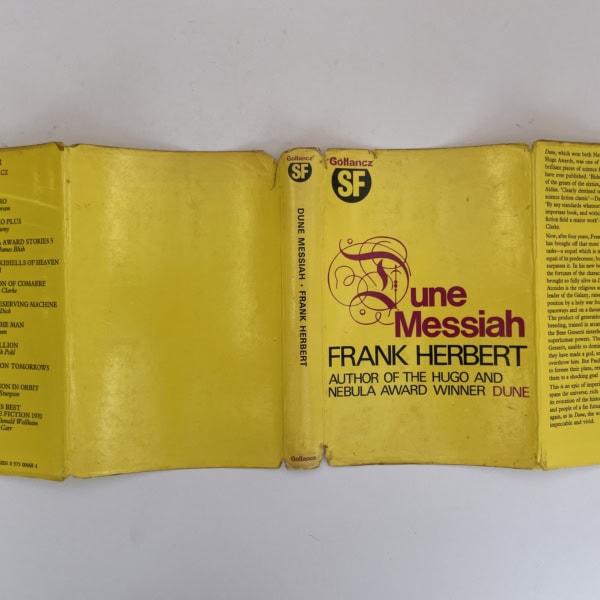
A first edition, first printing of Dune Messiah by Frank Herbert, published by Victor Gollancz, London in 1971. A near fine copy free from internal inscriptions, with pushing to the spine tips and lower corners of front and rear boards, a small single bump to the front board, with light spotting and browning to the text block. In a very good unclipped wrapper with chipping to the spine tips, open tears to the hinges of front and rear panels, chipping to knuckles of front and rear flap folds and some light shelf wear to front and rear panels.
Dune Messiah by Frank Herbert continues the saga of Paul Atreides, now Emperor, exploring the burdens of power, prophecy and religious fanaticism. As conspiracies form against him, Paul struggles with his prescient visions and the consequences of jihad carried out in his name. The novel is darker and more introspective than its predecessor, focusing on political intrigue, moral dilemmas and the cost of destiny rather than adventure. It challenges heroism and questions absolute power deeply.
(We don't keep all of our stock in the shop, so send us an email if you're planning a trip to see a particular author or book.)
- Description
Description
A first edition, first printing of Dune Messiah by Frank Herbert, published by Victor Gollancz, London in 1971. A near fine copy free from internal inscriptions, with pushing to the spine tips and lower corners of front and rear boards, a small single bump to the front board, with light spotting and browning to the text block. In a very good unclipped wrapper with chipping to the spine tips, open tears to the hinges of front and rear panels, chipping to knuckles of front and rear flap folds and some light shelf wear to front and rear panels.
Dune Messiah by Frank Herbert continues the saga of Paul Atreides, now Emperor, exploring the burdens of power, prophecy and religious fanaticism. As conspiracies form against him, Paul struggles with his prescient visions and the consequences of jihad carried out in his name. The novel is darker and more introspective than its predecessor, focusing on political intrigue, moral dilemmas and the cost of destiny rather than adventure. It challenges heroism and questions absolute power deeply.
