
Neville Chamberlain – Original SIGNED and TYPED Downing Street Headed Paper – Weeks after the Munich Agreement 1938
£1,250.00
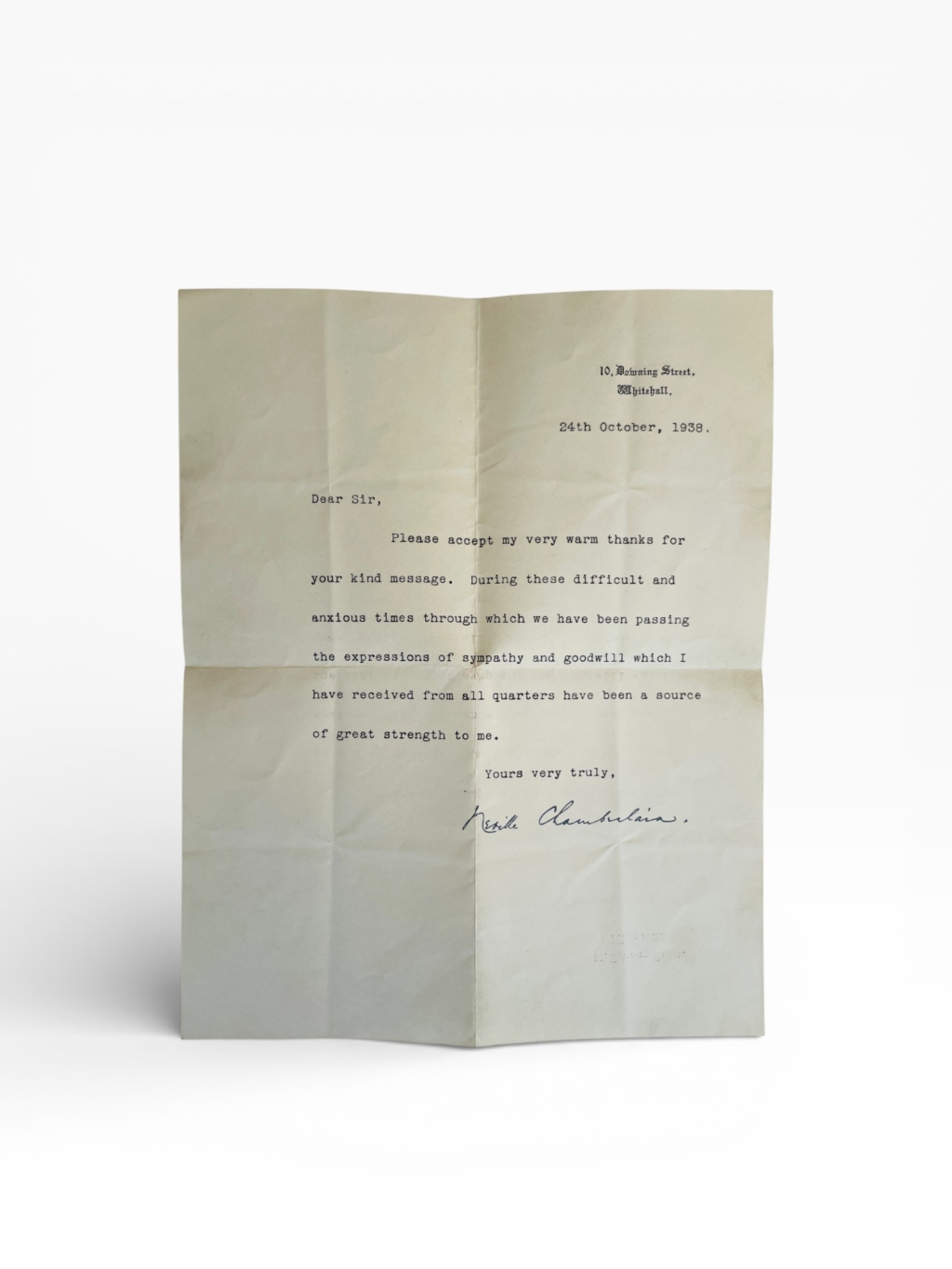
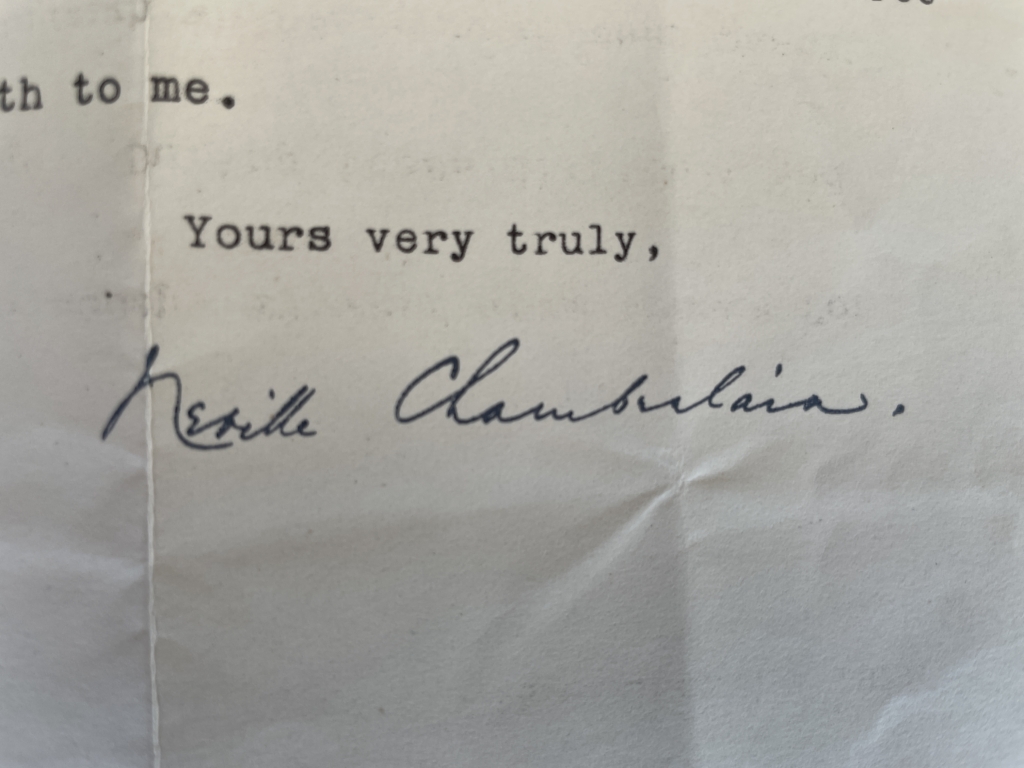
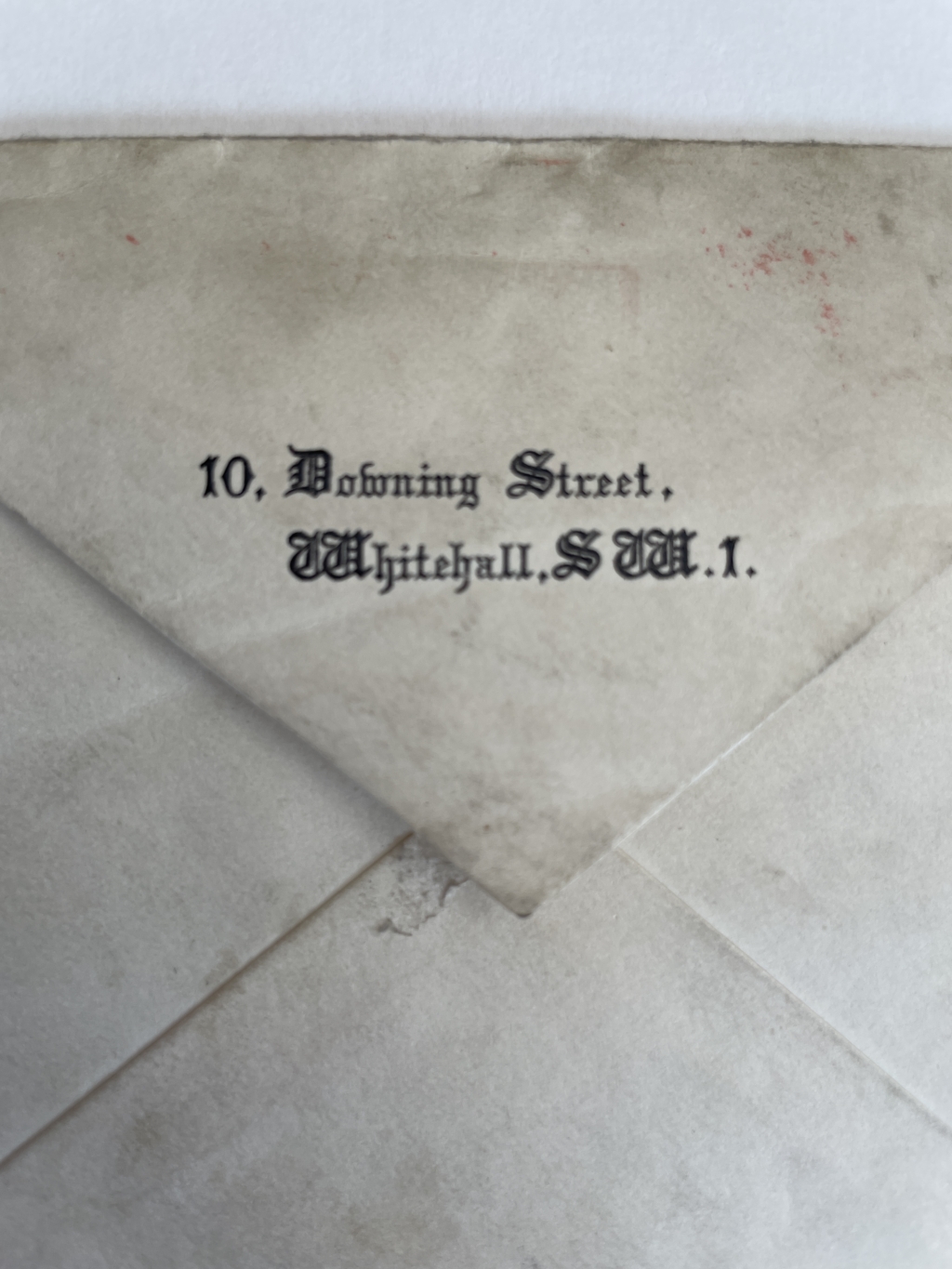
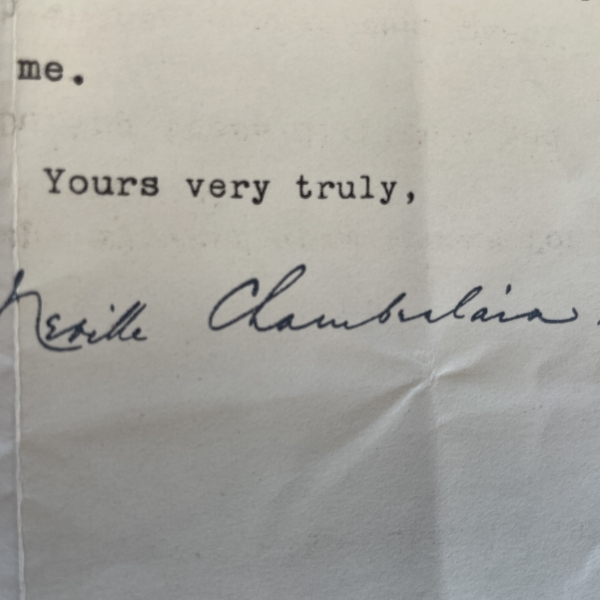
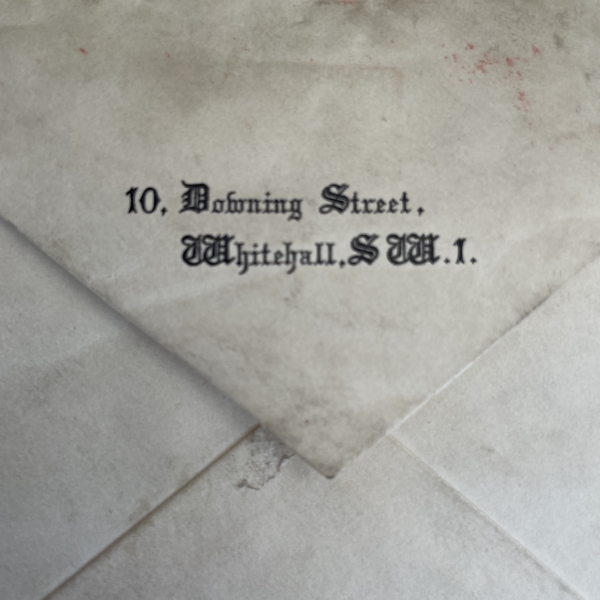
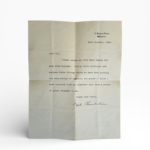
A folded, typed reply on Downing Street headed notepaper, dated 24th October 1938 and reads:
‘Dear Sir, Please accept my very warm thanks for your kind message. During these difficult and anxious times through which we have been passing the expressions of sympathy and goodwill which I have received from all quarters have been a source of great strength to me, Yours very truly, Neville Chamberlain.’
The Munich Agreement, signed on 30 September 1938, was shaped primarily by Neville Chamberlain, Britain’s prime minister from 1937 to 1940. In the tense weeks of September 1938, Chamberlain pursued appeasement, believing war could be avoided by meeting Adolf Hitler’s demands for the Sudetenland. He flew to Germany on 15, 22, and 29 September, holding direct talks with Hitler and later with Mussolini.
The agreement, concluded by Britain, Germany, Italy, and France, excluded Czechoslovakia, whose territory was ceded to Germany. On his return to London on 30 September, Chamberlain declared he had secured “peace for our time.” While widely welcomed in Britain initially, the agreement soon appeared a grave misjudgement. Germany violated its terms by occupying the rest of Czechoslovakia in March 1939, exposing the failure of appeasement and permanently defining Chamberlain’s reputation.
(We don't keep all of our stock in the shop, so send us an email if you're planning a trip to see a particular author or book.)
- Description
Description
A folded, typed reply on Downing Street headed notepaper, dated 24th October 1938 and reads:
‘Dear Sir, Please accept my very warm thanks for your kind message. During these difficult and anxious times through which we have been passing the expressions of sympathy and goodwill which I have received from all quarters have been a source of great strength to me, Yours very truly, Neville Chamberlain.’
The Munich Agreement, signed on 30 September 1938, was shaped primarily by Neville Chamberlain, Britain’s prime minister from 1937 to 1940. In the tense weeks of September 1938, Chamberlain pursued appeasement, believing war could be avoided by meeting Adolf Hitler’s demands for the Sudetenland. He flew to Germany on 15, 22, and 29 September, holding direct talks with Hitler and later with Mussolini.
The agreement, concluded by Britain, Germany, Italy, and France, excluded Czechoslovakia, whose territory was ceded to Germany. On his return to London on 30 September, Chamberlain declared he had secured “peace for our time.” While widely welcomed in Britain initially, the agreement soon appeared a grave misjudgement. Germany violated its terms by occupying the rest of Czechoslovakia in March 1939, exposing the failure of appeasement and permanently defining Chamberlain’s reputation.
