
Kazuo Ishiguro – An Artist Of The Floating World – First Edition 1986
£250.00
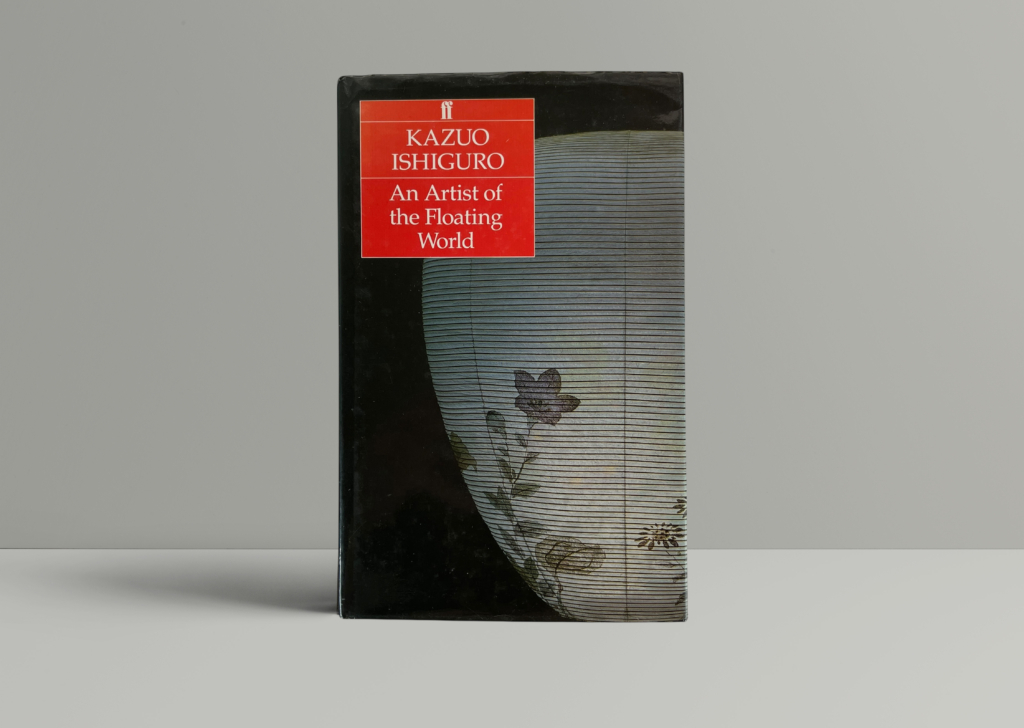
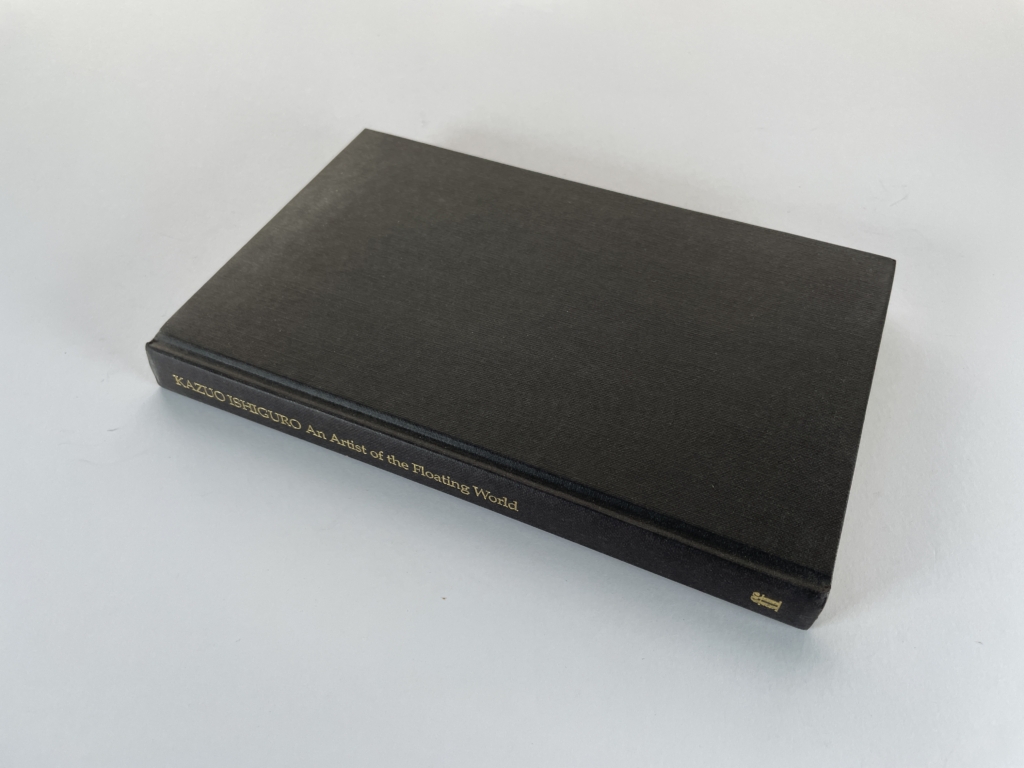
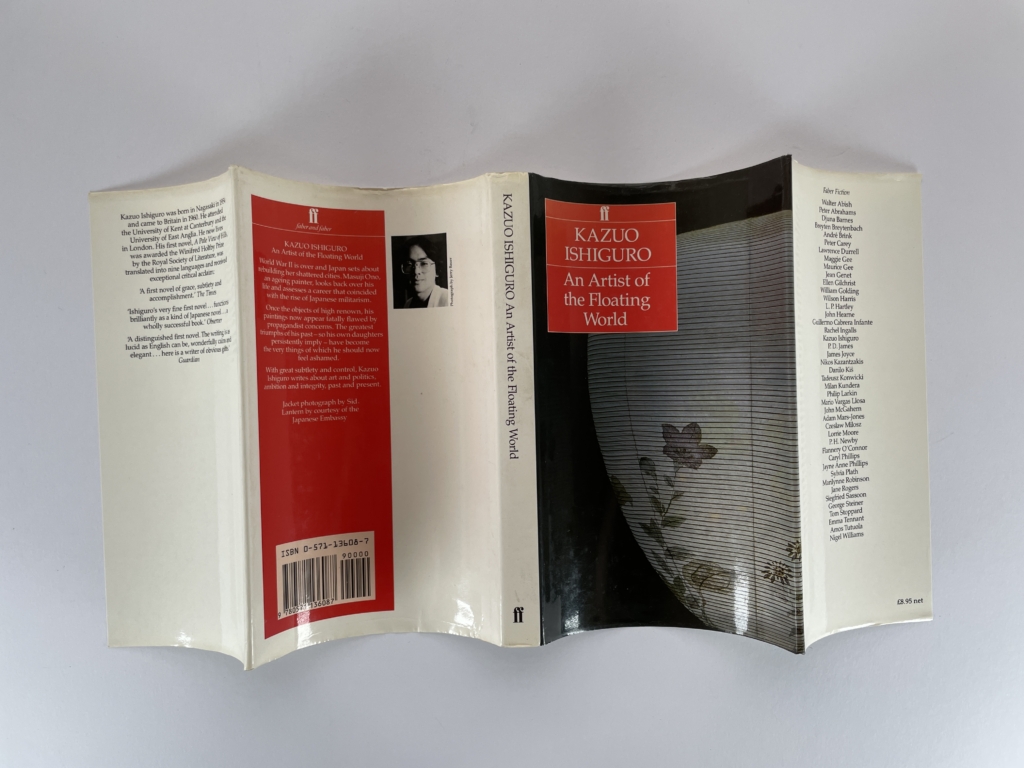
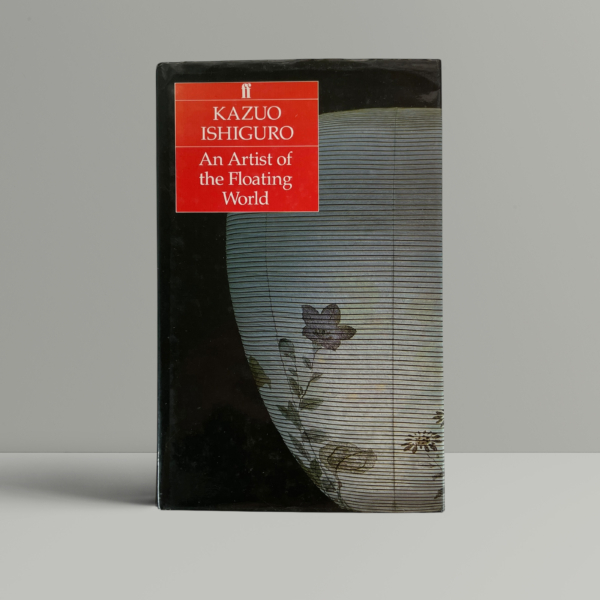
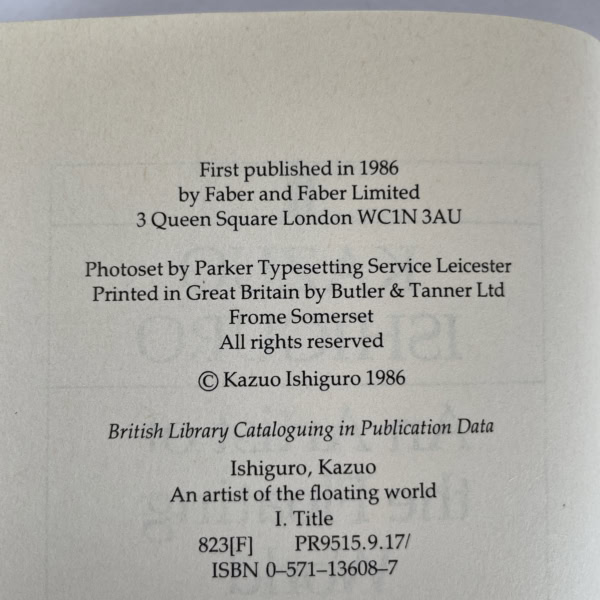
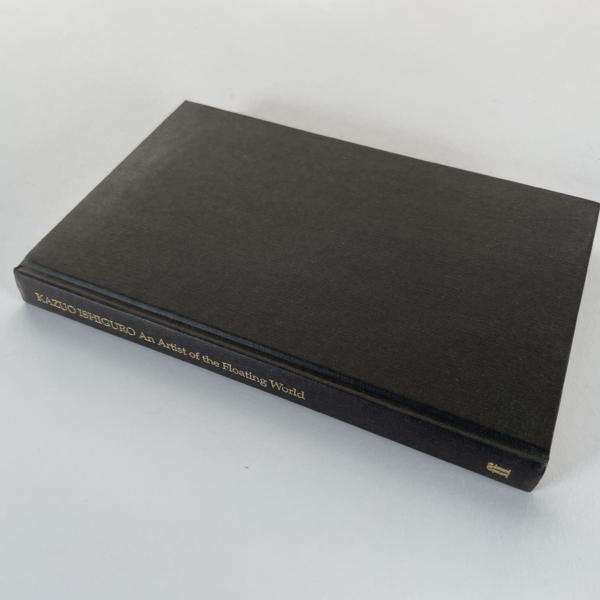
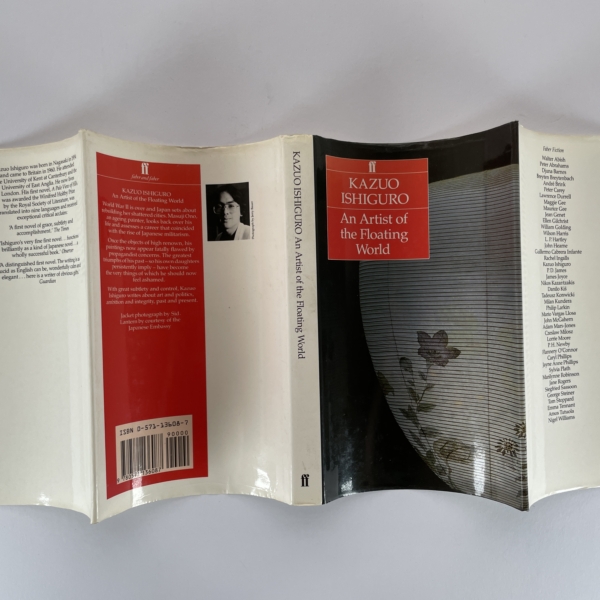
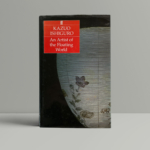
A first edition, first printing of An Artist of the Floating World by Kazuo Ishiguro, published by Faber, London in 1986. A near fine book with a previous owners name in blue ink to the front paste-down, with slight toning to the top edge of the text block. In a near fine unclipped wrapper and bumping to the extremities. The first state gives the printer as Butler & Tanner rather than Richard Clay.
An Artist of the Floating World by Kazuo Ishiguro follows Masuji Ono, an ageing Japanese painter reflecting on his past as a propagandist during World War II. Set in post-war Japan, the novel explores memory, guilt and shifting cultural values as Ono grapples with personal responsibility and fading influence. Through subtle narration and unreliable memory, Ishiguro examines self-deception, honour and the cost of nationalism in a society rebuilding itself amid the ruins of its former ideals.
(We don't keep all of our stock in the shop, so send us an email if you're planning a trip to see a particular author or book.)
- Description
Description
A first edition, first printing of An Artist of the Floating World by Kazuo Ishiguro, published by Faber, London in 1986. A near fine book with a previous owners name in blue ink to the front paste-down, with slight toning to the top edge of the text block. In a near fine unclipped wrapper and bumping to the extremities. The first state gives the printer as Butler & Tanner rather than Richard Clay.
An Artist of the Floating World by Kazuo Ishiguro follows Masuji Ono, an ageing Japanese painter reflecting on his past as a propagandist during World War II. Set in post-war Japan, the novel explores memory, guilt and shifting cultural values as Ono grapples with personal responsibility and fading influence. Through subtle narration and unreliable memory, Ishiguro examines self-deception, honour and the cost of nationalism in a society rebuilding itself amid the ruins of its former ideals.