All Items Are Sold TARIFF FREE to the USA – We Pay All Import Taxes

Winston S. Churchill – A History of the English-Speaking Peoples – Volumes 1-4 – First UK Editions – INSCRIBED by Churchill to his dermatologist

£17,500.00

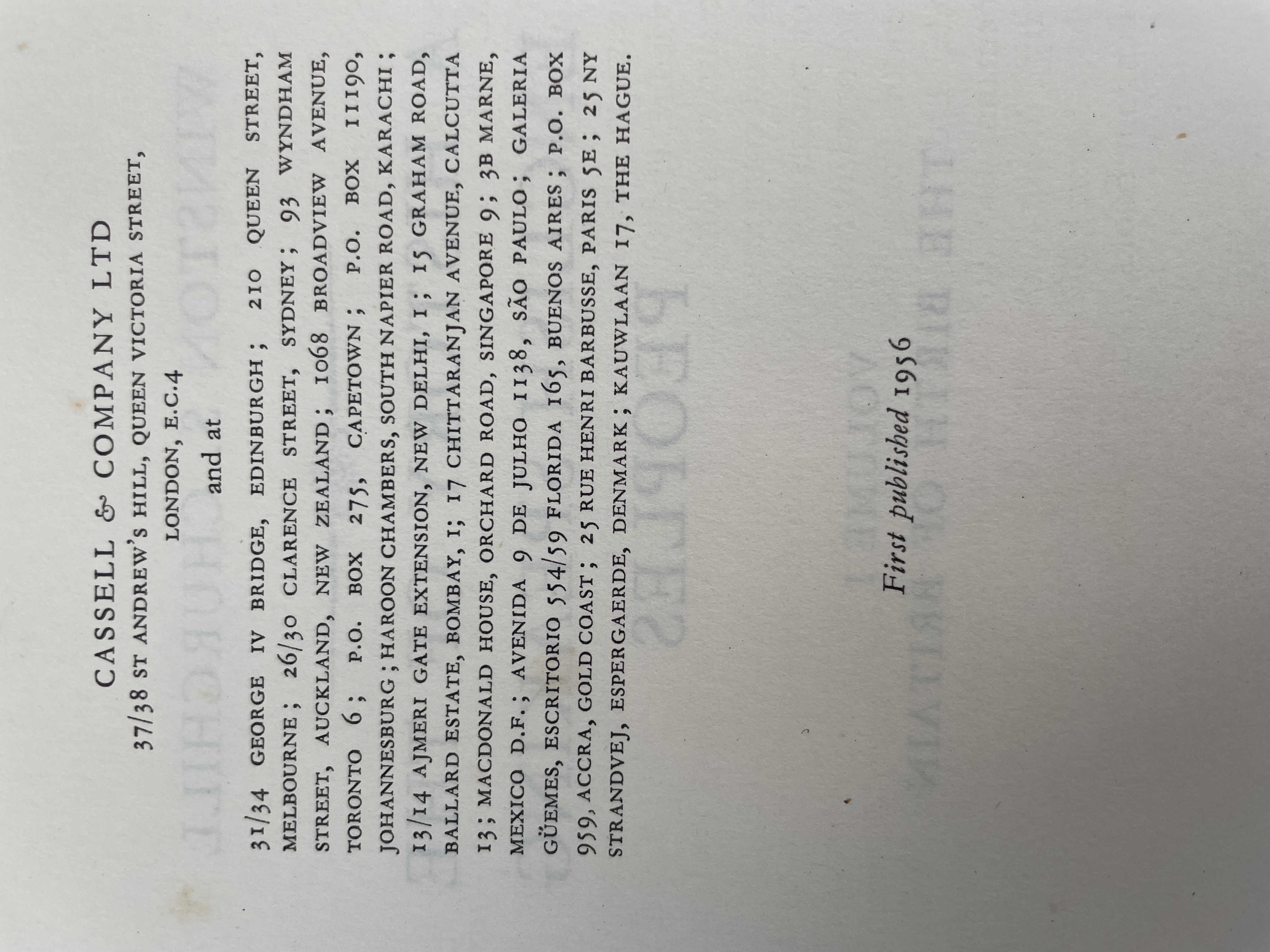
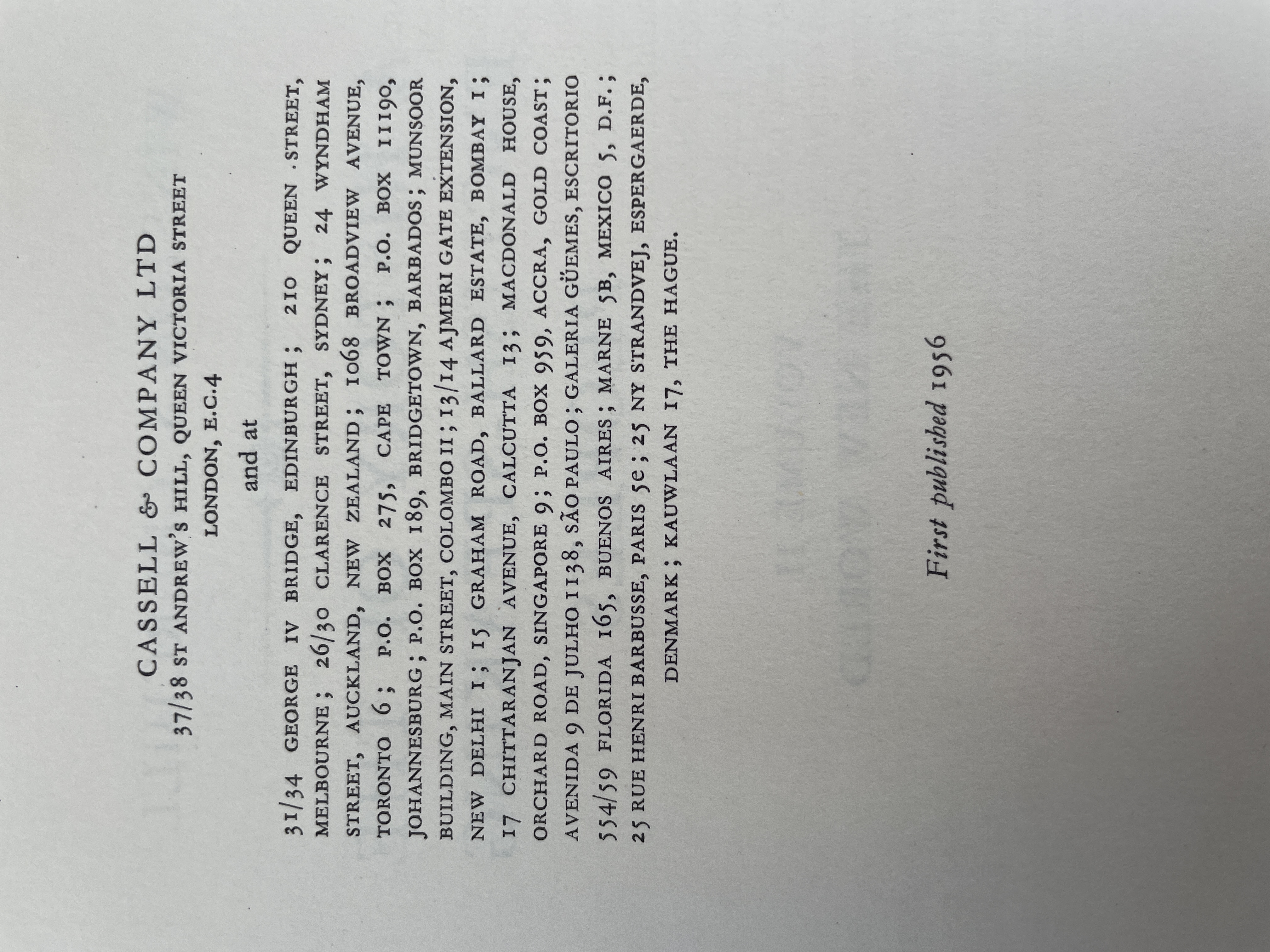
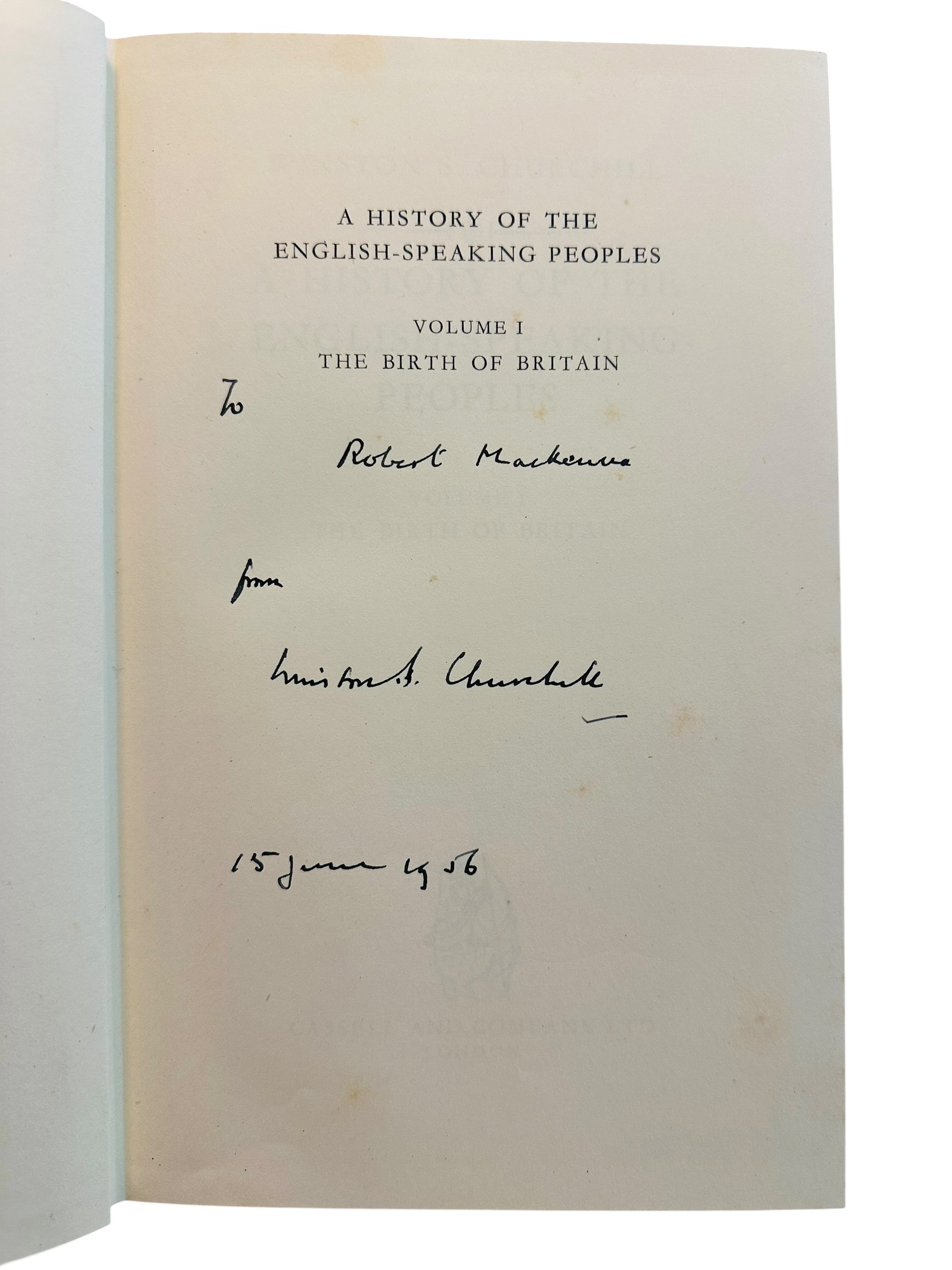
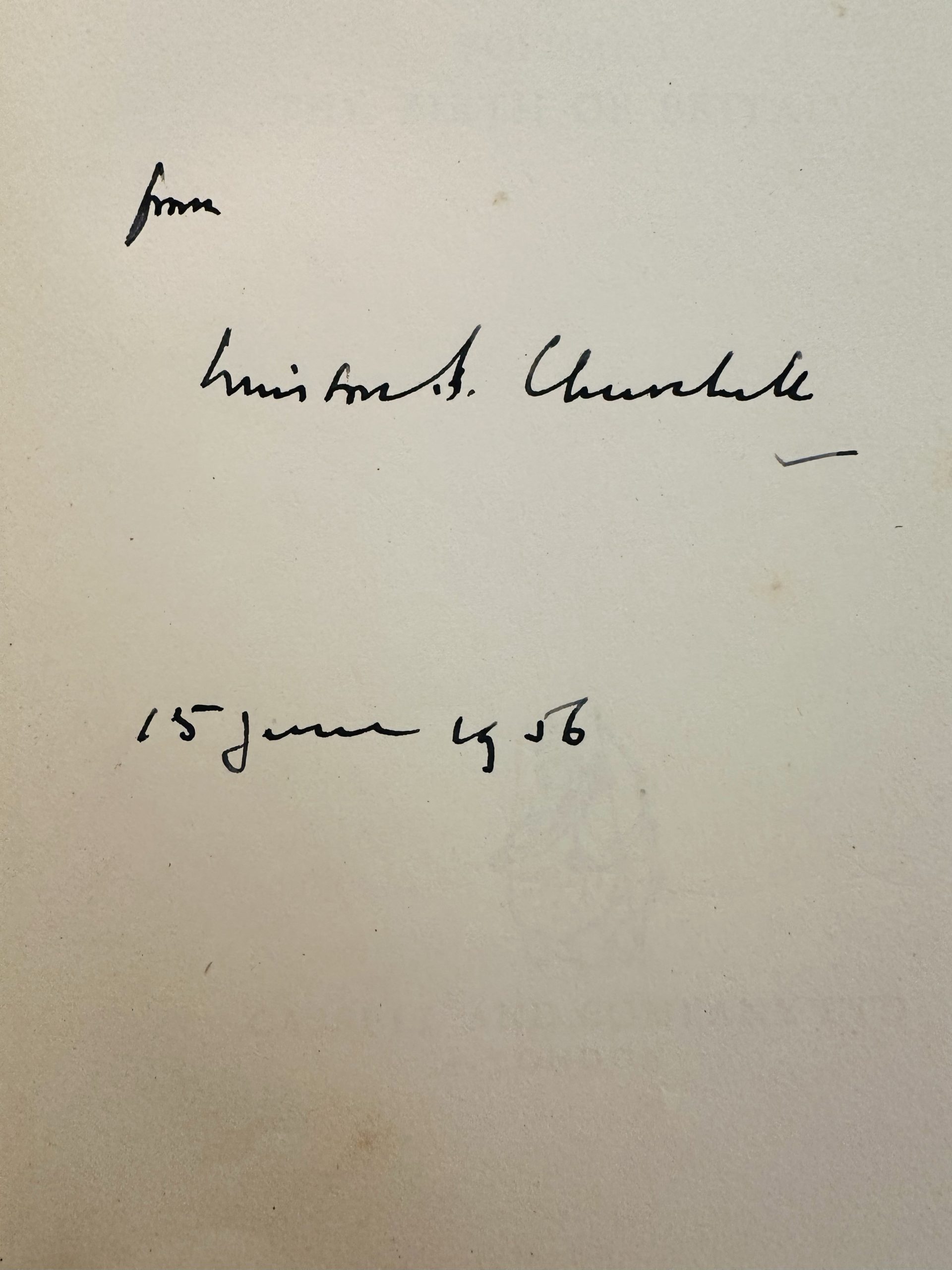
First editions, first impressions. Four volumes. Volume I presentation-inscribed by Winston S. Churchill to his physician and dermatologist Dr Robert Merttins Bird MacKenna.

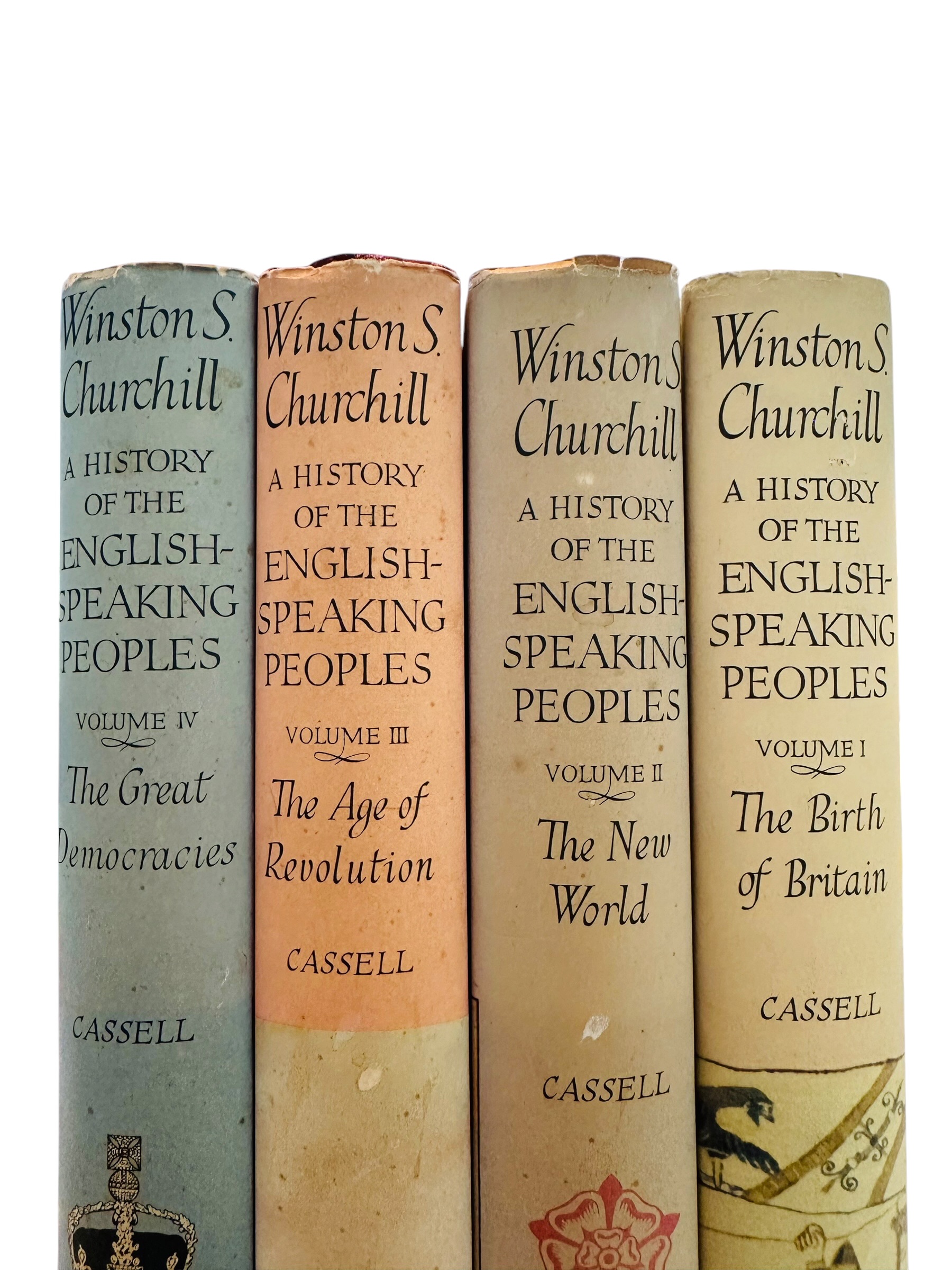
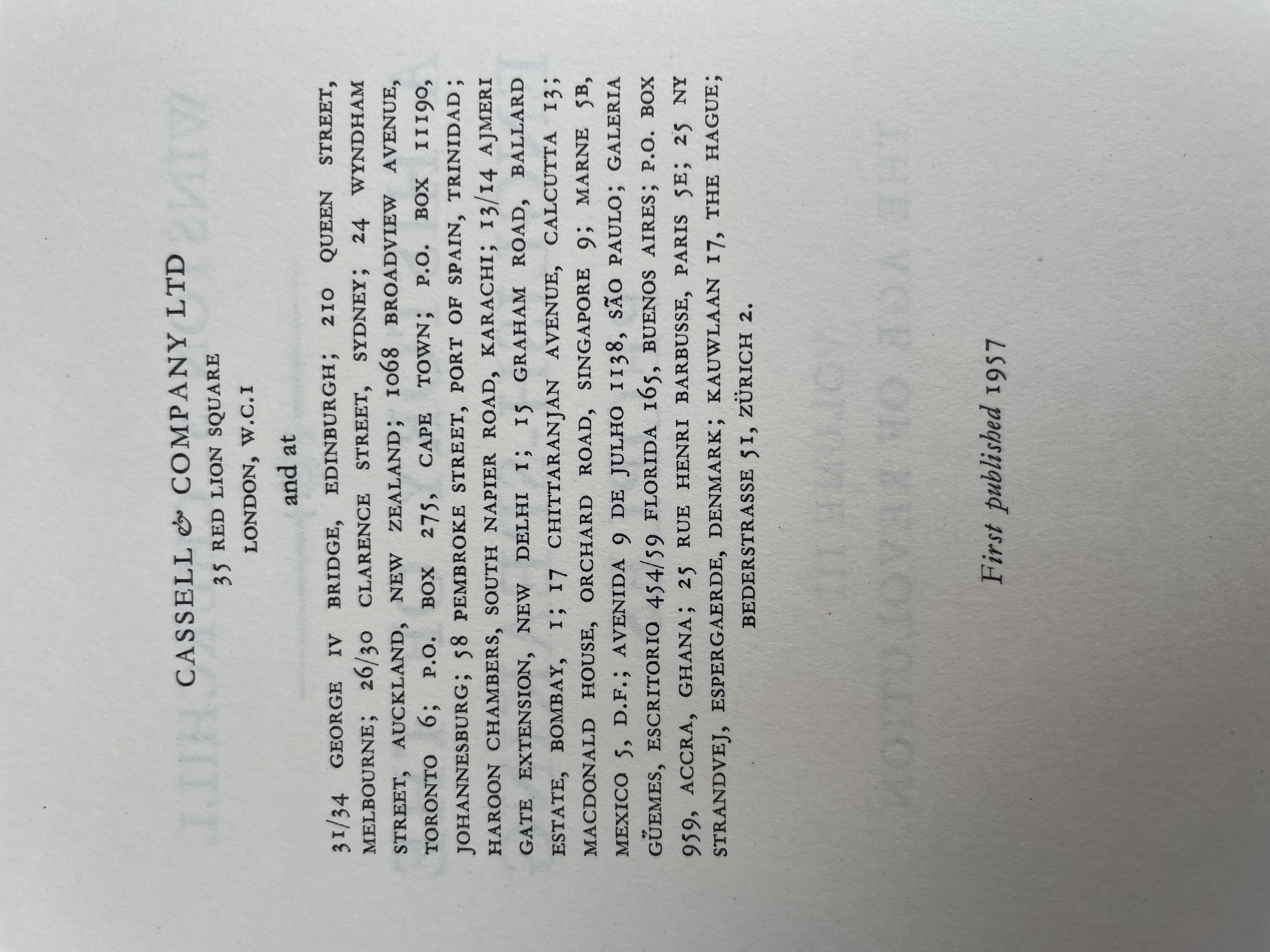
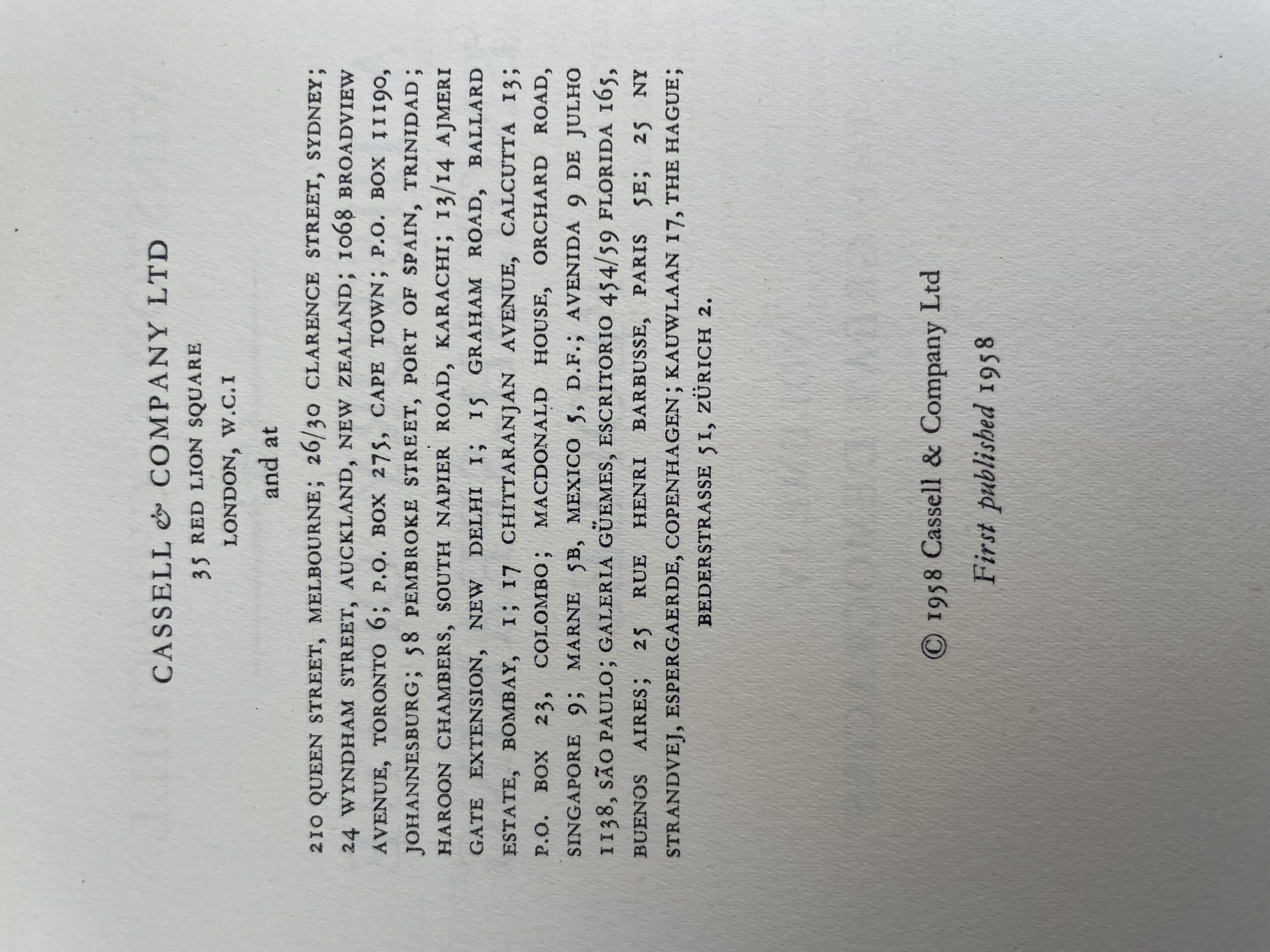
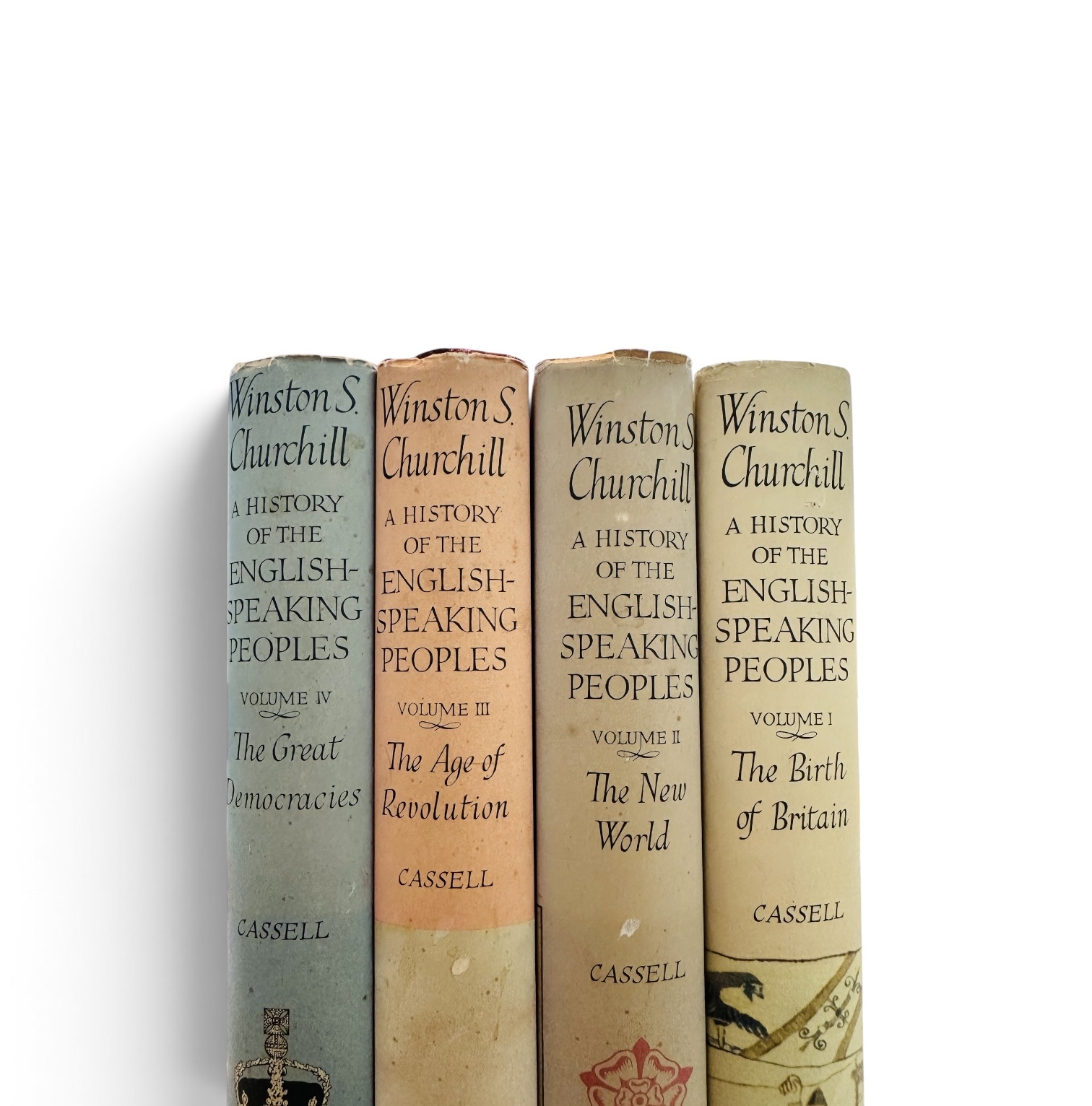
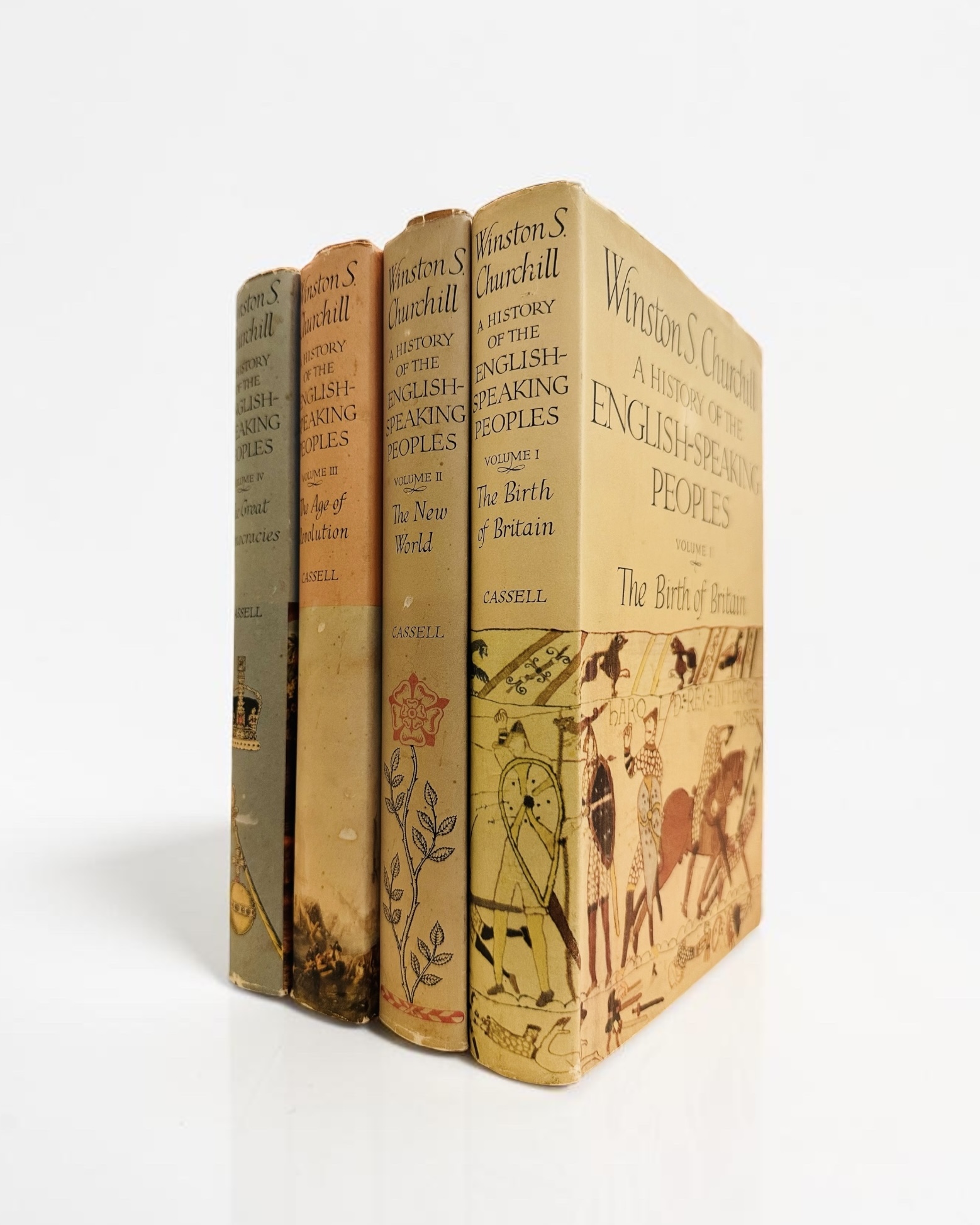
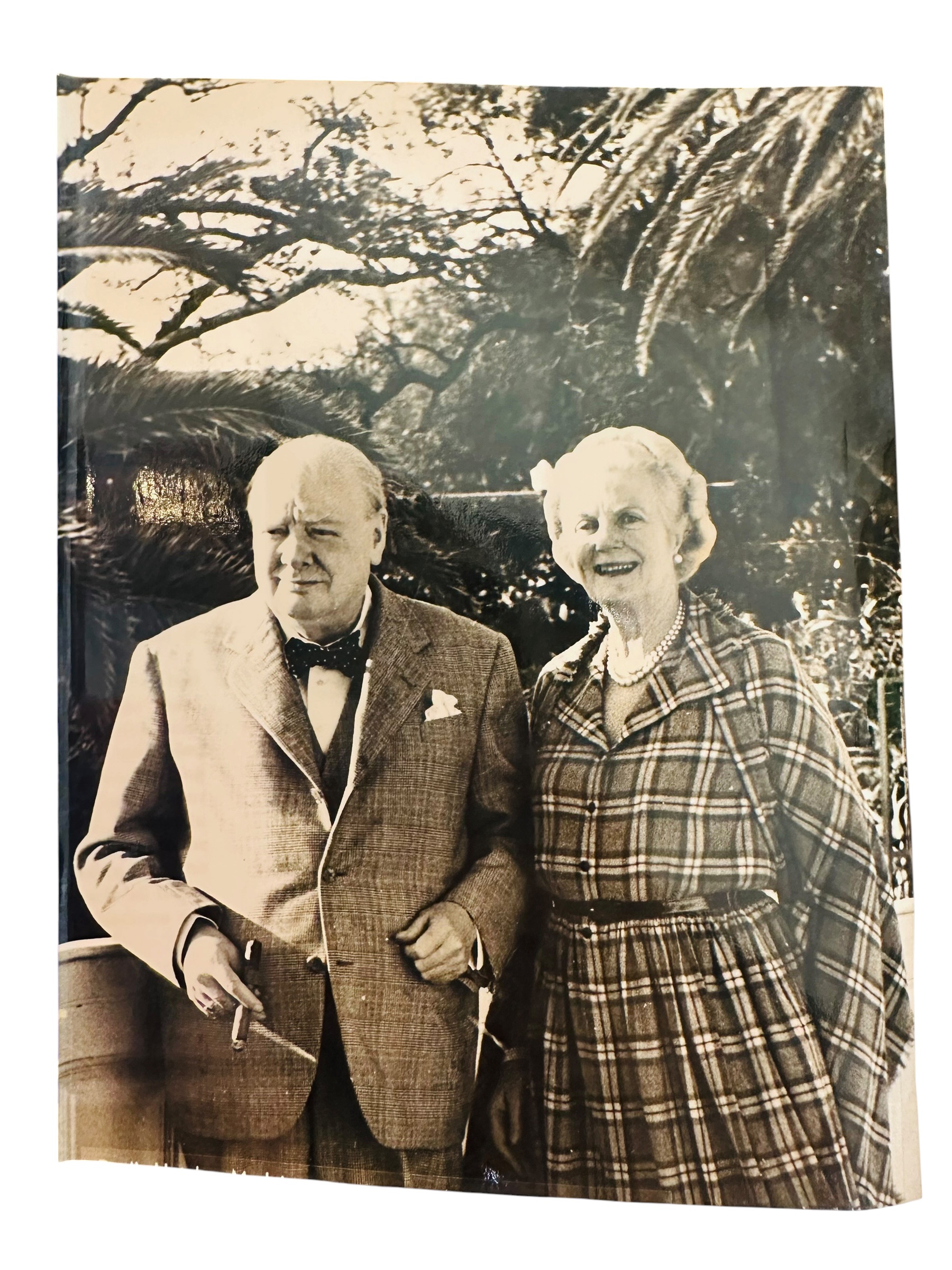
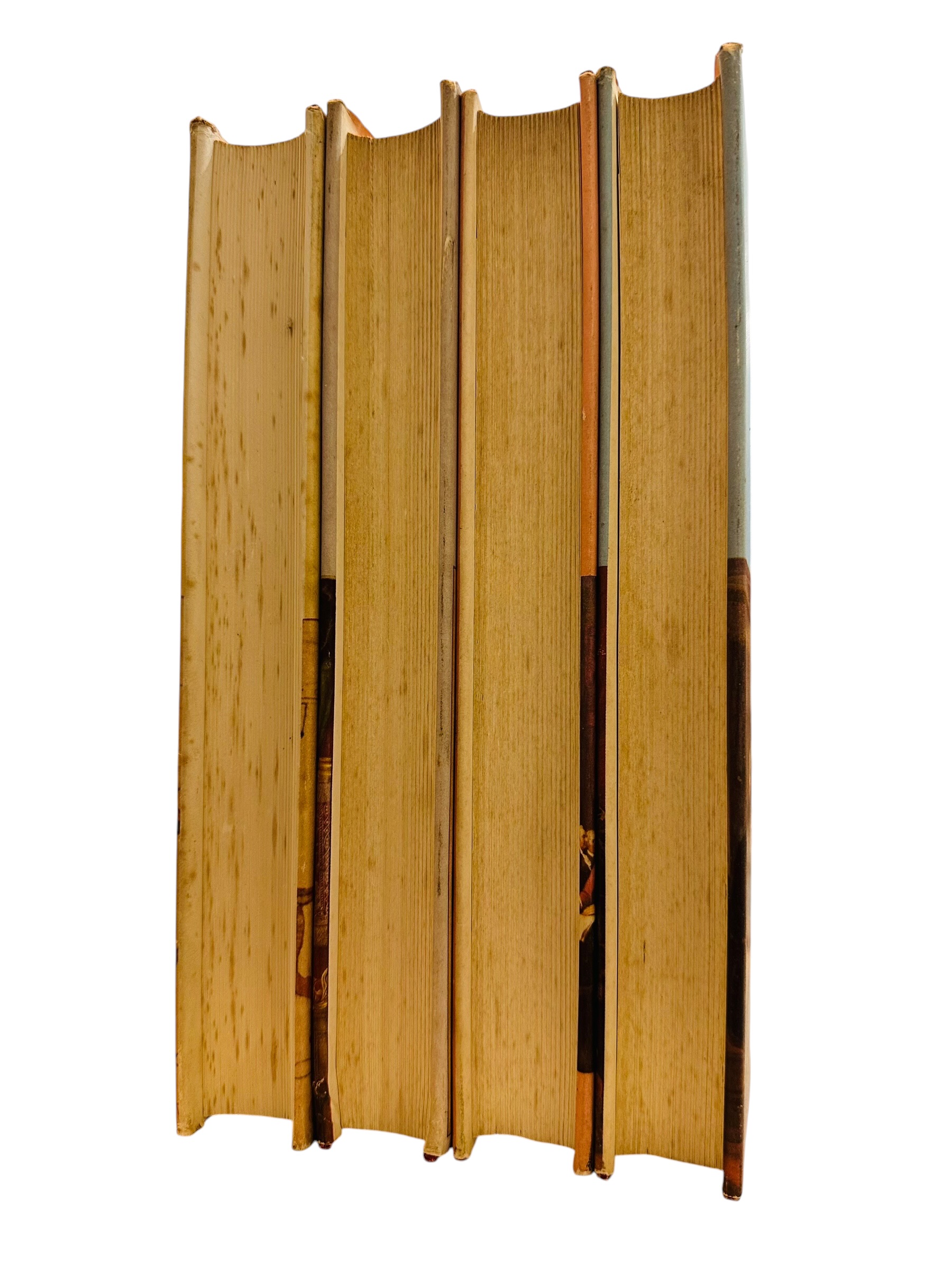
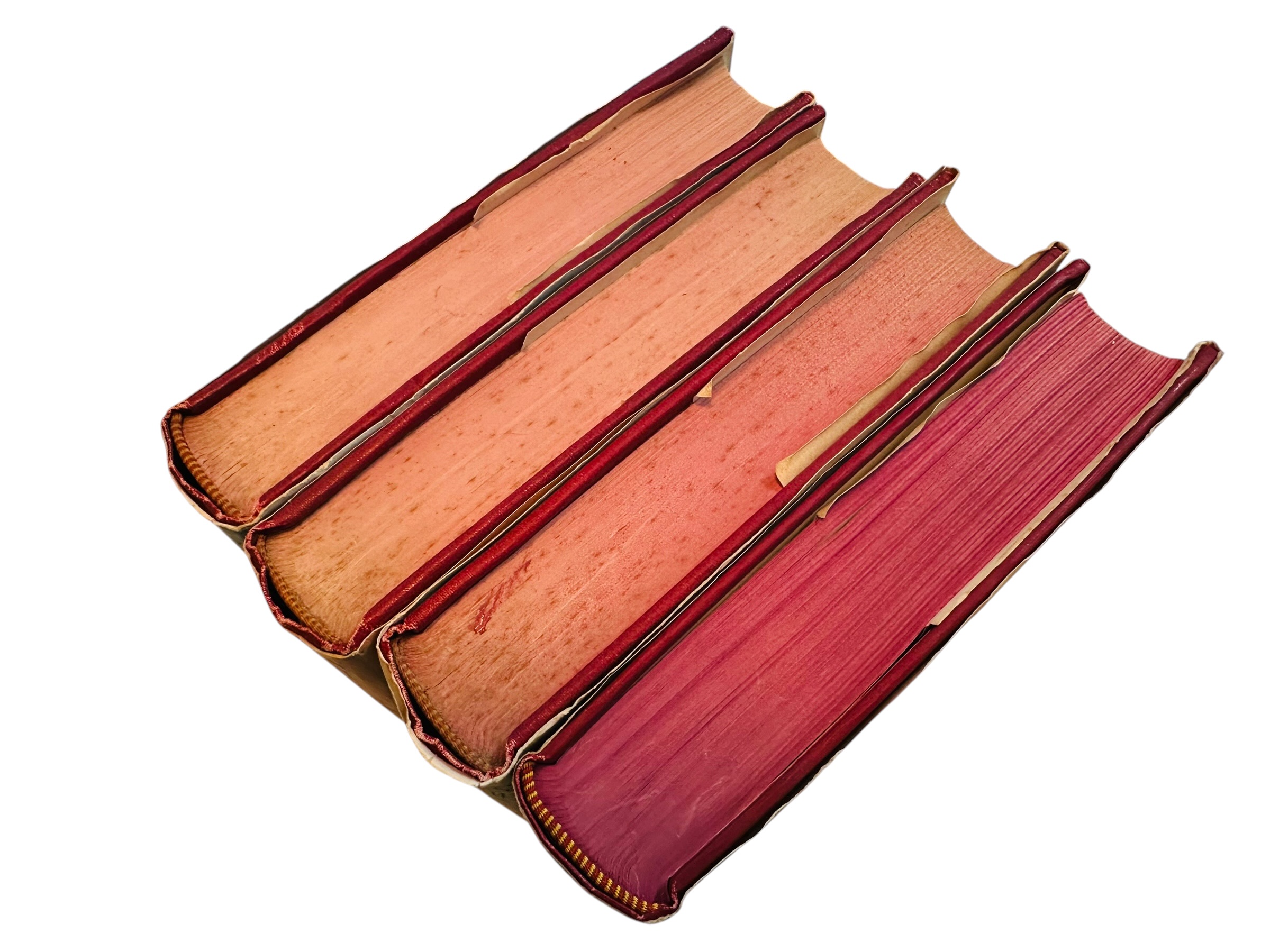
Four volumes comprising; The Birth of Britain (1956), The New World (1956), The Age of Revolution (1957) and The Great Democracies (1958), uniformly bound in the publisher’s red cloth with gilt titles to the spines, in the original pictorial dust wrappers, all unclipped. A very good set in like original, unclipped dust wrappers. With an original photograph of Winston and Clemmie Churchill.

Volume I is presentation-inscribed by Churchill to Dr Robert MacKenna and dated 15th June 1956, seven weeks after publication. An especially desirable association copy by virtue of the recipient’s direct and documented personal connection with Churchill.

Robert Merttins Bird MacKenna (1903–1984) was one of the leading British dermatologists of his generation and a physician to Winston Churchill. Born in Liverpool into a medical family, he initially entered the Royal Naval College at Osborne before turning to medicine, studying at Clare College, Cambridge and completing his clinical training at St Thomas’s Hospital. He qualified in 1926, received his Cambridge medical degrees in 1928 and his MD in 1931, and was elected a Fellow of the Royal College of Physicians in 1941.

During the Second World War MacKenna served in the Royal Army Medical Corps. In 1941 he became adviser in dermatology to the War Office and in 1943 was appointed War Office consultant in dermatology, ultimately holding the rank of acting colonel and local brigadier. His organisation of military dermatological services was highly regarded, and he retained his War Office consultancy until 1964.

In 1946 MacKenna was appointed physician in charge of the skin department at St Bartholomew’s Hospital, where he developed a department notable for its links with general medicine, psychiatry and biochemistry. He later served as president of both the British Association of Dermatologists and the dermatological section of the Royal Society of Medicine.

MacKenna was also a noted bibliophile, making Churchill’s presentation of the opening volume of his great historical work particularly appropriate.

His connection with Churchill was a personal professional one. Fellow dermatologist Maurice Garretts later recalled accompanying MacKenna to Chartwell after he had been summoned to attend Churchill. Surviving Churchill papers also record correspondence with MacKenna in his capacity as consulting dermatologist.

Churchill began work on ‘A History of the English-Speaking Peoples’ before the Second World War, but the demands of war and political office delayed its completion for almost two decades. Published when Churchill was in his eighties and following his final premiership, the four-volume work was his last major historical undertaking, tracing the development of Britain and the English-speaking world from antiquity through the nineteenth century.

A highly desirable Churchill presentation and association copy, linking one of his final major literary works with a distinguished physician who personally attended him.
1 in stock

Description

First editions, first impressions. Four volumes. Volume I presentation-inscribed by Winston S. Churchill to his physician and dermatologist Dr Robert Merttins Bird MacKenna.

Four volumes comprising; The Birth of Britain (1956), The New World (1956), The Age of Revolution (1957) and The Great Democracies (1958), uniformly bound in the publisher’s red cloth with gilt titles to the spines, in the original pictorial dust wrappers, all unclipped. A very good set in like original, unclipped dust wrappers. With an original photograph of Winston and Clemmie Churchill.

Volume I is presentation-inscribed by Churchill to Dr Robert MacKenna and dated 15th June 1956, seven weeks after publication. An especially desirable association copy by virtue of the recipient’s direct and documented personal connection with Churchill.

Robert Merttins Bird MacKenna (1903–1984) was one of the leading British dermatologists of his generation and a physician to Winston Churchill. Born in Liverpool into a medical family, he initially entered the Royal Naval College at Osborne before turning to medicine, studying at Clare College, Cambridge and completing his clinical training at St Thomas’s Hospital. He qualified in 1926, received his Cambridge medical degrees in 1928 and his MD in 1931, and was elected a Fellow of the Royal College of Physicians in 1941.

During the Second World War MacKenna served in the Royal Army Medical Corps. In 1941 he became adviser in dermatology to the War Office and in 1943 was appointed War Office consultant in dermatology, ultimately holding the rank of acting colonel and local brigadier. His organisation of military dermatological services was highly regarded, and he retained his War Office consultancy until 1964.

In 1946 MacKenna was appointed physician in charge of the skin department at St Bartholomew’s Hospital, where he developed a department notable for its links with general medicine, psychiatry and biochemistry. He later served as president of both the British Association of Dermatologists and the dermatological section of the Royal Society of Medicine.

MacKenna was also a noted bibliophile, making Churchill’s presentation of the opening volume of his great historical work particularly appropriate.

His connection with Churchill was a personal professional one. Fellow dermatologist Maurice Garretts later recalled accompanying MacKenna to Chartwell after he had been summoned to attend Churchill. Surviving Churchill papers also record correspondence with MacKenna in his capacity as consulting dermatologist.

Churchill began work on ‘A History of the English-Speaking Peoples’ before the Second World War, but the demands of war and political office delayed its completion for almost two decades. Published when Churchill was in his eighties and following his final premiership, the four-volume work was his last major historical undertaking, tracing the development of Britain and the English-speaking world from antiquity through the nineteenth century.

A highly desirable Churchill presentation and association copy, linking one of his final major literary works with a distinguished physician who personally attended him.
You may also like…