Alasdair Gray – Something Leather – First Edition 1990
£45.00
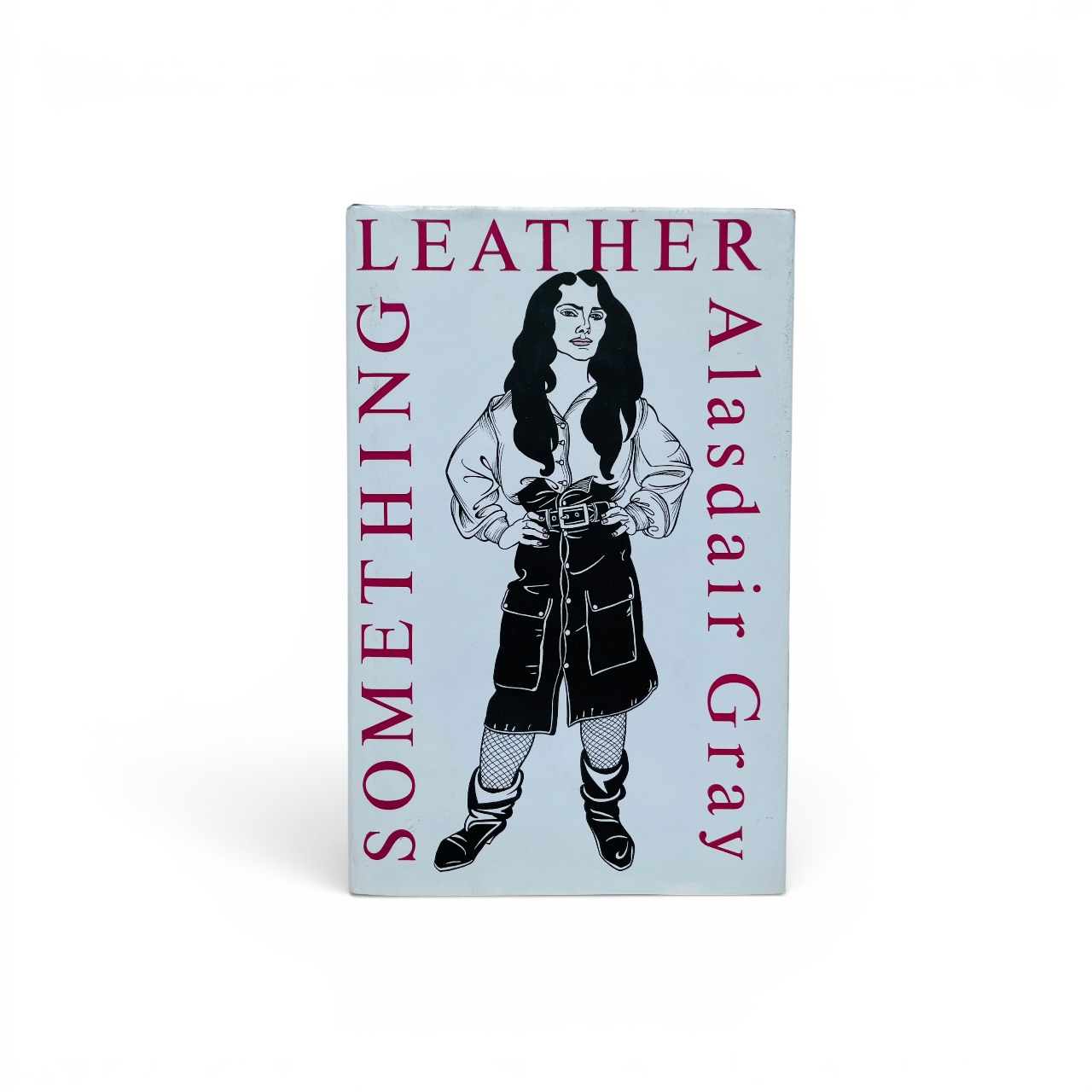
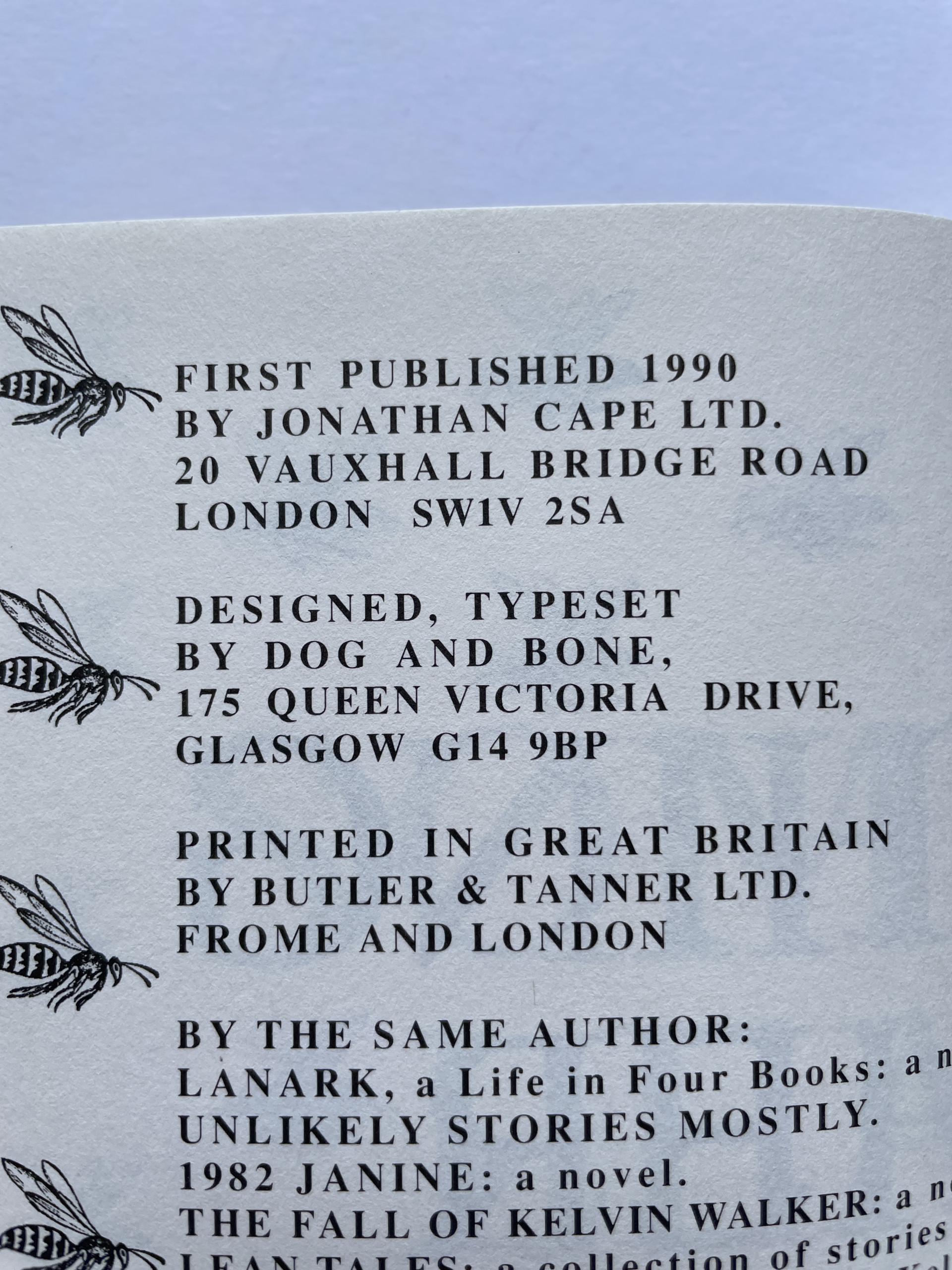
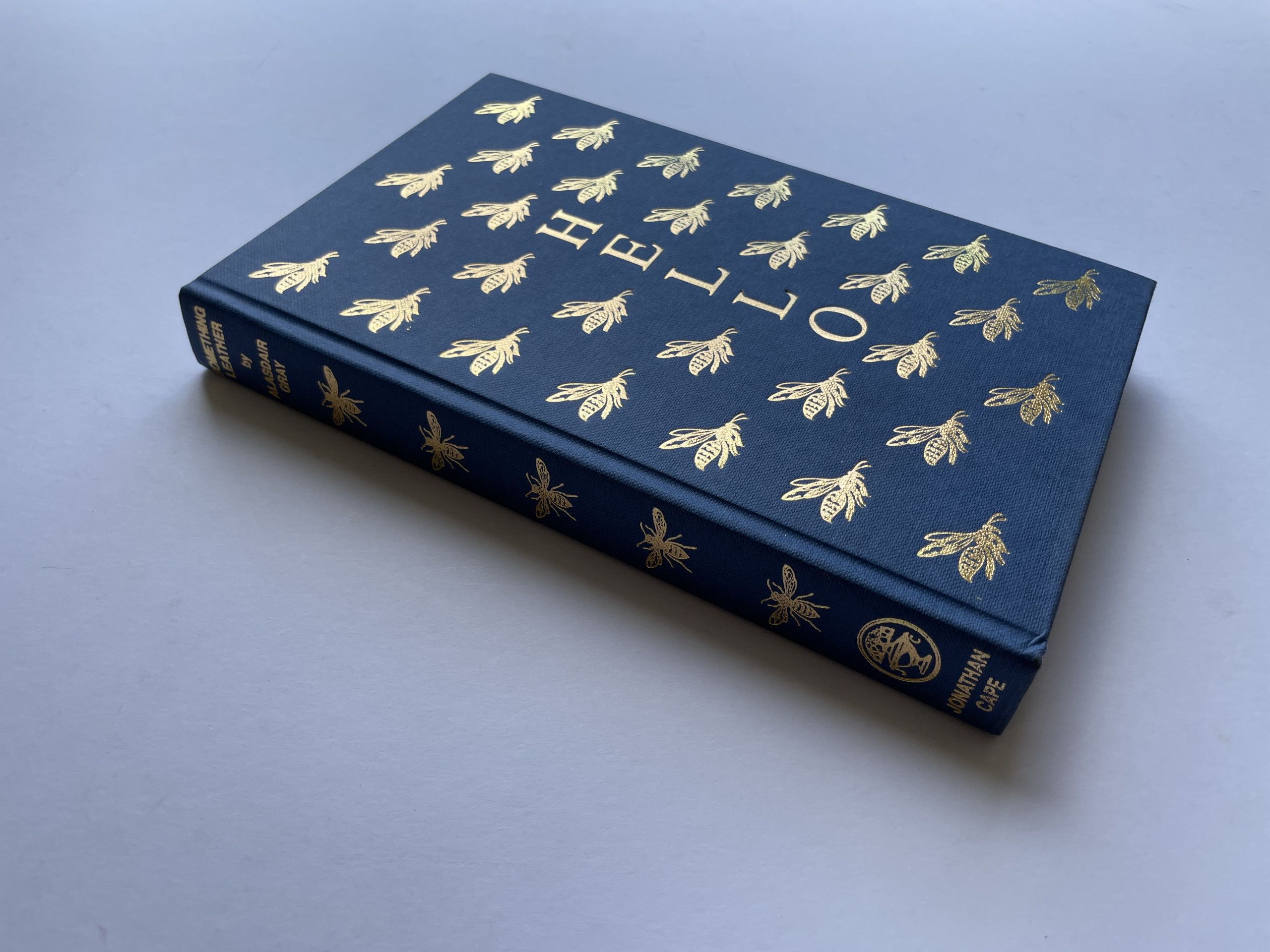
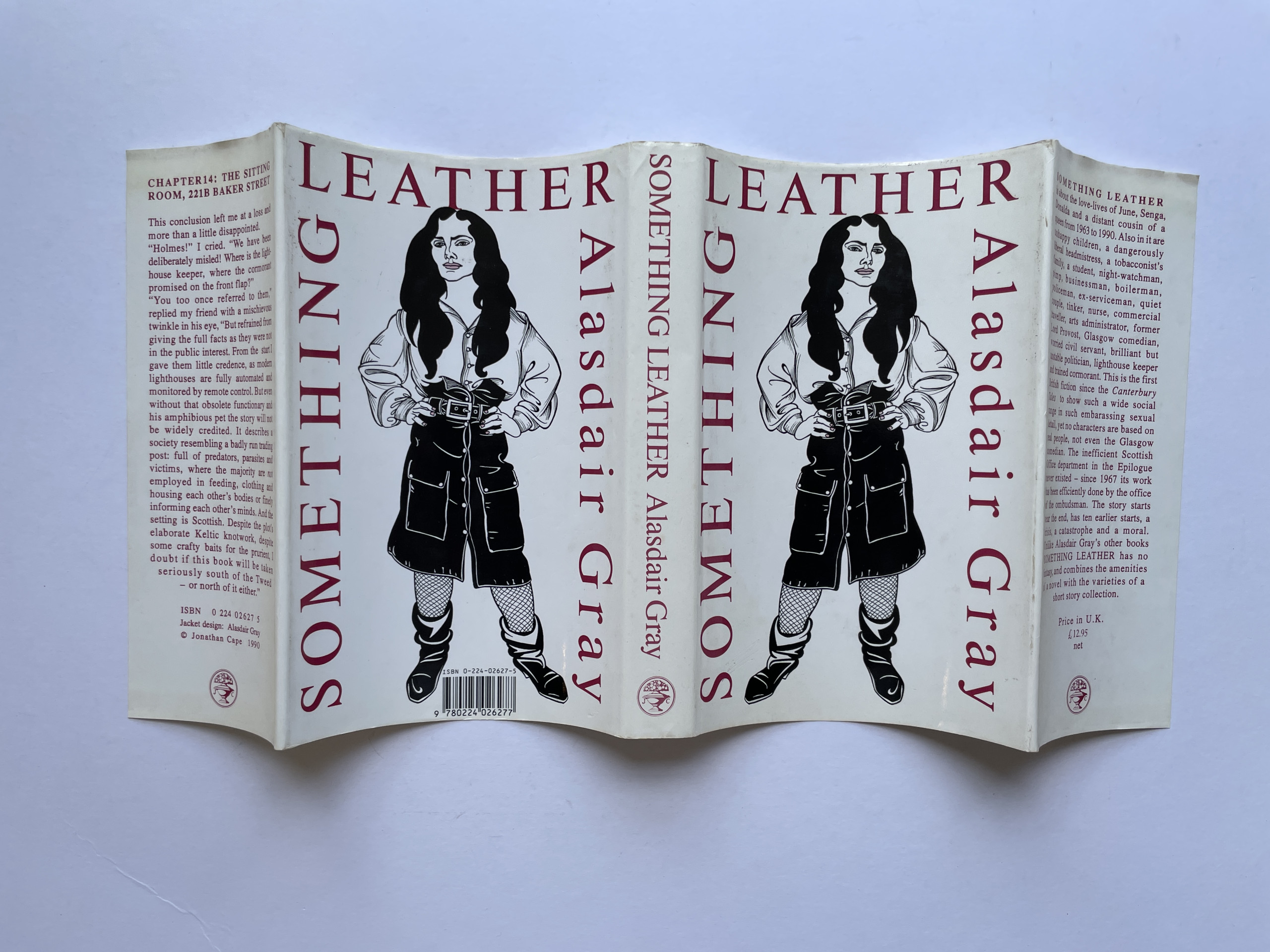
A first edition, first printing of Something Leather by Alasdair Gray, published by Jonathan Cape, London in 1990. A fine copy free from internal inscriptions, the boards bound in publisher’s original blue cloth with debossed wasp motif, Hello debossed to the front board, Goodbye similarly debossed to the rear board, gilt titling to the spine, the text block bright and crisp. In a near fine unclipped wrapper with fading to the spine and light internal spotting. Wrapper design by Aladair Gray.
Something Leather is Alasdair Gray’s provocative 1990 novel-in-stories, set largely in Glasgow and centred on four women from different social backgrounds: June, Donalda, Senga and Harriet. Framed by sexual initiation and leather fetishism, it is really a broader social comedy about class, desire, work and self-invention. Gray later regretted the sensational title, feeling it distracted readers from the book’s wider portrait of Glaswegian life.

(We don't keep all of our stock in the shop, so send us an email if you're planning a trip to see a particular author or book.)
- Description
Description
A first edition, first printing of Something Leather by Alasdair Gray, published by Jonathan Cape, London in 1990. A fine copy free from internal inscriptions, the boards bound in publisher’s original blue cloth with debossed wasp motif, Hello debossed to the front board, Goodbye similarly debossed to the rear board, gilt titling to the spine, the text block bright and crisp. In a near fine unclipped wrapper with fading to the spine and light internal spotting. Wrapper design by Aladair Gray.
Something Leather is Alasdair Gray’s provocative 1990 novel-in-stories, set largely in Glasgow and centred on four women from different social backgrounds: June, Donalda, Senga and Harriet. Framed by sexual initiation and leather fetishism, it is really a broader social comedy about class, desire, work and self-invention. Gray later regretted the sensational title, feeling it distracted readers from the book’s wider portrait of Glaswegian life.